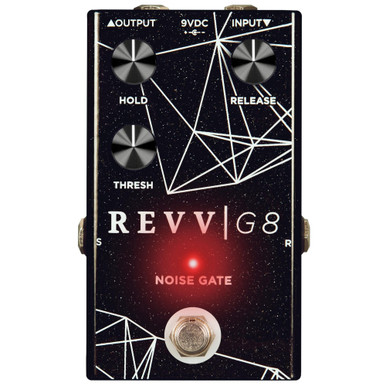
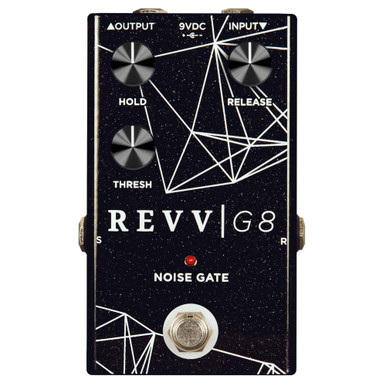
Revv Amplification G8 Noise Gate Pedal

£189.99

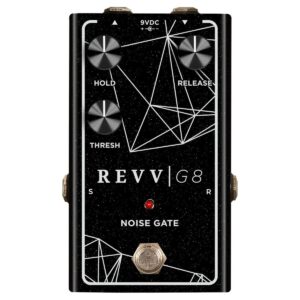
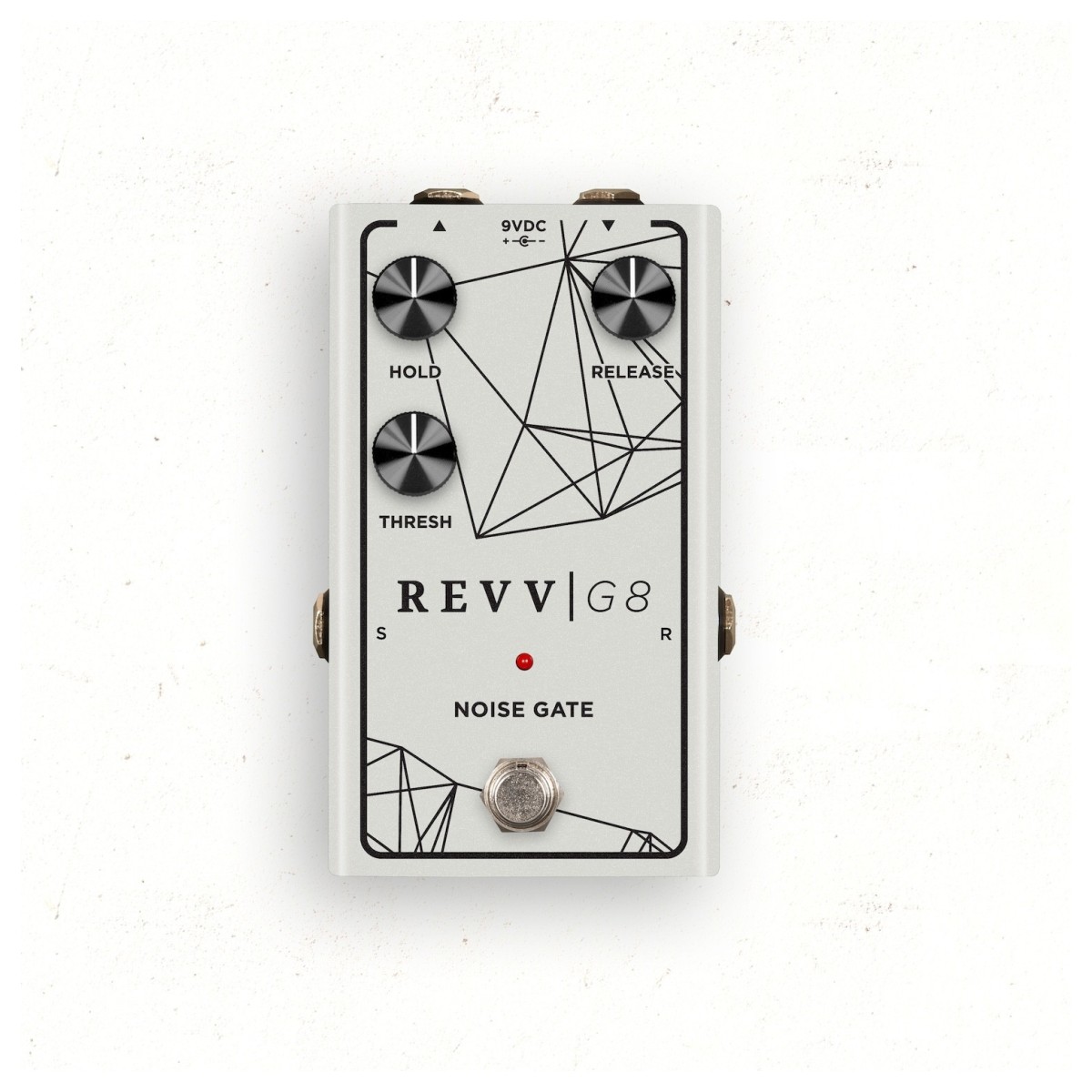
This is a New Revv Amplification G8 Noise Gate Pedal from Revv, listed in Noise Gate Pedals on Just Pedals. Read More below.

View Just
more
and , , ,

Canadian amp and pedal builders Revv Amplification know a thing or two about high gain. Their amps are revered for their searing, high gain tones and functionality and use only the best components, regardless of cost. It seems only logical then, that Revv Amps know how to tame even the most of ferocious of amps…Introducing the Revv G8 Noise Gate!

Based on the noise gate in the Generator 120 Mk.3, the G8 is a transparent, natural sounding gate that removes all of the annoying hiss and background noise that comes with high gain. From slight noise cancellation to ultra tight high gain, the G8 preserves your tone and pick attack for a natural sound, even at extreme settings. Separate Hold and Release controls enable maximum decay shaping, and a transparent threshold allows your tone to naturally bloom.

The G8 features a send/return loop which allows you to apply the noise gate to pedals as well as creating a side chain. This is a handy feature if you have an old or noisy stomp box in your rig. The true bypass circuit guarantees that there will be zero signal loss when the pedal is bypassed and has been optimised to work equally as well with any analogue, digital or hybrid rig. Housed in a rugged black sparkle chassis with printed geometric design, the G8 is tough, durable and reliable.

Features

  • Ultra-tight Noise Gate pedal
  • Based on the gate in the Generator 120 MK3
  • Effortlessly cleans noise and focuses on specific frequencies
  • Hold, Release, and Threshold controls allow optimum control
  • Send/Return loop for gating pedals or creating a side chain
  • Easy to use format means more time focused on performing
  • True bypass for maximum clarity and zero signal loss
  • Top mounted Input and Output jacks
  • Built to last durable construction
  • Optimized for use with any Analogue, Digital or Hybrid Rig
  • Black sparkle chassis with printed geometric design
  • Small single-space enclosure
  • Designed and built in Canada
  • Powered by opt. PSU (9-12 V DC, centre -, 2.1mm, approx. 50mA current draw)
Related videos

Brand

Revv

In the current JustPedals catalogue, Revv is represented by Preamp & DI Pedals, Overdrive Pedals and Noise Gate Pedals. Current listings include Tilt Boost, Amplification G8 Noise Gate and G8 Noise Gate. That makes the range relevant to players looking for drive, gain and clipping, plus modelling, direct rigs and multi-effects. Check each model for its exact circuit or processing platform, controls, power requirements and connections, particularly where the catalogue includes both pedals and supporting gear.

Category

Noise Gate Pedals

A noise gate reduces or mutes the signal when it falls below a threshold, separating wanted notes from hiss, hum and high-gain noise. Threshold decides when the gate closes, while attack, release and hold control how naturally it opens and how note tails decay. Side-chain or four-cable designs can detect the clean input while silencing noise later in the gain chain.

Tags

Analogue

The signal is shaped by continuously varying electronic circuitry rather than being converted into a digital effect algorithm. Component choice, operating voltage and circuit tolerances influence headroom, noise, clipping texture and the small variations in response between designs.

Digital

Converts the signal or control process into numerical data for algorithmic processing. Digital designs can provide precise timing, long memory, complex routing and repeatable presets; sample rate, conversion, internal resolution and latency influence fidelity and response.

Hybrid

Combines analogue and digital stages within one signal or control design. A digital section may provide memory, routing or modelling while analogue circuitry supplies clipping, filtering or amplification, so the order and blend of the two domains shape the final response.

True Bypass

Connects input directly to output through mechanical or relay switching when the effect is off, removing the active circuit from the audio path. It avoids buffer colour but leaves cable capacitance and switching design to influence high-frequency loss and possible switching noise.