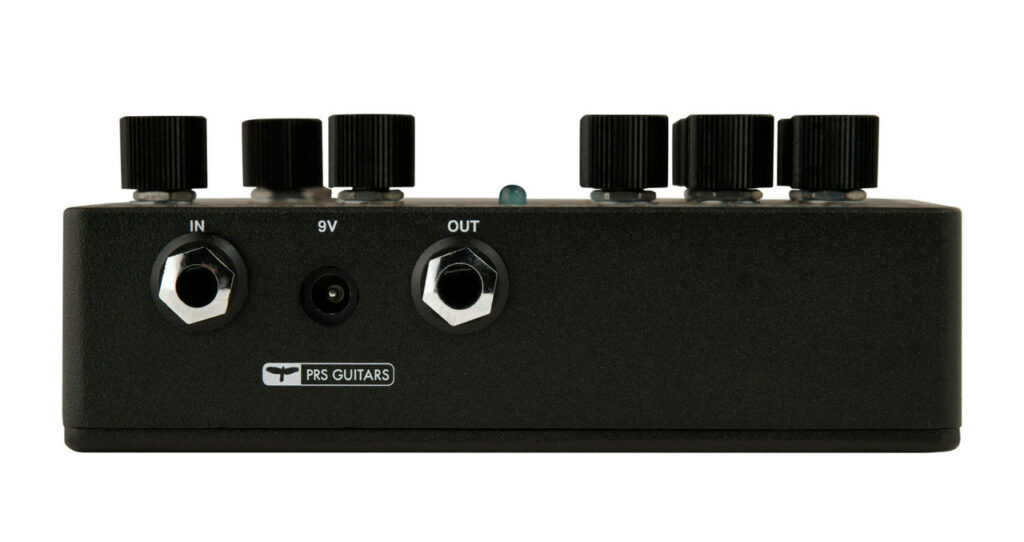
PRS Wind Through The Trees Dual Analog Flanger Pedal

£339.00

This is the PRS Wind Through The Trees Dual Analog Flanger Pedal from PRS, listed in Flanger Pedals on Just Pedals. Read More below.

View Just
more
and , , ,

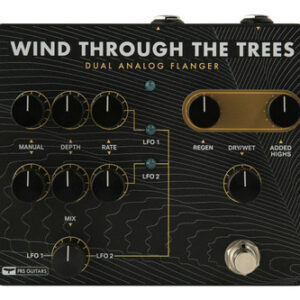
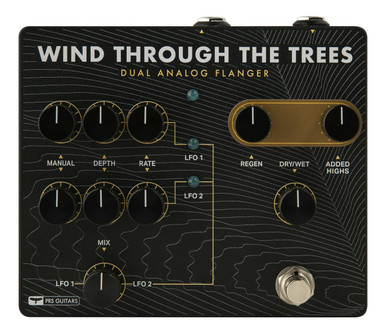
Designed from the ground up by PRS Guitars in Stevensville, MD, the Wind Through the Trees is a dual analogue flanger with nearly endless tonal possibilities! Paul Reed Smith has made no secret of how much he loves flanger pedals, with the vintage Electra 605 Stereo Flanger being one of his personal favourites. With that in mind, it’s no surprise to see a flanger in PRS’ first line of boutique pedals!

The Wind Through the Trees can best be described as two flangers fighting one another, creating the sound of, you guessed it…wind blowing through the trees! With controls for Manual, Depth, Rate and Regeneration, the WTTT has a certain familiarity to it, with additional controls for Added Highs giving you powerful tone shaping possibilities and hours of fun!

“We believe the pedals we’ve created are highly usable, great-sounding pieces of professional gear. A real magic pedal makes the board. We’re trying to make pedals that make the board and stay on it.”Paul Reed Smith

Specifications

  • Pedal Type: Flanger
  • Analogue/Digital: Analogue
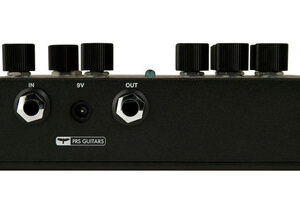
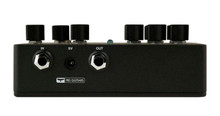
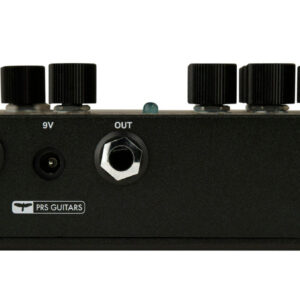
  • Inputs: (1) ¼” instrument
  • Outputs: (1) ¼” instrument
  • Bypass Switching: True Bypass
  • Amperage: 22mA
  • Power Sources: 9V DC Power Supply, regulate and/or isolated (not included)
  • Batteries: (1) 9V DC (not included)
  • Length: 5.5”
  • Width: 1.5”
  • Height: 4.5”
  • Weight: 1.3 lbs

Related videos

Brand

PRS

Category

Flanger Pedals

Flanging mixes the dry signal with a very short delay whose time is continuously modulated. The paths reinforce and cancel at regularly spaced frequencies, producing a moving comb-filter sweep with a hollow, metallic or jet-like character. Rate and depth set the motion, while feedback sharpens the notches and can push the effect towards resonant, self-oscillating textures.

Tags

Analogue

The signal is shaped by continuously varying electronic circuitry rather than being converted into a digital effect algorithm. Component choice, operating voltage and circuit tolerances influence headroom, noise, clipping texture and the small variations in response between designs.

Digital

Converts the signal or control process into numerical data for algorithmic processing. Digital designs can provide precise timing, long memory, complex routing and repeatable presets; sample rate, conversion, internal resolution and latency influence fidelity and response.

Stereo

Processes, creates or passes two audio channels. True stereo preserves separate left and right inputs, while mono-to-stereo effects generate spatial differences internally; routing, phase behaviour and whether trails remain stereo determine the resulting image. Some outputs sum to mono when only one socket is connected, which can change level or modulation depth.

True Bypass

Connects input directly to output through mechanical or relay switching when the effect is off, removing the active circuit from the audio path. It avoids buffer colour but leaves cable capacitance and switching design to influence high-frequency loss and possible switching noise.