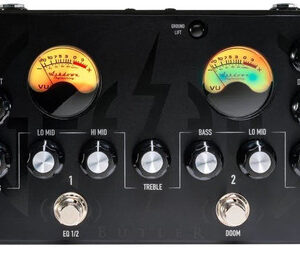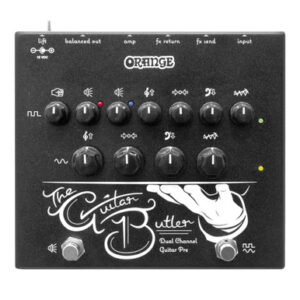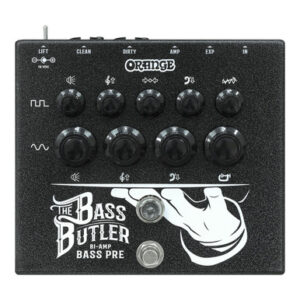
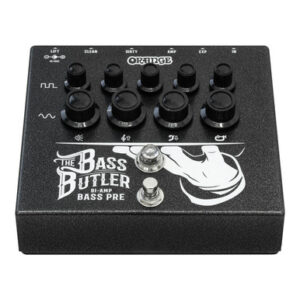

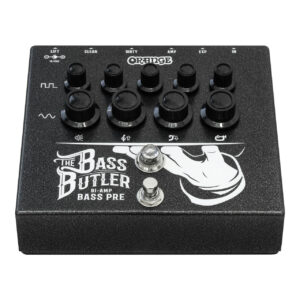
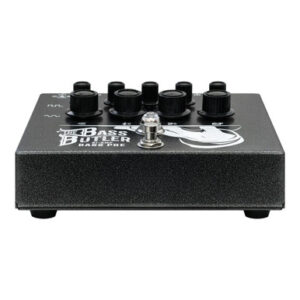
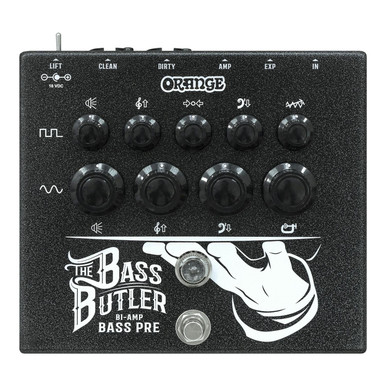
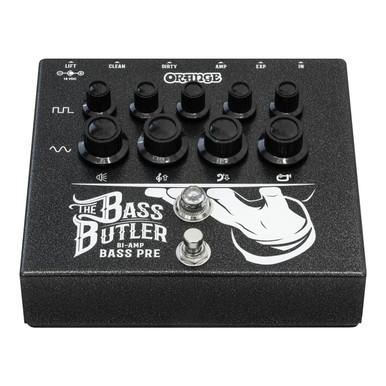
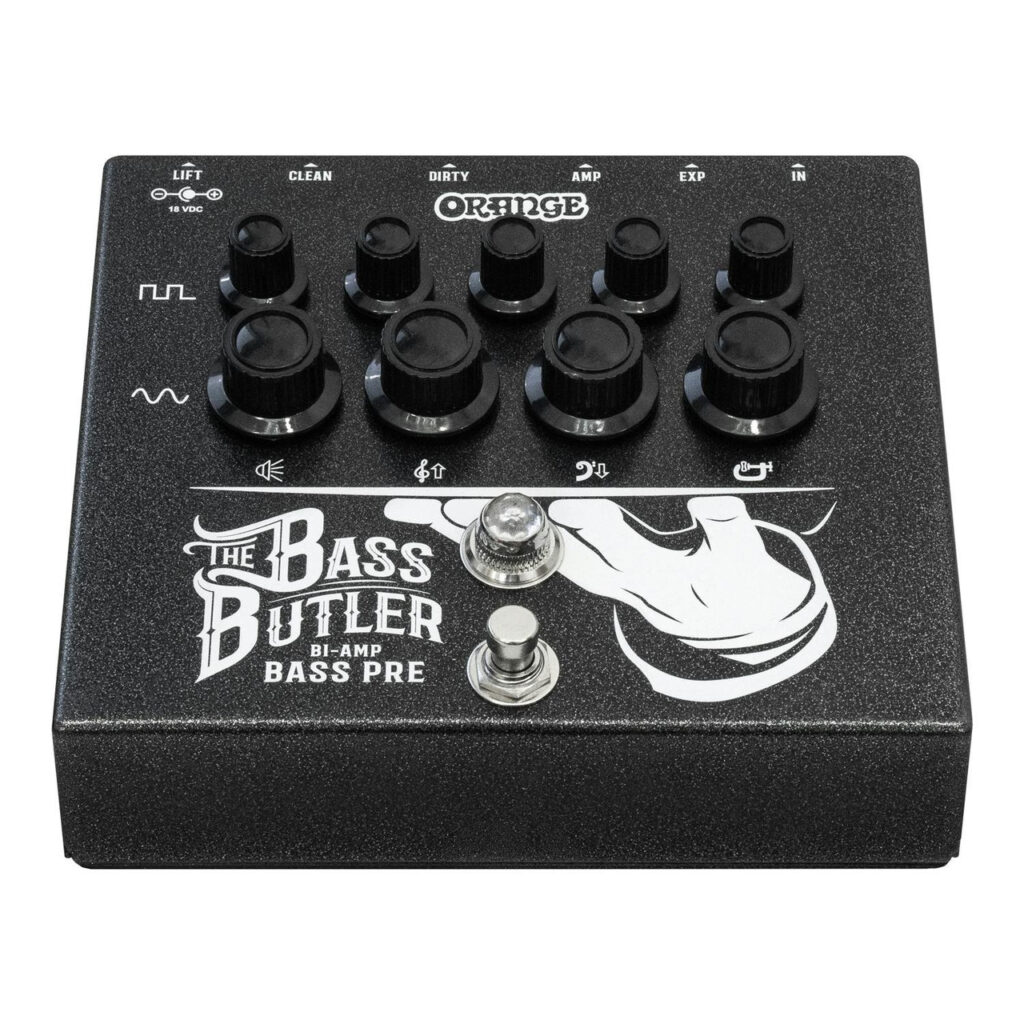
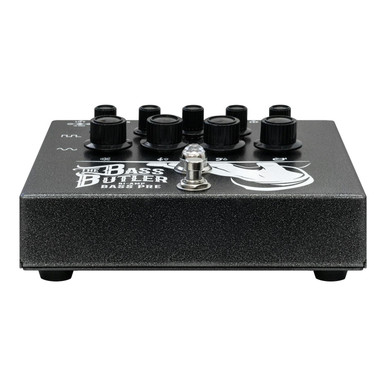
The Bass Butler is pretty much a complete bi-amp bass rig in just one single, compact pedal. But what is bi-amping you may ask? Well, Bi-amping is when you send a bass guitar signal direct to a bass amp and a guitar amp simultaneously. The result: powerful, punchy, yet clear low-end, with a separately amplified set of mids and high-end. The Bass Butler allows you to do all of this without the need for an extensive, potentially complex rig!
How Does it Work?
It's surprisingly simple. It works by splitting your signal from the input, with two dedicated, parallel analogue signal chains (mirroring a real bi-amp setup). The two channels are characterised by their own truly unique nature.
The high-gain guitar channel boasts four gain stages and five controls, each of which can be harnessed with just one stomp of your footswitch. Tones can be incredibly varied, ranging from more musical, classic sounds, to aggressive, in-your-face, modern tonal behemoths. Additional extras includes a guitar cab simulated balanced D.I. output, as well as an expression pedal jack – resulting in far more accurate control over your input gain.
The bass channel provides some contrast. It's always on, with a streamlined set of controls available – including volume, treble, compression and bass. Easily craft contrasting, exciting tones, and access the full power of an optical compressor circuit, a bass cabinet simulated balanced D.I. output and boost/cut tone controls.
XLR Outputs
Thanks to two separate XLR outputs from these two individual channels, you can send your custom tone directly to a mixing desk – increasing the Bass Butlers live versatility even further!
Features
- Ground lift switch.
- Input 1/4-inch jack socket and an expression 1/4-inch jack socket.
- Blended 1/4-inch jack socket (without cab simulator).
- Guitar (dirty) XLR balanced output (featuring lead guitar cab simulator).
- Bass guitar (clean) XLR balanced output (featuring bass guitar cab simulator).
- Seriously durable; crafted using a rock-solid, steel housing.
- 18V DC power results in high headroom.
Specifications
- Power: 18V
- Unboxed Dimensions (W x H x D): 17 x 8.5 x 16.5 CM (6.6 x 3.3 x 6.50″)
- Unboxed Weight: 1.29 Kg (2.84 Lbs)