Ashdown Geezer Butler – Pedal of Doom Dual EQ with Switchable Drive

£285.00

This is the Ashdown Geezer Butler – Pedal of Doom Dual EQ with Switchable Drive from Ashdown, listed in Specialist Effects Pedals on Just Pedals. Read More below.

View Just
more
and ,

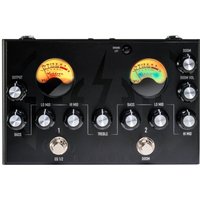
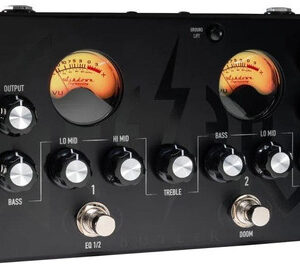
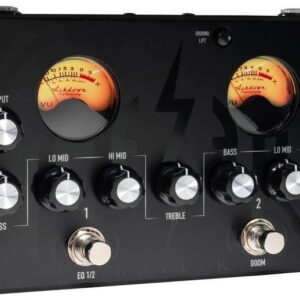
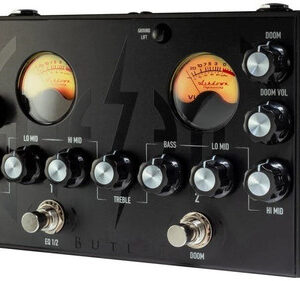
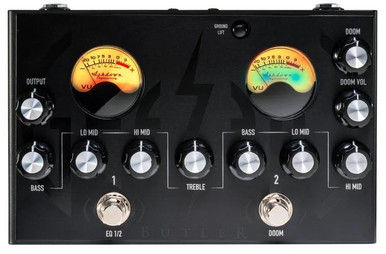
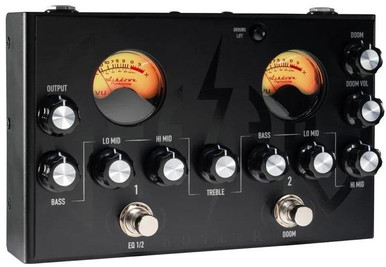
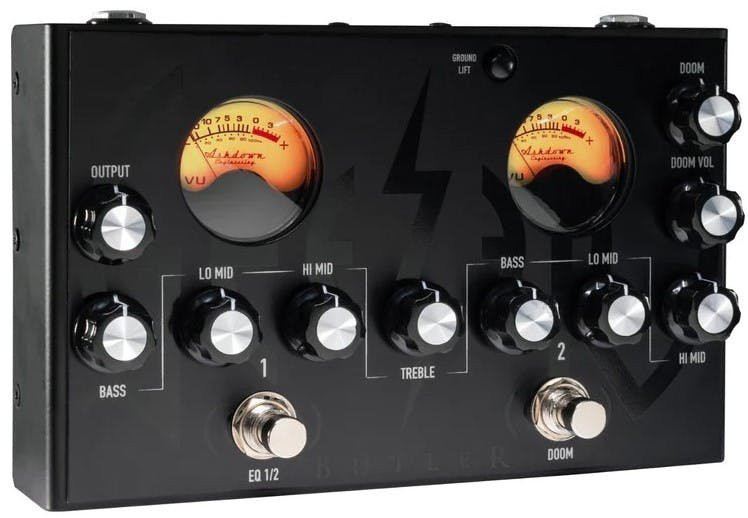
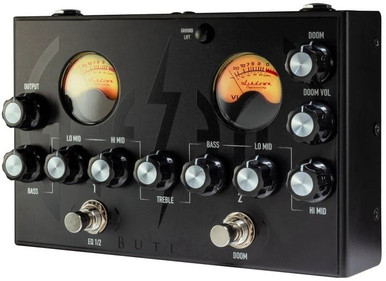
Ashdown’s ‘Pedal of Doom’ is a meticulously crafted bass distortion pedal born from 18 months of passionate internal discussions and inspired by the legendary Geezer Butler. At its core, this pedal revolves around the power of EQ control. With an active 5-band EQ and the ability to shape your drive’s pre-EQ, you have the freedom to sculpt two distinct tones, each with its own character and harmonics.

 Geezer Butler

Geezer Butler’s influence is palpable in every detail, from the groove of ‘Hand of Doom’ to the transformative qualities of his music. ‘The Pedal of Doom’ allows you to capture that spirit, giving you the control to punch in those rich harmonics precisely when you need them. This pedal is your key to summoning the sound of doom at a moment’s notice.

 Fine-Tuning EQ

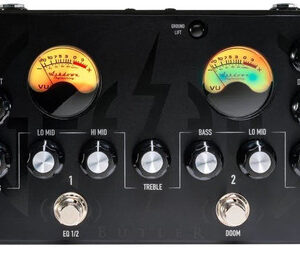
Designed and Engineered in the heart of Essex, it features an onboard transformer isolated DI output and two switchable EQs. Dual VU meters ensure your bass signal remains perfectly balanced throughout the signal path, letting you fine-tune the EQ to match your instrument’s output. Say goodbye to unwanted gain jumps and hello to consistent, powerful tones.

 ‘Pedal of Doom’

And of course, it wouldn’t be ‘The Pedal of Doom’ without the ability to dial in just the right amount of gain. Whether you crave subtle distortion or a full-on wall of sound, this pedal has you covered. It’s the result of countless requests for a Geezer Butler preamp pedal based on the Head of Doom.

Specifications

Power Requirement: 9-18v External Power Supply Centre Pin Negative

EQ: 4-Band EQ, bass, low-mid, hi-mid and treble

H x W x D (mm):60 x 180 x 120

Weight (kg): 1.2
Brand

Ashdown

Ashdown Engineering is a renowned manufacturer of bass amplifiers, cabinets, and effects pedals, known for their commitment to quality, innovation, and powerful sound. Founded in 1997 by Mark Gooday, a former employee of Trace Elliot, Ashdown has since become a respected name in the bass community, providing professional-grade amplification solutions to musicians worldwide.

Among Ashdown’s product lineup, their bass amplifiers and cabinets are particularly notable for their robust construction, versatile tone shaping options, and reliable performance. The company offers a variety of amplifier heads, combos, and speaker cabinets designed to suit different playing styles and preferences, from punchy and articulate tones to deep and thunderous bass frequencies.

In addition to amplifiers and cabinets, Ashdown also produces a range of effects pedals tailored specifically for bass players. These pedals, such as the Ashdown Drive Plus and the Ashdown Dual Band Compressor, offer bassists a variety of tone-shaping and dynamics control options to enhance their sound and performance.

With a dedication to craftsmanship, innovation, and providing bassists with the tools they need to excel, Ashdown Engineering continues to be a trusted choice for musicians seeking high-quality amplification and effects solutions for their bass guitars.

Category

Specialist Effects Pedals

Specialist effects alter the signal in ways that do not sit cleanly inside one established family. They may use granular processing, frequency shifting, resonators, freeze or sustain, bit reduction, ring modulation, feedback networks or combinations of several techniques. The relevant distinction is the underlying process, its tracking or latency, and how completely the dry signal can be blended or replaced.

Tags

Bass

Voiced or equipped to retain low-frequency fundamentals and the higher headroom of a bass signal. Clean blends, crossovers and bass-specific filter ranges can preserve weight and articulation while the effected portion adds harmonics, movement or ambience.

EQ

Raises or lowers defined frequency regions. Fixed-band graphic controls provide direct visual shaping, while parametric controls vary centre frequency and bandwidth; the available range and filter width determine whether the change is broad tonal balance or narrow corrective filtering.