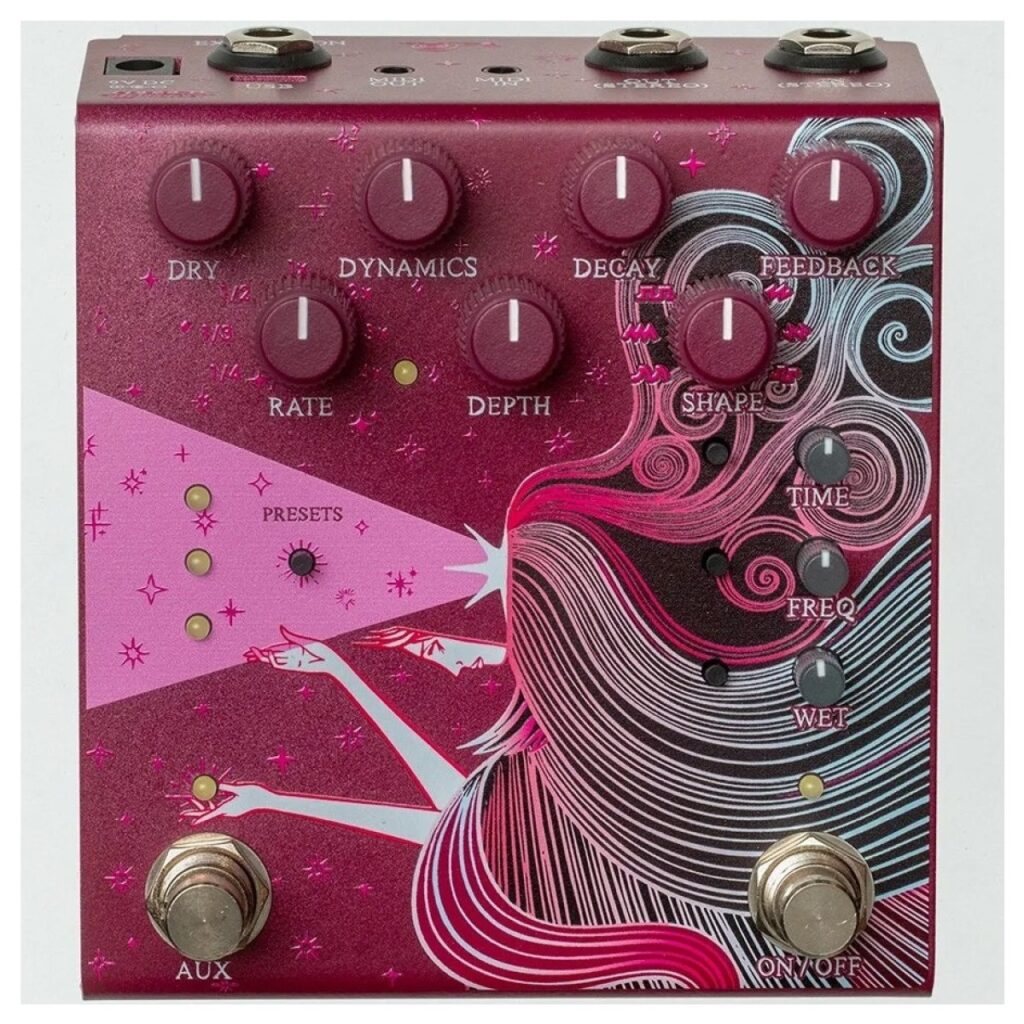
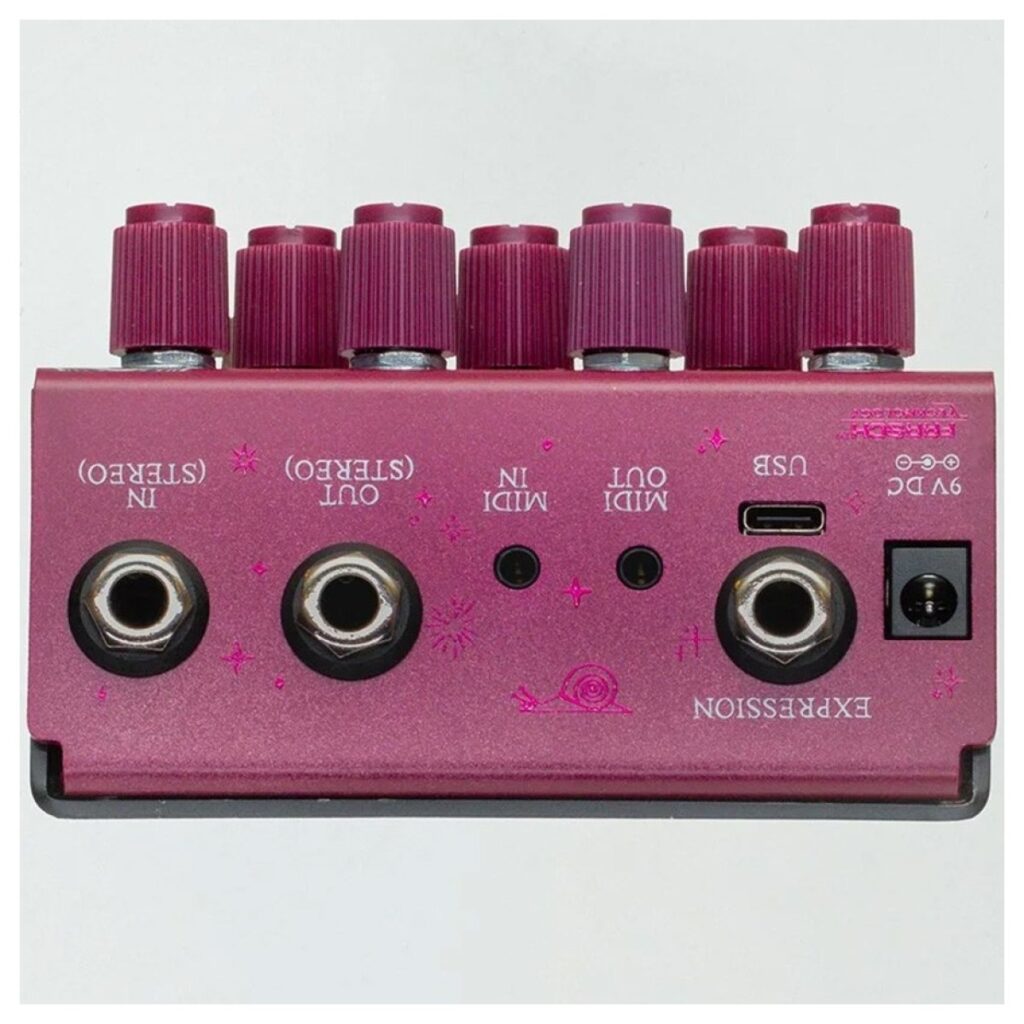
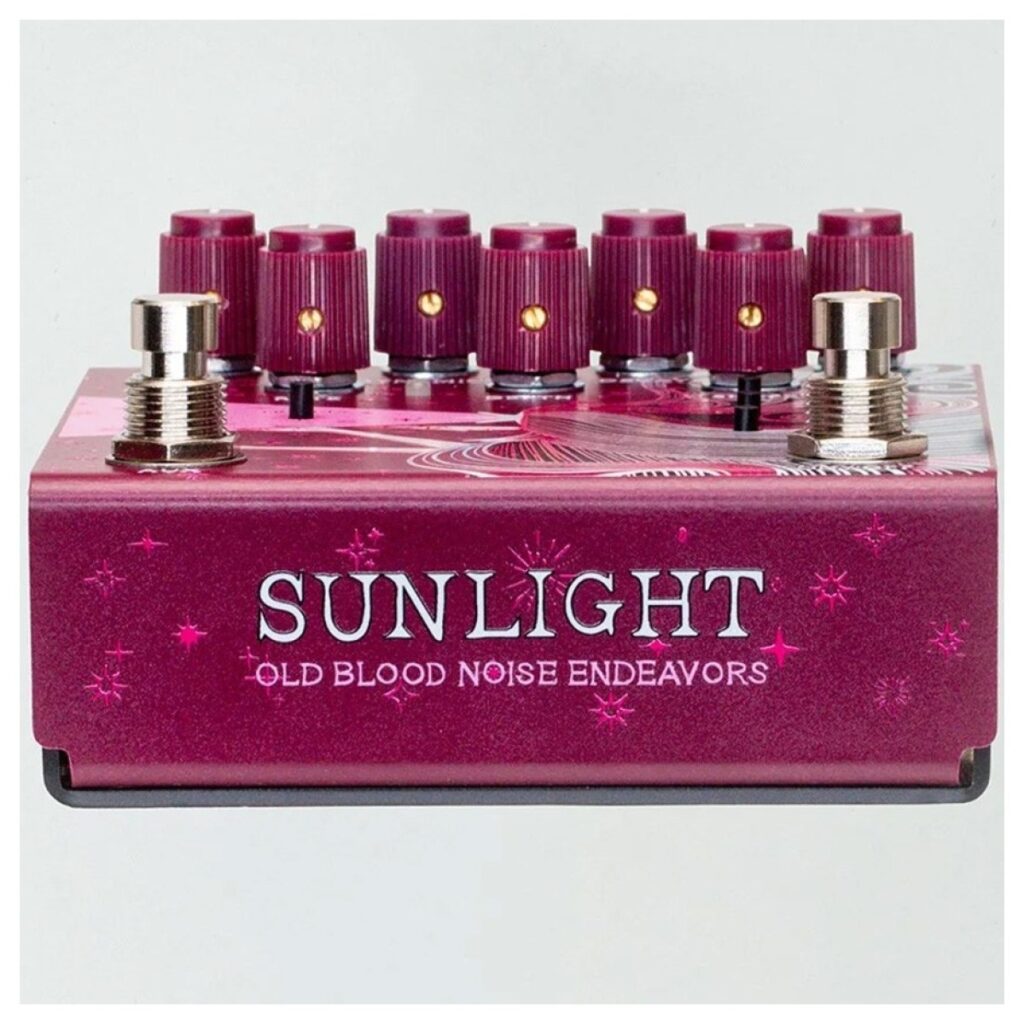
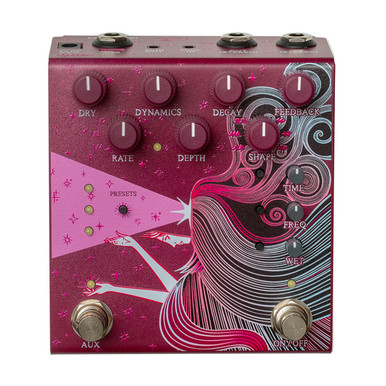
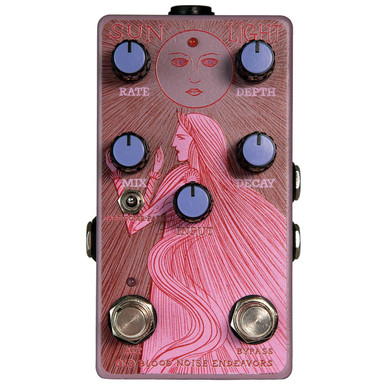
The Old Blood Noise Endeavors Sunlight Stereo Modulated Reverb is a reverb pedal built for players who love movement space and texture. It takes a lush ambient reverb core and pushes it further with modulation delay and filtering that can all be controlled by an onboard LFO. From shimmering chorus-like waves to pulsing tremolo reverbs or swirling flanger tones Sunlight lets you shape soundscapes that feel alive and constantly in motion. The dynamic control feature adds another expressive layer allowing your playing intensity to guide the effects behaviour for trails that bloom breathe or hang in the air. Designed to fit into modern setups Sunlight offers stereo in and out MIDI control and expression mapping for every knob so it can slot easily into complex pedalboards or studio rigs. Its soft-touch relay footswitch keeps switching silent while true or trails bypass options let you tailor your signal flow. With its creative modulation flexible control and rich stereo depth Sunlight stands as a bright atmospheric counterpart to OBNEs darker reverb designs.
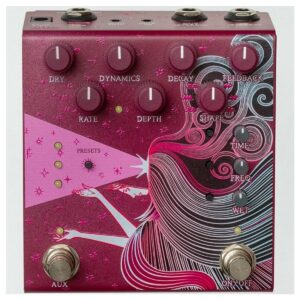
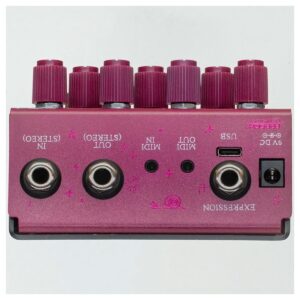
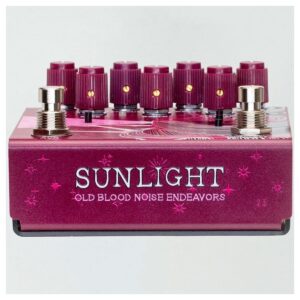
Old Blood Noise Endeavors Sunlight Stereo Modulated Reverb Pedal
This is the Old Blood Noise Endeavors Sunlight Stereo Modulated Reverb Pedal from Old Blood Noise Endeavors, listed in Reverb Pedals on Just Pedals. Read More below.
As an affiliate partner, we may earn a small commission when you buy through our links — at no extra cost to you.
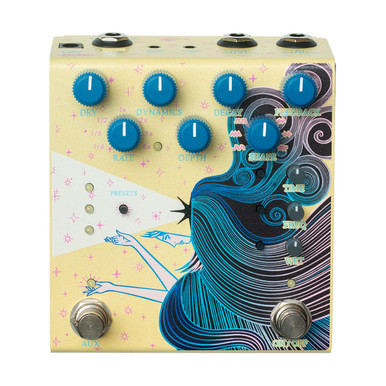
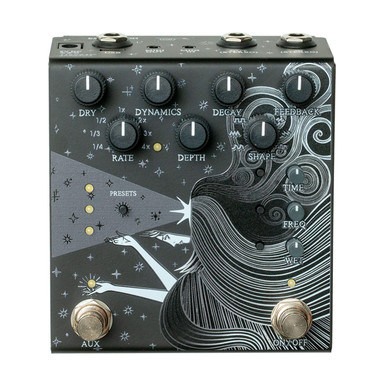
Brand
Old Blood Noise Endeavors
Old Blood Noise Endeavors is a pedal manufacturer known for its creative and unconventional effects. Their pedals are designed to push the boundaries of traditional sound, often combining distortion, delay, and modulation effects in innovative ways. One example is their *Beam Splitter* pedal, which takes a single input signal and splits it into three different versions with varying delay times and overdrive tones. This results in a larger, more textured sound, ideal for those looking to create unique sonic landscapes. Their pedals also feature expressive controls such as Deviate, which introduces natural variations to delay times for a more organic feel.
Old Blood Noise Endeavors is also recognized for its distinctive pedal designs and collaboration with various artists, showcasing their commitment to producing high-quality, experimental tools for musicians. Their pedals are popular for both live performances and studio work, offering a range of effects from fuzz to reverb, each with a creative twist. This brand stands out for its bold approach to sound manipulation, making it a favourite among experimental musicians and those seeking to expand their sonic palette.
Category
Reverb Pedals
Reverb creates the dense pattern of reflections heard after sound enters a physical or imagined space. Room, hall, plate and spring models differ in reflection density, frequency decay and modulation, while ambient algorithms extend or transform the tail beyond natural acoustics. Decay, pre-delay, damping, diffusion and wet/dry balance define the apparent size, surface and distance of that space.
Tags
MIDI
Sends, receives or responds to Musical Instrument Digital Interface messages rather than carrying the instrument audio itself. Program changes recall presets, continuous controllers move parameters, and MIDI clock or transport messages synchronise timing between devices.
Stereo
Processes, creates or passes two audio channels. True stereo preserves separate left and right inputs, while mono-to-stereo effects generate spatial differences internally; routing, phase behaviour and whether trails remain stereo determine the resulting image. Some outputs sum to mono when only one socket is connected, which can change level or modulation depth.
Others Just Ordered :
- Electro-Harmonix PICO DEEP FREEZE Sound Retainer / Sustainer (EHX Demo by JON SKIBIC)
- Electro-Harmonix SPRUCE GOOSE Overdrive (EHX Demo by TOM BURDA)
- Electro-Harmonix Octavix Octave Fuzz Pedal (Demo by Bill Ruppert)
- Electro-Harmonix Superego+ Synth Engine / Multi-Effect Pedal (Demo by Bill Ruppert)
- EHX Pico Series! Classic Pedals In a Micro Format!
- Electro Harmonix Pedals You Have Never Heard Of