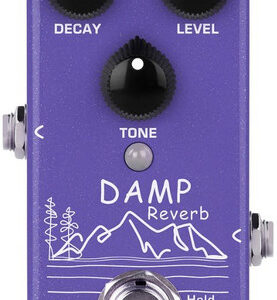
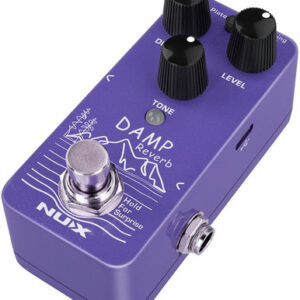
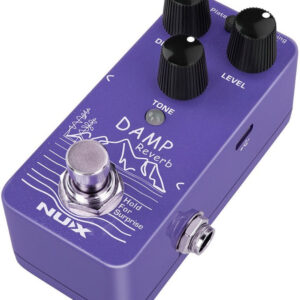
Brand
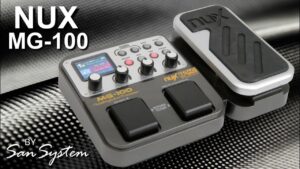
NUX made its industry debut in 2006 and is one of the brands owned by Cherub Technology. Its official catalogue ranges from analogue and digital stompboxes to multi-effects, amplifiers, wireless systems, drums, keyboards and recording gear. Cherub lists company locations in Guangdong, China, as well as overseas offices; that identifies the company base, not the factory for every NUX product. JustPedals listings include the NBP-5 Melvin Lee Davis bass preamp, NAI-5 Optima Air acoustic simulator and NDR-5 Atlantic delay and reverb. The range rewards model-by-model comparisons of signal path, presets and instrument-specific features.
Category
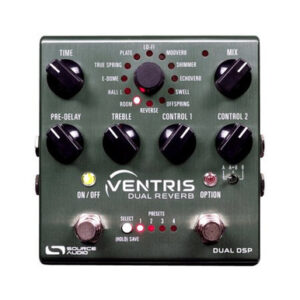
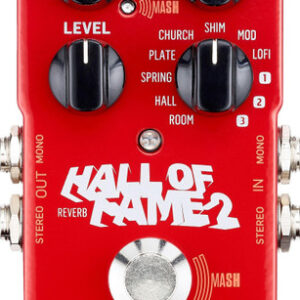
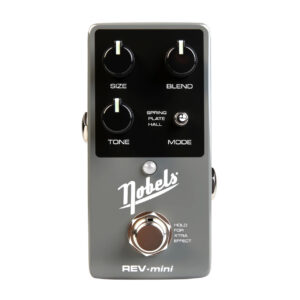
Reverb creates the dense pattern of reflections heard after sound enters a physical or imagined space. Room, hall, plate and spring models differ in reflection density, frequency decay and modulation, while ambient algorithms extend or transform the tail beyond natural acoustics. Decay, pre-delay, damping, diffusion and wet/dry balance define the apparent size, surface and distance of that space.
Tags
Converts the signal or control process into numerical data for algorithmic processing. Digital designs can provide precise timing, long memory, complex routing and repeatable presets; sample rate, conversion, internal resolution and latency influence fidelity and response.
Processes, creates or passes two audio channels. True stereo preserves separate left and right inputs, while mono-to-stereo effects generate spatial differences internally; routing, phase behaviour and whether trails remain stereo determine the resulting image. Some outputs sum to mono when only one socket is connected, which can change level or modulation depth.
Connects input directly to output through mechanical or relay switching when the effect is off, removing the active circuit from the audio path. It avoids buffer colour but leaves cable capacitance and switching design to influence high-frequency loss and possible switching noise.