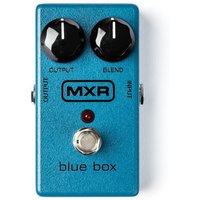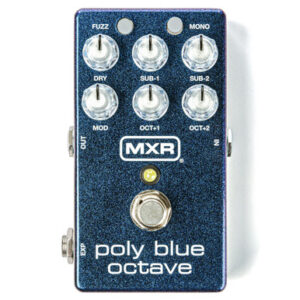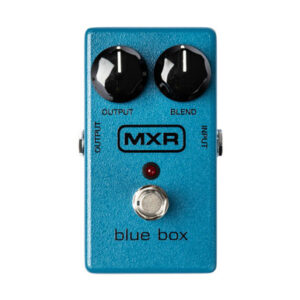
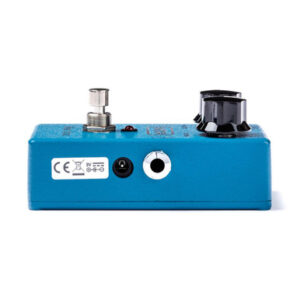

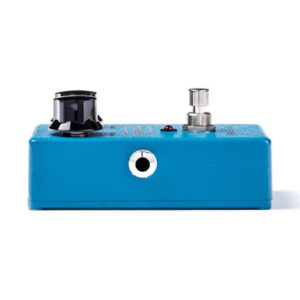
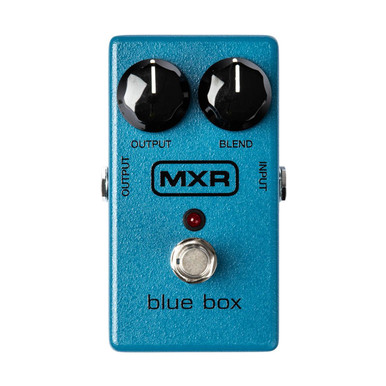
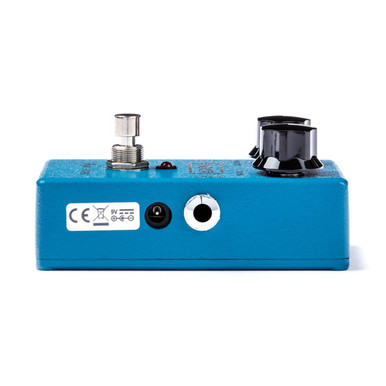
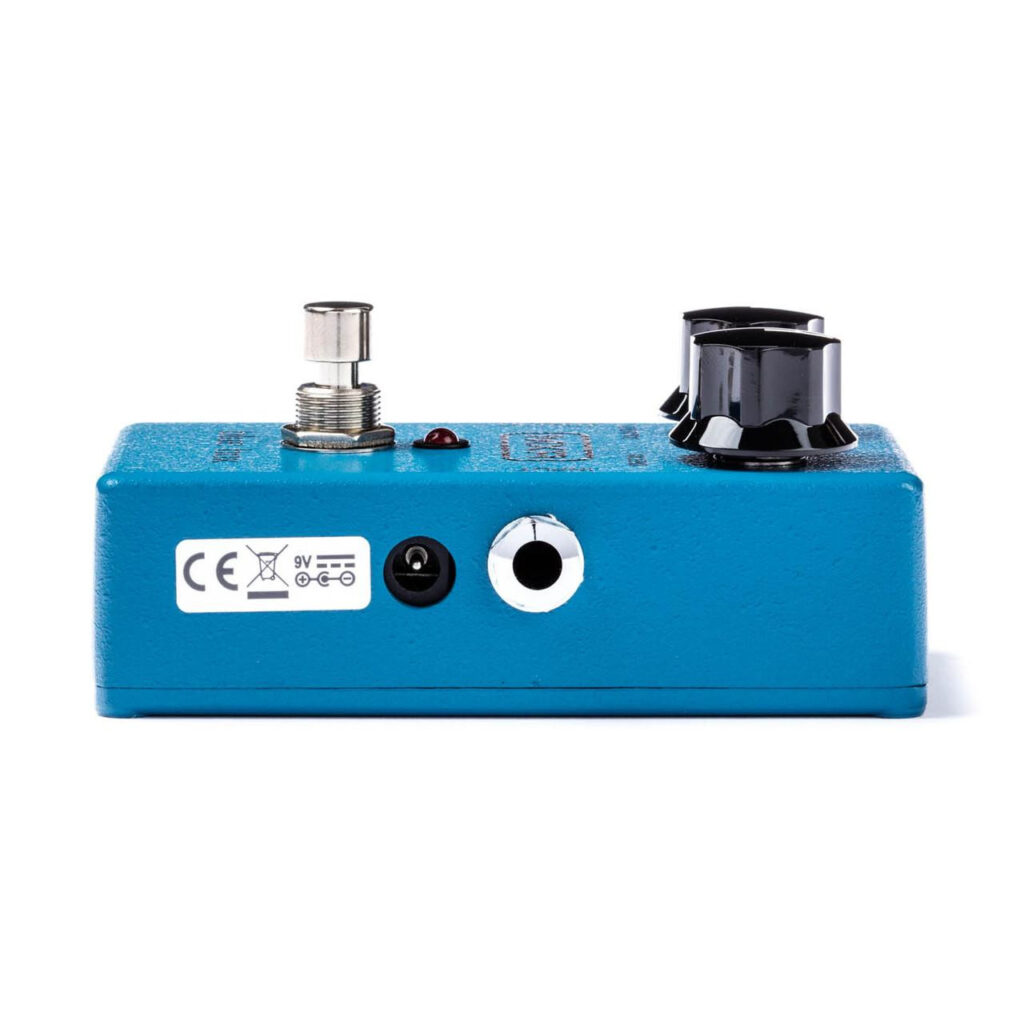
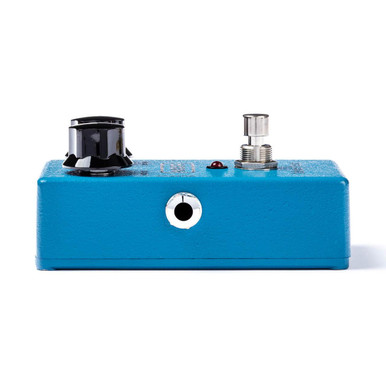
MXR Blue Box Octave Fuzz Pedal M-103

£109.00

This is a New MXR Blue Box Octave Fuzz Pedal M-103 from MXR, listed in Octave Pedals on Just Pedals. Read More below.

View Just
more
and

A raucous fuzz pedal with double-octave-down capabilities, the MXR Octafuzz is a distinctive sound that thickens up licks and riffs for massive tone that is hard to miss. Down and dirty, the M-103 allows you to control the mix of the effect so you can try to tame this beast!

MXR pedals have great tone, are built to last and represent excellent value for money. You can be sure that the box under your foot will deliver great quality tone gig after gig.

Here’s what MXR say about the Octave Fuzz Pedal M-103

  • Adds fuzz to your signal and then duplicates it two octaves down
  • Control the mix of the dry signal and the effect
  • Used by Jimmy Page for the solo in Led Zeppelin’s “Fool in the Rain.”

This is the crazy effect heard on Jimmy Page’s “Fool in the Rain” solo. The Blue Box takes your guitar signal and duplicates it two octaves down for a huge, subterranean tone. The Blend knob lets you control how much of the effected tone you mix in with your dry signal. Not for the timid—there is truly nothing like the Blue Box.

Power: Dunlop ECB003 AC Adapter or Single 9 volt battery
Related videos

Brand

MXR

MXR’s first product was the Phase 90, released in 1972. Dunlop’s official MXR history traces the early line from that compact phaser to the Distortion+, Dyna Comp compressor and Blue Box octave fuzz—circuits that remain central reference points for the brand. JustPedals carries those classic families alongside the Carbon Copy analog delay, Micro Amp, Talk Box and bass effects. MXR’s range is deliberately broader than one effect category: compare the model number and version, especially where a classic circuit has later reissues, mini enclosures or expanded controls.

Category

Octave Pedals

An octave effect generates notes one or more octaves above or below the input. Analogue circuits often create raw monophonic sub-octaves, while digital pitch tracking can follow chords and provide several intervals with cleaner separation. Tracking speed, polyphonic accuracy, latency and the balance of dry, upper and lower voices determine whether the result feels tight, organ-like, synthetic or deliberately unstable.

Tags

Fuzz

Pushes the signal into extreme clipping, often approaching a square wave and producing dense harmonics. Transistor type, bias, input loading and filtering govern whether the texture is smooth, woolly, gated, spluttering, octave-rich or highly responsive to the instrument volume.