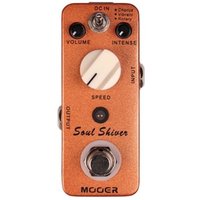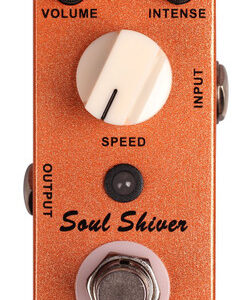
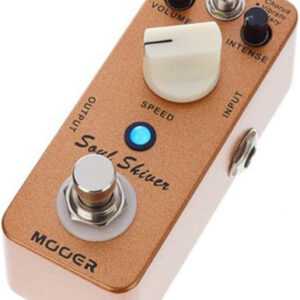
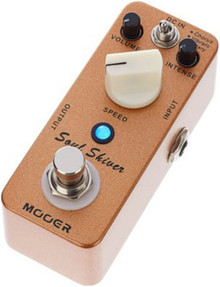
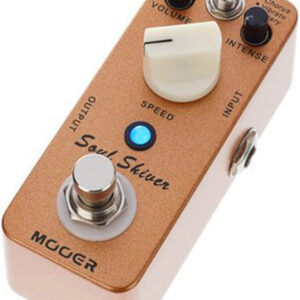
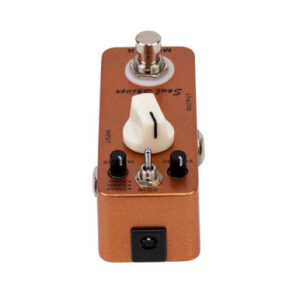
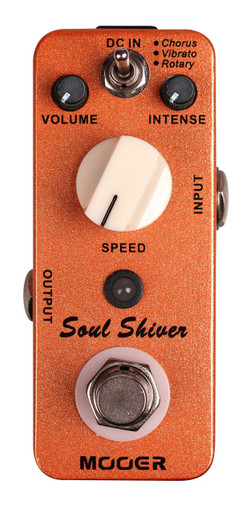
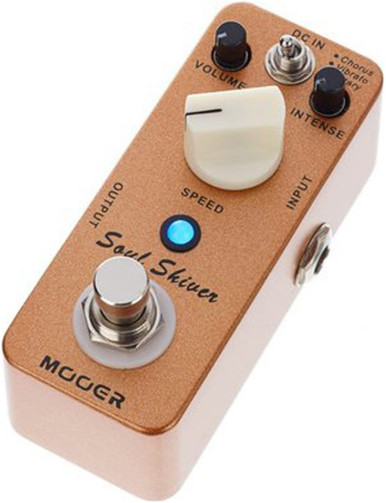
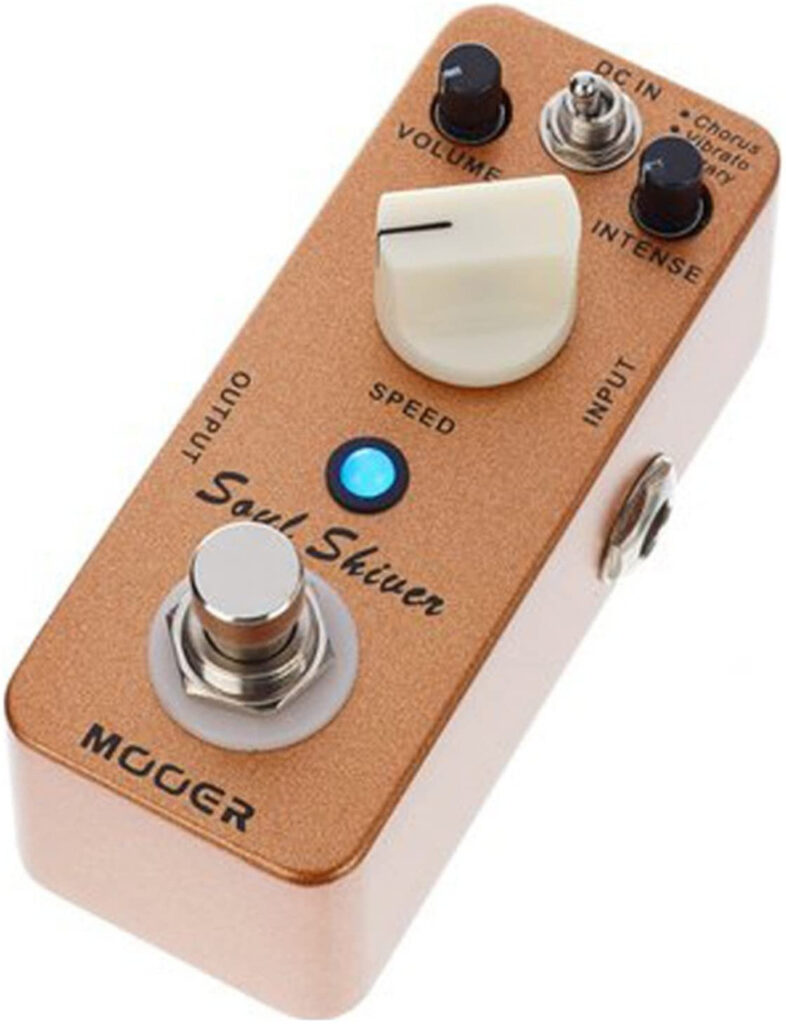
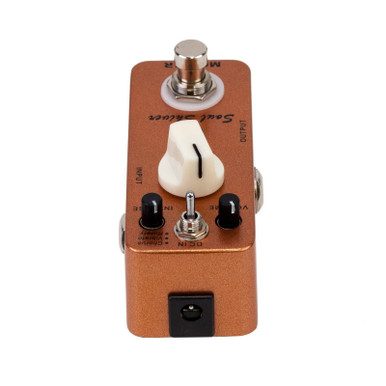
Mooer Soul Shiver Pedal

£59.00

This is the Mooer Soul Shiver Pedal from Mooer, listed in Specialist Effects Pedals on Just Pedals. Read More below.

View Just
more

Here's what Mooer have to say about the Soul Shiver Pedal: 

Classic 60s sound, which takes you into the retro psychedelic trip. Three effect modes: Chorus/ Vibrato/ Rotary Chorus: A high quality standard chorus, with warm and psychedelic chorus effect. Vibrato: Vintage 60s vibrato sound, ensuring that a wide- range vibrato effect could be achieved. Rotary: simulate the cabinet a round you, bringing forth a fantastic rotary effect.

Specifications: 

  • Input : 1/ 4”monaural jack (impedance: 470k Ohms   )]
  • Three effect modes: Chorus/ Vibrato/ Rotary
  • Output : 1/ 4”monaural jack (impedance: 100 Ohms)
  • Power Requirements: AC adapter 9V DC (center minusplug) , recommended to use Mooer Micro Power
  • Current Draw:128 mA
  • Dimensions: 93. 5mm (D) × 42mm (W) × 52mm (H)
  • Weight : 150g

Related videos

Brand

Mooer

Mooer is a Chinese company that produces affordable, compact guitar effects pedals and other music equipment.

Established in 2010, Mooer quickly gained popularity for its “Micro-Series” pedals, which are small but deliver a wide range of effects, from overdrive and distortion to reverb, delay, and modulation. Despite their budget-friendly price, Mooer pedals are appreciated for their solid build quality, ease of use, and impressive sound.

The company also offers multi-effects units, amplifiers, and accessories, catering to both beginner and experienced musicians who seek reliable gear without breaking the bank. Mooer’s products are widely used by guitarists worldwide, particularly those who value portability and versatility in their setups.

Category

Specialist Effects Pedals

Specialist effects alter the signal in ways that do not sit cleanly inside one established family. They may use granular processing, frequency shifting, resonators, freeze or sustain, bit reduction, ring modulation, feedback networks or combinations of several techniques. The relevant distinction is the underlying process, its tracking or latency, and how completely the dry signal can be blended or replaced.