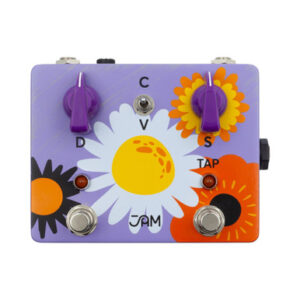
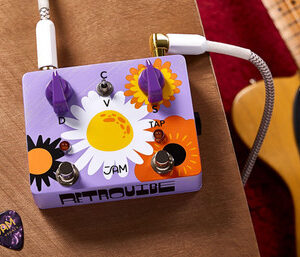
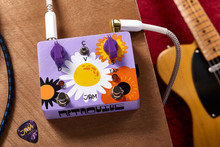

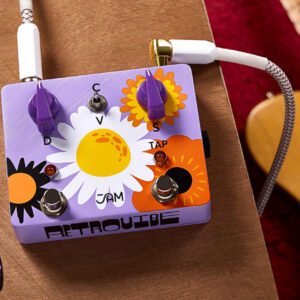
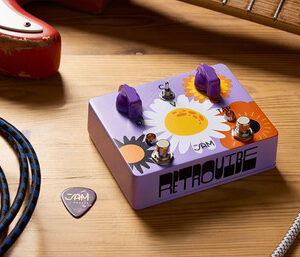
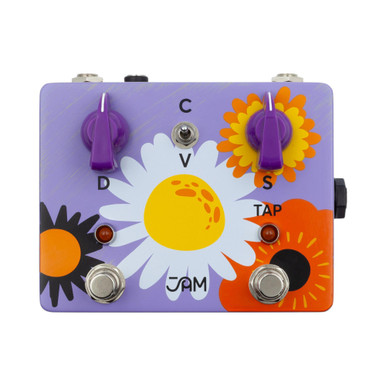
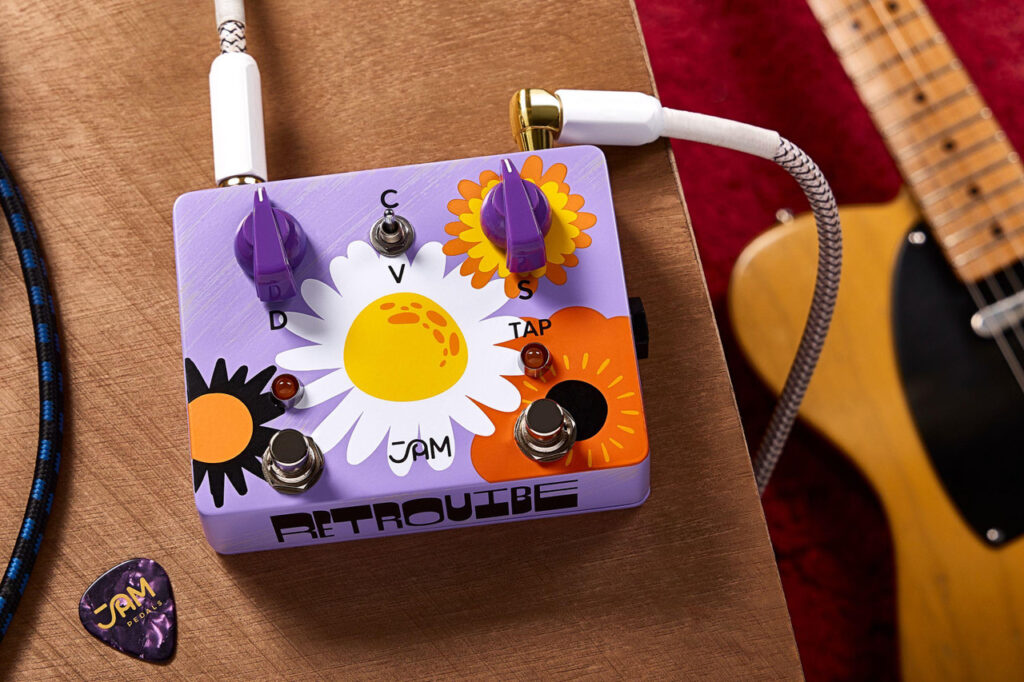
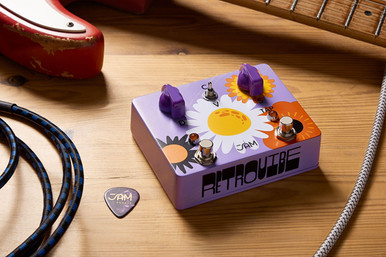
The Jam Pedals RetroVibe V4 is a premium, all-analogue Uni-Vibe style pedal that captures the iconic swirl, throb and vocal shimmer of the original units, while adding modern performance tools like tap tempo, ramping and expression control. From slow, syrupy pulses to fast, rotary-style spins, it delivers the unmistakable warmth and movement that defined countless classic records, now with far greater flexibility on your board.
Building on the reputation of its predecessors, the RetroVibe V4 widens the available Depth and Speed range so you can dial in everything from subtle movement to full-on psychedelic wobble. Chorus and Vibrato modes give you two distinct flavours of modulation, while the new tap tempo and ramping functions make it easy to match the effect to the song and add dynamic sweeps in real time. Plug in an expression pedal and you can even ride the speed like a vintage rotary cabinet.
Whether you are chasing authentic late-60s Uni-Vibe tones, adding a touch of movement to cleans, or creating dramatic, swirling soundscapes, the RetroVibe V4 gives you the sound and the control to do it with confidence. True bypass switching and a compact footprint make it a practical choice for any serious pedalboard, while its lush, organic modulation keeps you inspired every time you step on it.
Classic Uni-Vibe Character
The RetroVibe V4 is designed to sit proudly among the most revered Uni-Vibe interpretations, with a lush, three-dimensional modulation that feels vocal and alive under your fingers. Its all-analogue circuitry preserves the warmth, depth and musical movement players associate with the original units, making it ideal for everything from Hendrix-inspired leads to subtle, shimmering textures.
Chorus and Vibrato Modes
A dedicated toggle lets you switch between Chorus and Vibrato modes, dramatically expanding the pedal’s tonal palette. Chorus mode delivers the classic Uni-Vibe swirl that thickens and animates your core tone, while Vibrato mode removes the dry signal for a more pronounced pitch wobble that can range from gentle seasick sway to intense, psychedelic warble.
Tap Tempo and Ramping
The updated control set introduces tap tempo and a powerful ramping function, so you can set or change the modulation speed on the fly without touching the knobs. A prolonged press of the TAP footswitch engages ramping between your current speed and a user-defined target speed, with the travel time also user-adjustable. This makes it easy to create dramatic swells, slow-downs and speed-ups that follow the dynamics of your performance.
Expression and External Control
With dedicated TS and TRS inputs, the RetroVibe V4 integrates smoothly into more advanced setups. Use a standard passive 10k expression pedal to control Speed in real time, or connect an external tap tempo footswitch if you prefer to keep the pedal itself tucked away. An internal trimmer lets you fine-tune the maximum output level of the effect, helping you match levels precisely within your rig.
Key Features
- All-Analogue Uni-Vibe Style Circuit – The RetroVibe V4 retains a fully analogue signal path, delivering the organic warmth, depth and musical movement associated with vintage Uni-Vibe units. This gives you a rich, expressive modulation that responds naturally to your playing and sits beautifully in a mix.
- Chorus and Vibrato Modes – A simple toggle switch selects between Chorus and Vibrato, letting you move from classic, phasey swirl to more pronounced pitch modulation. This dual-voice design makes the pedal versatile enough for subtle ambience, lush cleans and bold, psychedelic lead tones.
- Tap Tempo with Ramping Function – The dedicated TAP footswitch allows you to tap in the modulation speed or engage a ramp between two user-defined speeds. Being able to control both the destination speed and the ramp time from the front panel gives you powerful, performance-ready control over how the effect evolves during a song.
- Expression and External Tap Inputs – Separate TS and TRS jacks support an external tap tempo switch and a standard passive 10k expression pedal for Speed. This means you can place the RetroVibe V4 anywhere on your board and still have hands-free access to tempo and real-time speed sweeps, ideal for expressive, rotary-style performances.
Specifications
General
- Type: Analogue Uni-Vibe style modulation pedal
- Bypass: True Bypass
- Modes: Chorus (C) / Vibrato (V)
Controls
- Depth: Sets the intensity of the modulation sweep
- Speed: Sets the rate of modulation
- Toggle Switch: Selects Chorus or Vibrato mode
- Internal Trimmer: Adjusts maximum output level of the effect
- Footswitches: ON footswitch, TAP footswitch (tap tempo and ramping)
Connectivity
- Input: 6.35 mm mono jack
- Output: 6.35 mm mono jack
- Expression / Control: TS jack for external tap tempo footswitch
- Expression / Control: TRS jack for Speed expression pedal (standard passive 10k)
Power
- Power Supply: 9V DC adaptor (tip-negative)
- Power Consumption: 120 mA (max)
- Power-On State: Selectable ON or OFF by inserting DC while holding ON footswitch
Performance
- Impedance: Input 67k, Output less than 10k
- LFO Range: Minimum 0.5 Hz, Maximum 9.5 Hz
Dimensions and Weight
- Dimensions: 12 × 10 × 5 cm (including jacks, pots and footswitches)
- Weight: 350 g