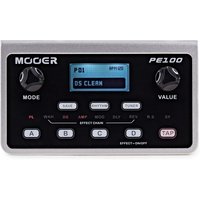
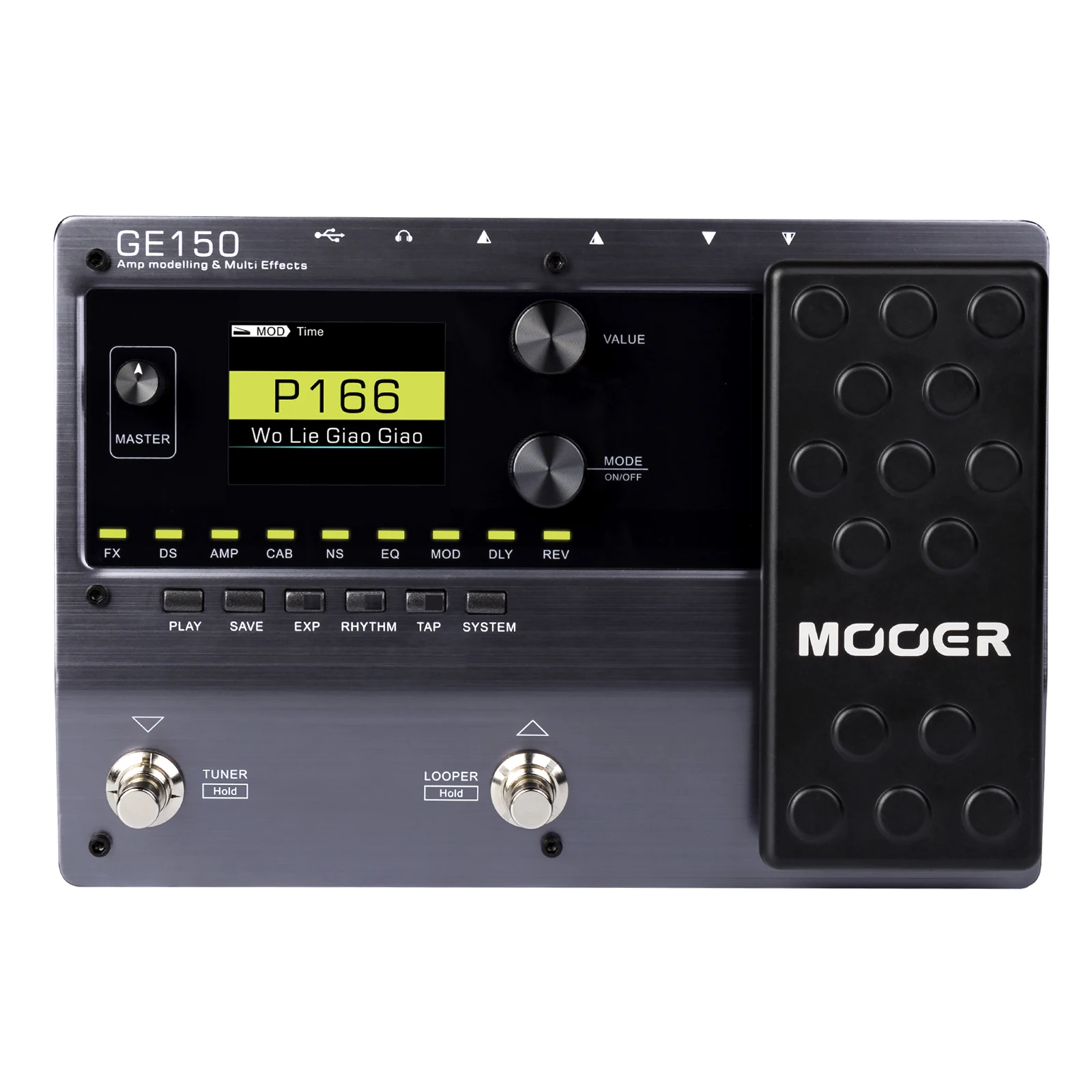
The Mooer PE100 Portable Multi Effects Processor is a compact pocket sized processor packed with thirty-nine effect types within six modules. Its module include amp distortion wah delay reverb and modulation. These can be selected using the mode control whilst its parameters within each of the modules can be shaped with the value control. Wanting More? The PE100 comes loaded with ninety-nine factory presets and has room for an extra ninety-nine user presets. Unlimited configurations and combinations to try. On top of that there is a quick recall button that allows you to save your favourite four presets quickly. The Mooer PE100 also has a handy tuner on-board and Tap Tempo functionality for use with the 40 drum rhythms and 10 metronomes. Everything you need in a compact design.
Mooer PE100 Portable Multi Effects Processor
This is a New Mooer PE100 Portable Multi Effects Processor from Mooer Audio its found in our Multi-Effects Pedals on the Just Pedals menu. Read More below.
As an affiliate partner, we may earn a small commission when you buy through our links — at no extra cost to you.
Related videos

Brand
Mooer Audio
In the current JustPedals catalogue, Mooer Audio is represented by Multi-Effects Pedals, Looper Pedals and Wah & Filter Pedals. Current listings include Baby Bomb 30, ABY and X2 Preamp. That makes the range relevant to players looking for drive, gain and clipping, plus time-based effects and ambience. Check each model for its exact circuit or processing platform, controls, power requirements and connections, particularly where the catalogue includes both pedals and supporting gear.
Category
Multi-Effects Pedals
A multi-effects processor combines several effect algorithms and signal-routing stages in one unit. Its sound depends not only on the individual models but on their order, parallel or serial routing, processing resolution and available control. Preset structure, switching gaps, foot control, expression assignment, amp or cabinet modelling, USB audio and MIDI determine how completely the processor can replace separate pedals.
Tags
Presets
Stores complete groups of parameter values for later recall. The number of locations, switching time, spillover behaviour and whether presets include routing, expression and MIDI assignments determine how completely one sound can change into another.
Tap Tempo
Measures repeated foot taps and converts their interval into an effect rate or delay time. Subdivisions translate that pulse into dotted, triplet or other rhythmic values, while averaging and range limits influence how quickly and accurately the tempo settles.
Others Just Ordered :
- I Love A Happy Accident… – Animals Pedal

- Animals Pedal Vintage Van Driving is Very Fun Overdrive
- Animals Pedal Sunday Afternoon Is Infinity Bender

- Ninevolt Pedals | Bath Time Reverb (Animals Pedal)
- This Fuzz Pedal Makes No Sense… But It Sounds Incredible

- ANIME Pedals | Animals Pedal Custom Illustrated Series