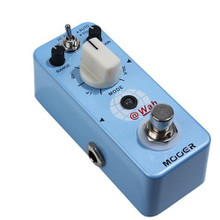
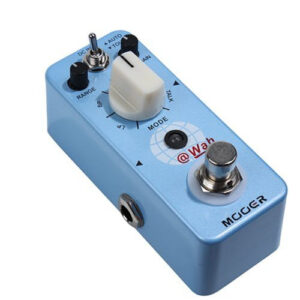
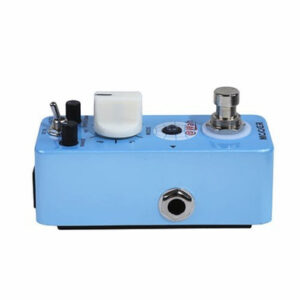
Mooer AT Wah Digital Auto Wah Pedal

£39.99

This is a New Mooer AT Wah Digital Auto Wah Pedal from Mooer its found in our Wah & Filter Pedals on the Just Pedals menu. Read More below.

View Just
more
and ,

Here's what Mooer have to say about the @Wah:
 

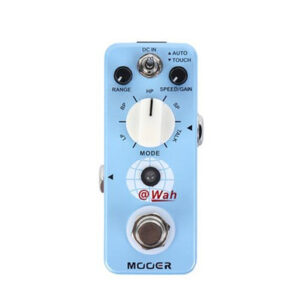
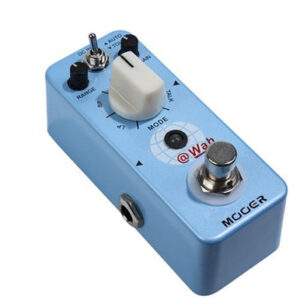
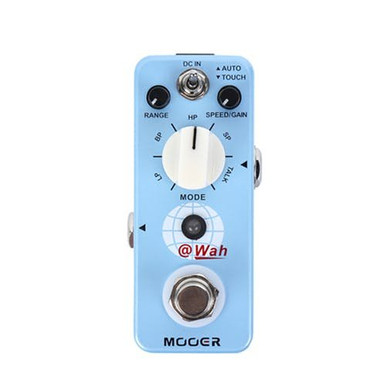
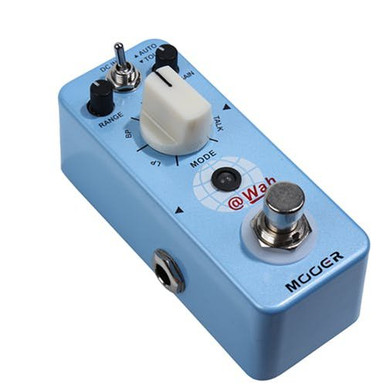
@WAH brings together 4 very different Wah sounds and a cool Talk effect into one small pedal. It has two main modes of operation; Auto which is time based and Touch which responds to the dynamics of the musicians instrument. The 3 controls provide great manipulation of the tonal qualities of the pedal.

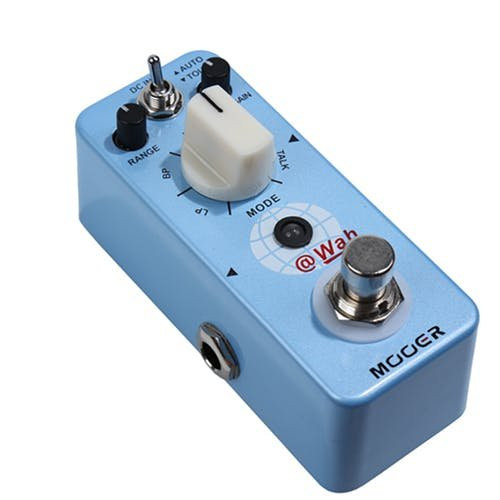
Operation method switch: 'AUTO' is a time based filter. 'Touch' responds to the dynamics of the instrument.

MODE control: Selects the filter mode and simultaneously adjusts the MIX and ATTACK of the filter.

The 5 filter modes are listed below:
LP (Low pass)
BP (bandpass)
HP (high pass)
SP (Standard)
TALK (vocal)

RANGE:Adjusts the tonality of the filter

SPEED / GAIN: Adjusts the rate of the 'AUTO' wah or the input response of the 'TOUCH' wah

Specification:

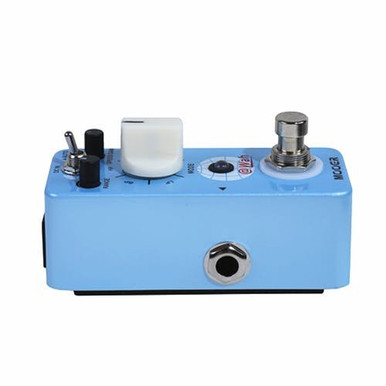
  • Input:1/4” mono audio jack.(Impedance: 470k Ohms)
  • Output:1/4” mono audio jack(Impedance: 100 Ohms)
  • Power requirements: AC adapter 9V DC ,center negative. Highly
  • recommend to use Mooer Micro Power.
  • Current Draw: 120mA
  • Dimensions:93.5mm(D) x 42mm(W) x 52mm(H)
  • Weight:140g

Related videos

Brand

Mooer

MOOER entered the music-gear market in 2010 with miniature guitar effects pedals, conceived by four music-and-technology enthusiasts in Shenzhen, China. The company later expanded into preamp pedals, amp modelling, impulse-response loaders and multi-effects, including the GE200 and RADAR IR Loader. JustPedals listings show the compact effects side of the range: Reecho digital delay, Green Mile overdrive, Liquid Phaser, Triangolo tremolo and Pure Boost. MOOER’s small enclosures are a design choice, not a guide to how much control a model offers; check its modes, switching and power needs individually.

Category

Wah & Filter Pedals

Wah effects sweep a resonant band-pass or related filter through the frequency spectrum, creating the vowel-like movement associated with the treadle. Envelope filters move automatically in response to picking level, while fixed and sequenced filters use other control sources. Sweep range, resonance, direction, sensitivity and input loading determine whether the response is vocal, percussive, smooth or sharply synthetic.

Tags

Digital

Converts the signal or control process into numerical data for algorithmic processing. Digital designs can provide precise timing, long memory, complex routing and repeatable presets; sample rate, conversion, internal resolution and latency influence fidelity and response.

Vocal

Designed for microphone-level signals and the frequency, dynamics and feedback behaviour of the human voice. Input gain, balanced connections, phantom power and pitch tracking may be provided so effects respond correctly before the signal reaches a mixer or PA.