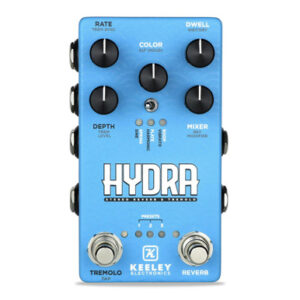
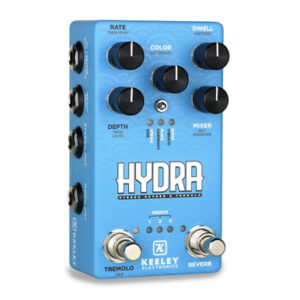
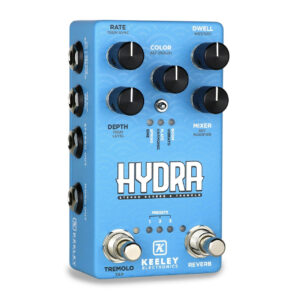
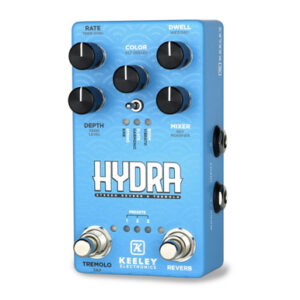
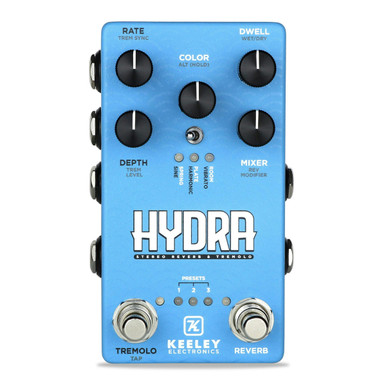
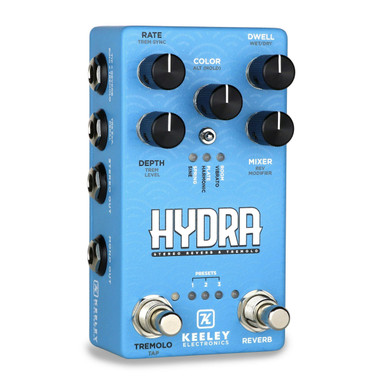
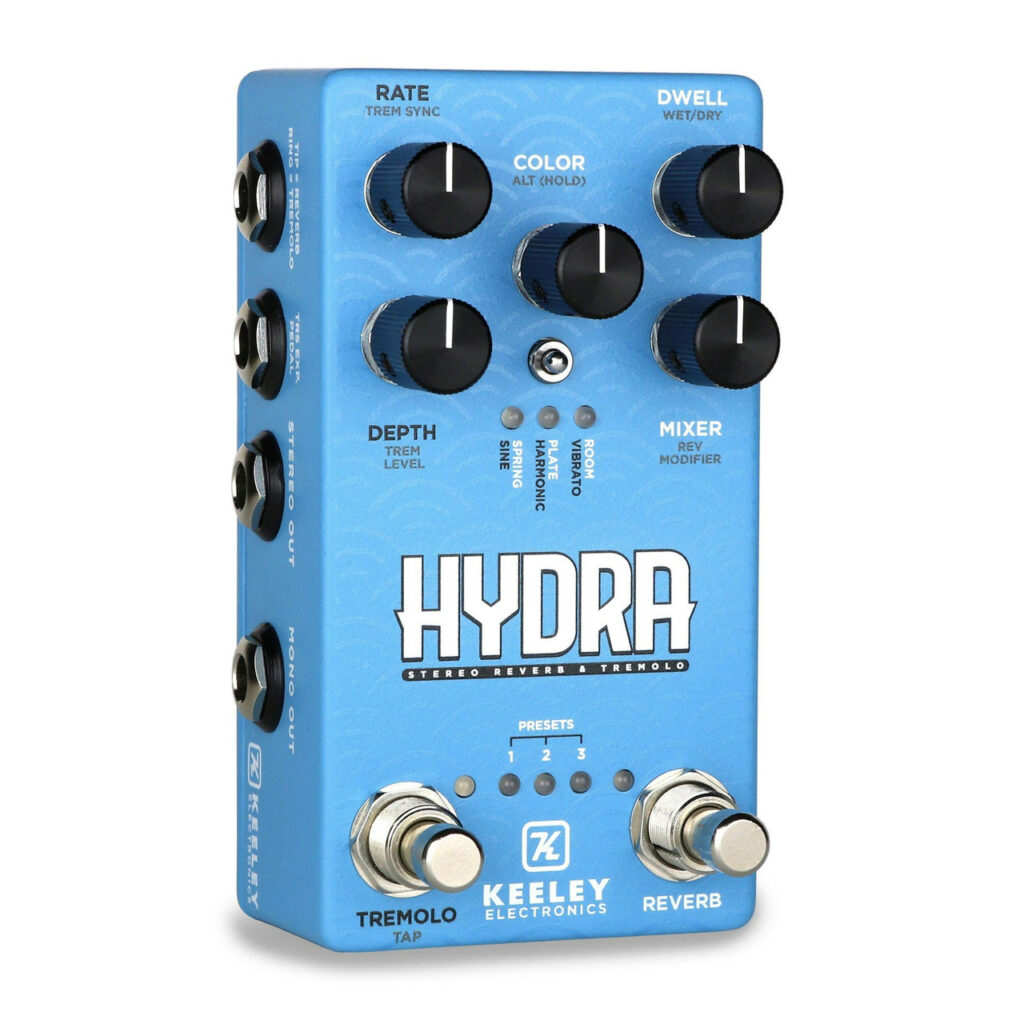
Brand
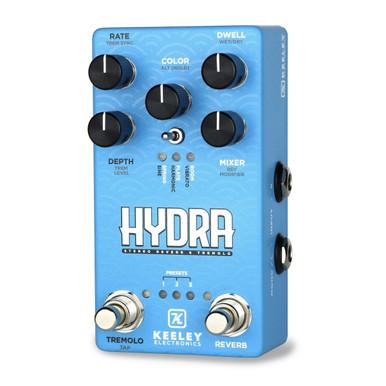
Keeley Electronics is a prominent American manufacturer of guitar effects pedals, founded in 2001 by Robert Keeley. The company has established a strong reputation in the boutique pedal industry through its focus on precision engineering and high-quality audio performance.
Keeley is renowned for its active and passive pedal designs, including iconic models like the Katana Blues Driver, the Compressor Plus, and the Delay Workstation. Keeley’s pedals are distinguished by their meticulous craftsmanship, innovative circuit designs, and reliability.
The company’s products often incorporate advanced features such as flexible EQ controls, analogue and digital hybrid processing, and extensive tone-shaping capabilities, making them favoured by both professional and amateur guitarists seeking exceptional sound quality and versatile performance.
Category
Keeley Electronics is a prominent American manufacturer of guitar effects pedals, founded in 2001 by Robert Keeley. The company has established a strong reputation in the boutique pedal industry through its focus on precision engineering and high-quality audio performance.
Keeley is renowned for its active and passive pedal designs, including iconic models like the Katana Blues Driver, the Compressor Plus, and the Delay Workstation. Keeley’s pedals are distinguished by their meticulous craftsmanship, innovative circuit designs, and reliability.
The company’s products often incorporate advanced features such as flexible EQ controls, analogue and digital hybrid processing, and extensive tone-shaping capabilities, making them favoured by both professional and amateur guitarists seeking exceptional sound quality and versatile performance.
Tags
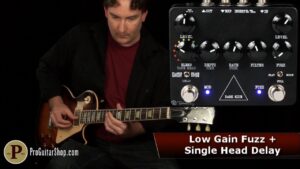
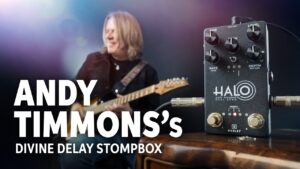
A delay pedal records your signal and plays it back after a set time, creating echoes that can range from tight, slapback repeats to long, atmospheric trails. It’s one of the most versatile effects, used to thicken tones, add rhythmic depth, or build spacious, ambient layers. Analogue delays offer warm, decaying repeats that blend naturally with your tone, while digital units provide pristine echoes with precise control over time, feedback, and mix levels.
From classic rockabilly and tape-style echoes to modern looping and shimmer effects, delay pedals have become essential tools for shaping sound. They can make solos soar, rhythms pulse, or transform simple chord progressions into cinematic textures. Whether used subtly to add dimension or boldly to create soundscapes, a good delay pedal can completely redefine the feel and atmosphere of your music.
Expression pedals allow real-time control over specific parameters on compatible guitar pedals, such as volume, delay time, modulation depth, or filter sweep. Used with an expression input, they let players shape effects dynamically with their foot, adding movement and performance control that cannot be achieved with fixed knob settings.
Your pedal is like a signature dish for your sound — a flavour-packed creation that transforms the bland ingredients of your guitar into something unforgettable. Each one adds its own seasoning, texture, and heat, turning a simple meal into a feast of tone.
These tasty little boxes sit in a row, like plates on a buffet, letting you mix and match flavours as you play. With one tap of your foot, you can swap sweet for spicy, subtle for smoky, and serve up something completely new. From the comfort food of warm overdrive to the fiery kick of fuzz, from smooth jazz sauce to heavy-metal spice, pedals give players a full menu of options to express their taste. And just like with food, once you’ve tried one dish, you’ll want to sample them all.
Collecting, trading, and discovering new flavours soon becomes part of the joy of being a tone-loving gourmet geek with a guitar.
A looper pedal records and plays back sections of your playing, allowing you to layer sounds and build full arrangements on your own. By capturing short or long phrases, you can create rhythm parts, harmonies, or entire backing tracks in real time. Most loopers offer basic controls for record, overdub, and playback, while advanced models include multiple tracks, tempo syncing, and memory storage for saving your loops.
Loopers are invaluable for practice, songwriting, and live performance. They help you explore ideas, refine timing, and experiment with textures — from solo acoustic performances to complex ambient soundscapes. A good looper pedal becomes an instrument in itself, letting you improvise, arrange, and perform with creativity and freedom, turning one guitar into an entire band.
This is brand new, fresh in, and a UK warranty is included. New Gear always comes from trusted UK music retailers.
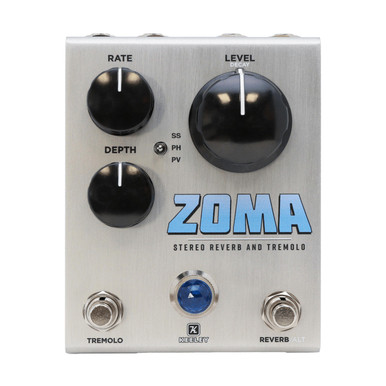
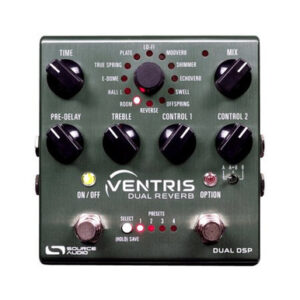
A reverb pedal is like the rich sauce that ties every flavour on the plate into one smooth experience. It adds depth, warmth, and atmosphere — the sonic equivalent of a perfectly reduced glaze that lingers on the tongue. Whether you’re after the subtle ambience of a cosy café (spring or plate reverb) or the grand echoes of a cathedral (hall or shimmer reverb), this is where your tone breathes and expands. A touch of reverb can turn a dry sound into something lush and inviting — but pour on too much, and it’s all you can taste. Used with finesse, it’s the finishing touch that transforms your tone from plain to unforgettable.
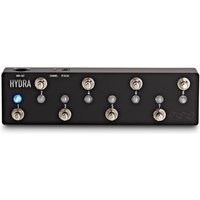
Switcher refers to a guitar pedal or pedalboard unit that allows multiple pedals or signal paths to be controlled from a single device. A switcher can turn several pedals on or off at once, change signal order, or recall preset combinations, helping players manage complex pedal setups cleanly and reliably, especially in live situations.
A synth pedal transforms your guitar signal into rich, layered tones that mimic the sounds of a synthesiser. Using pitch tracking and waveform generation, it can produce everything from deep bass lines to shimmering pads and futuristic leads. Synth pedals open up a wide creative range, blending the expressiveness of guitar playing with electronic textures, making them ideal for experimental sounds, ambient music, or adding a modern edge to classic riffs.
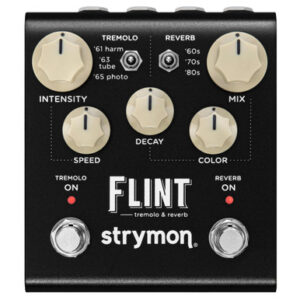
A tremolo pedal modulates the volume of your guitar signal up and down in a rhythmic pattern, creating a pulsing or wavering effect that can sound vintage and hypnotic or sharp and choppy depending on the settings. It’s one of the oldest effects in guitar history, famously used on classic amps from the 1950s and ’60s.
Most tremolo pedals let you control the speed, depth, and wave shape, allowing you to go from smooth, subtle swells to intense stuttering tones. It’s a simple but expressive effect that adds movement and character to your sound.
Vibrato refers to a guitar pedal effect that modulates pitch slightly up and down, creating movement and a sense of wobble in the sound. Unlike tremolo, which changes volume, vibrato affects pitch only, producing anything from subtle shimmer to pronounced, warbling textures. It is often used to add character, depth, and vintage-style modulation to guitar tones.