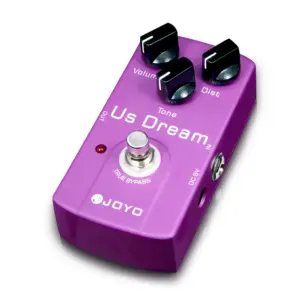
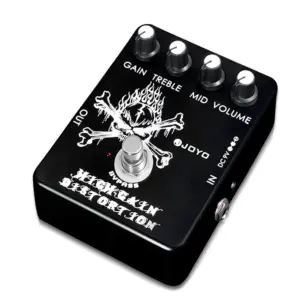
Brand
JOYO Technology is a Shenzhen music-gear company whose range goes well beyond stompboxes. Its official catalogue covers guitar and bass amplifiers, acoustic and busking amps, effects, power supplies, interfaces, wireless systems and accessories. JOYO also says it develops acoustic-core technology and has applied for utility patents. JustPedals listings include the JF-21 Splinter distortion and JF-319 Green Legend overdrive, alongside mini amps and power adapters. That breadth matters when comparing products under the JOYO name: some are effects, while others support the rest of a guitar or bass rig.
Category
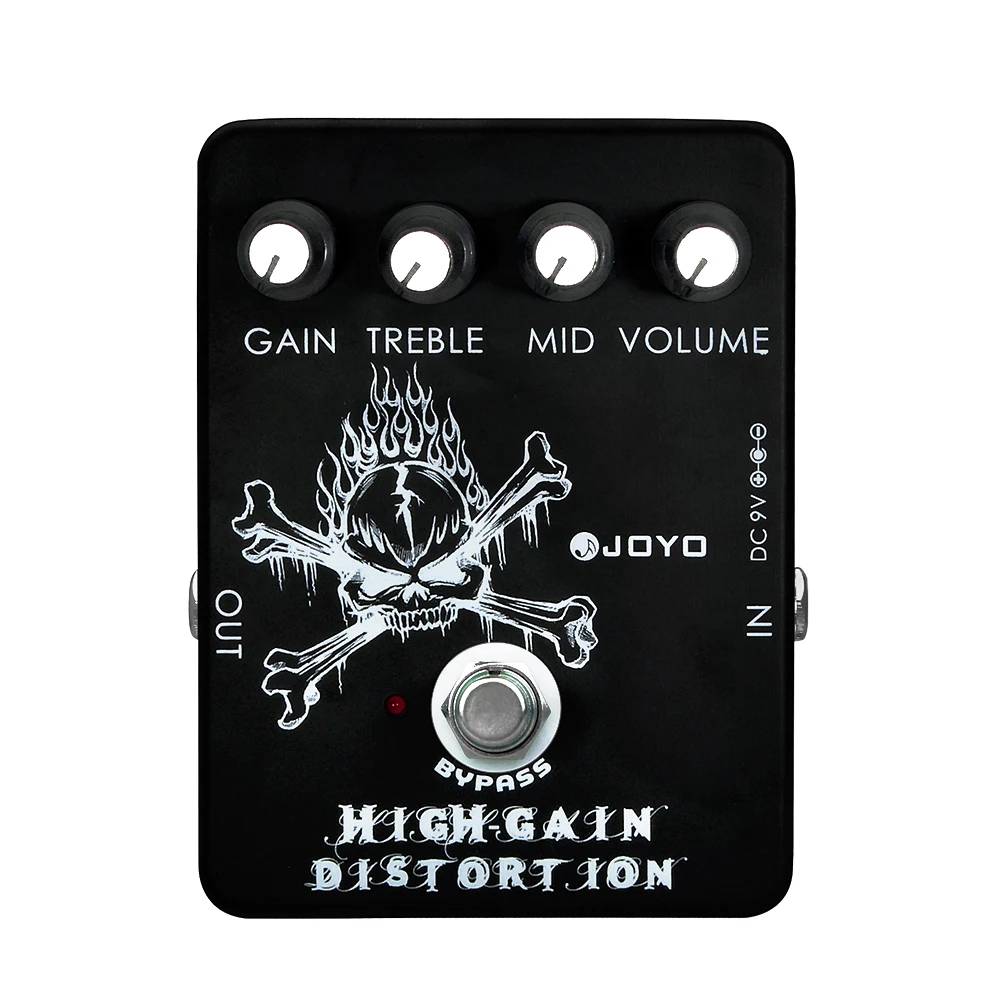
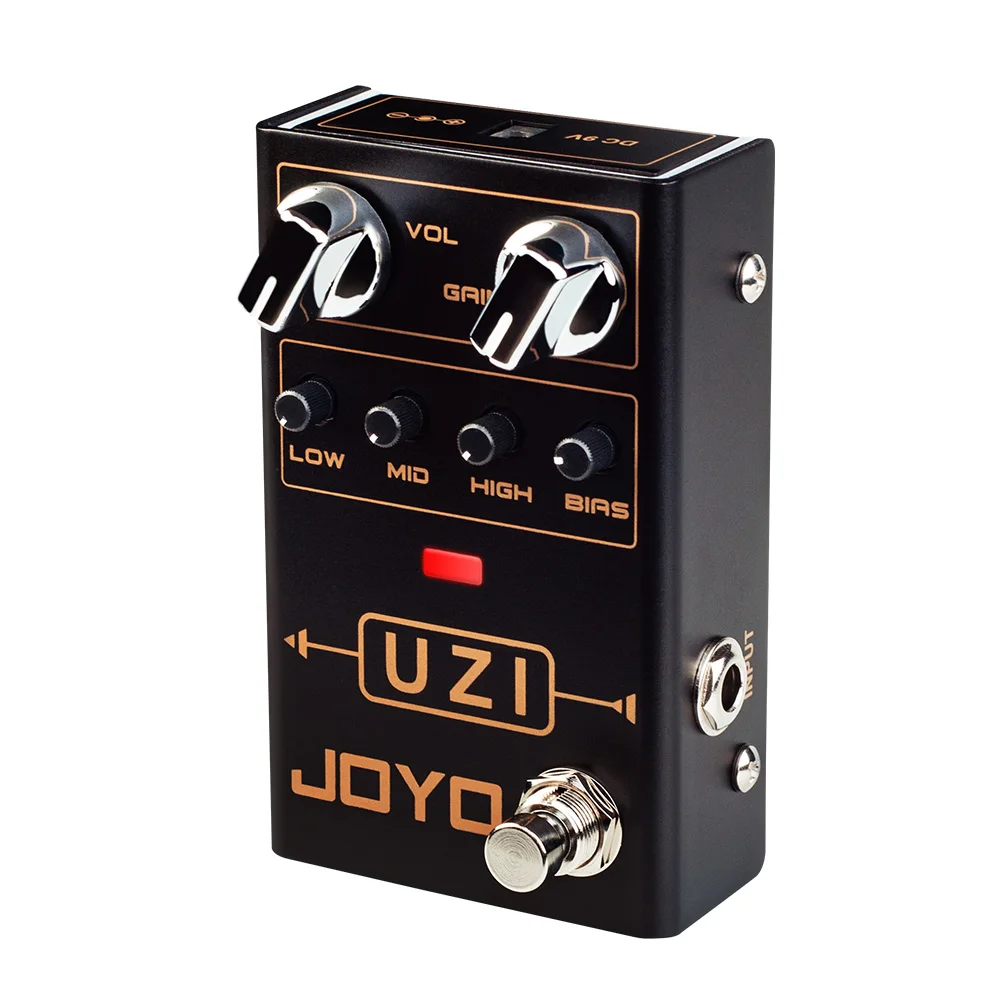
Distortion clips the waveform more firmly than overdrive, generating dense upper harmonics, longer sustain and a more compressed response. Circuit topology and filtering decide whether the sound is tight and focused, broad and aggressive, smooth or deliberately abrasive. Gain sets the amount of clipping, while pre- and post-distortion tone controls strongly influence low-end definition, midrange presence and high-frequency texture.
Tags
The signal is shaped by continuously varying electronic circuitry rather than being converted into a digital effect algorithm. Component choice, operating voltage and circuit tolerances influence headroom, noise, clipping texture and the small variations in response between designs.
Raises or lowers defined frequency regions. Fixed-band graphic controls provide direct visual shaping, while parametric controls vary centre frequency and bandwidth; the available range and filter width determine whether the change is broad tonal balance or narrow corrective filtering.