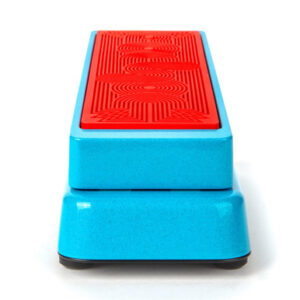
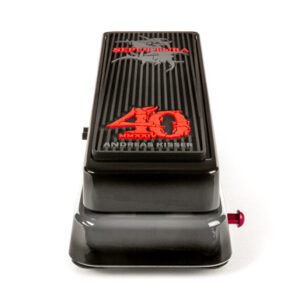
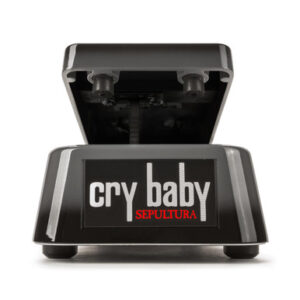
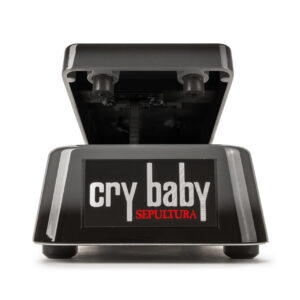
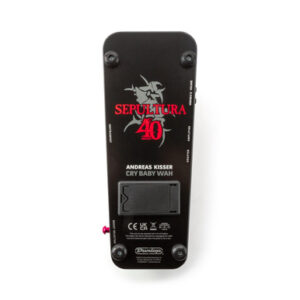
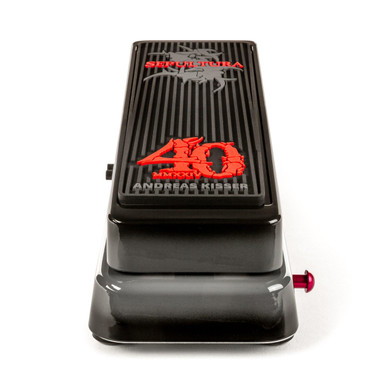
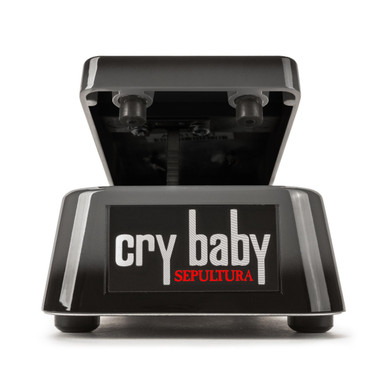
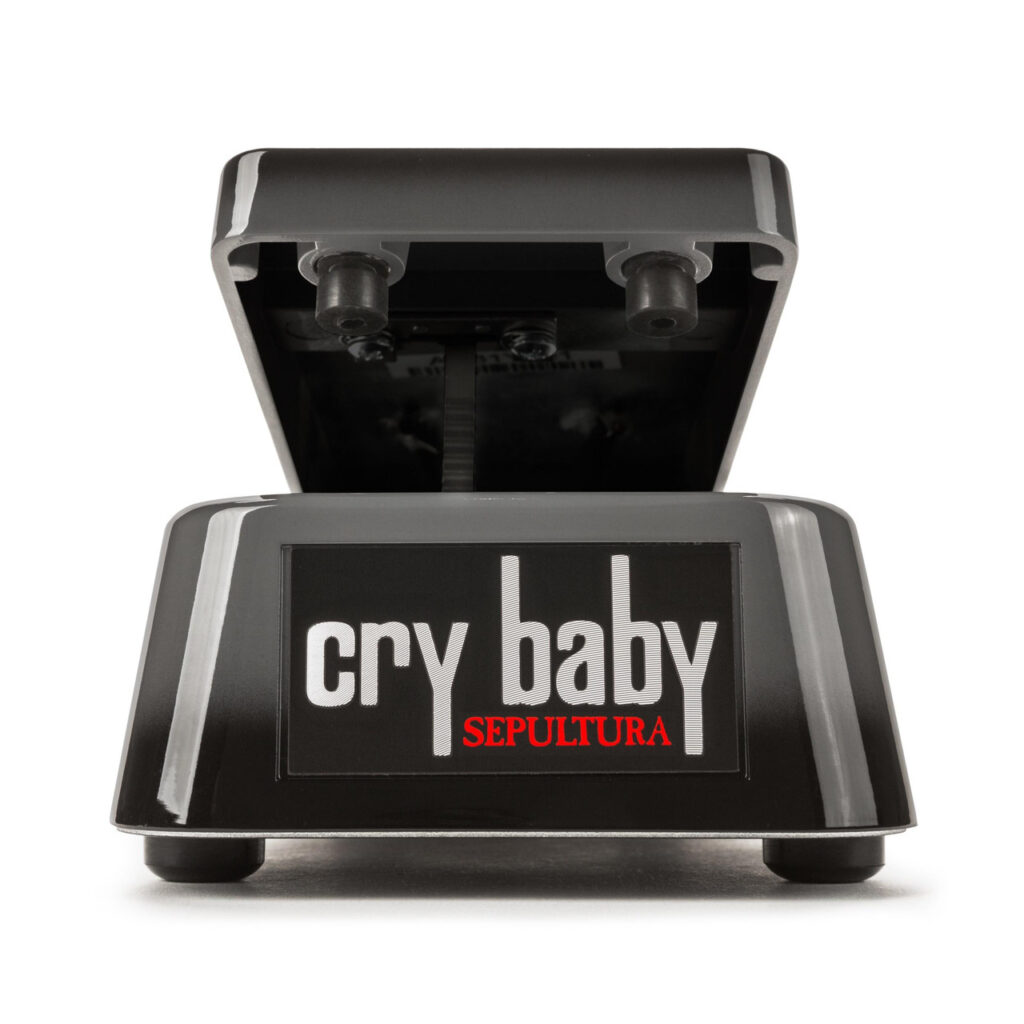
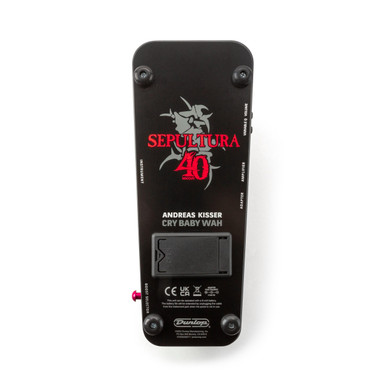
Jim Dunlop Sepultura 40th Anniversary Cry Baby Wah Pedal

£209.00

This is a New Jim Dunlop Sepultura 40th Anniversary Cry Baby Wah Pedal from Jim Dunlop its found in our Wah & Filter Pedals on the Just Pedals menu. Read More below.

View Just
more

Celebrating Sepultura’s 40th anniversary and farewell tour, this limited edition Cry Baby was a collab between Dunlop and iconic wah-wah master Andrea Kisser. Used on some of their biggest hits, such as Resist/Refuse and Roots Bloody Roots, the Cry Baby has been an integral part of their groundbreaking sound.

Operating the Andreas Kisser Cry Baby Wah is straightforwardly simple and devastatingly effective at delivering the expressive energy that Andreas brings to bear. First, auto-return switching allows him to stomp in and out of the effect at will. Next, the Boost switch kicks in up to +15dB of gain as set by the Volume knob, and the Variable Q knob shapes the intensity of the wah effect from a a narrower bandpass to emphasize higher end harmonics to a wider bandpass that emphasizes lower end harmonics.

Get the Sepultura 40th Anniversary Edition of the Andreas Kisser Cry Baby Wah, and honor the epic contributions of one of metal’s greatest bands.
Related videos

Brand

Jim Dunlop

In the current JustPedals catalogue, Jim Dunlop is represented by Wah & Filter Pedals, Fuzz Pedals and Volume Pedals. Current listings include MXR GT Overdrive, DVP4 Volume X Mini and Slash Wah. That makes the range relevant to players looking for drive, gain and clipping, plus time-based effects and ambience. Check each model for its exact circuit or processing platform, controls, power requirements and connections, particularly where the catalogue includes both pedals and supporting gear.

Category

Wah & Filter Pedals

Wah effects sweep a resonant band-pass or related filter through the frequency spectrum, creating the vowel-like movement associated with the treadle. Envelope filters move automatically in response to picking level, while fixed and sequenced filters use other control sources. Sweep range, resonance, direction, sensitivity and input loading determine whether the response is vocal, percussive, smooth or sharply synthetic.