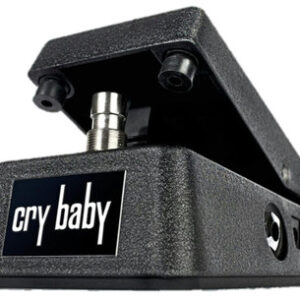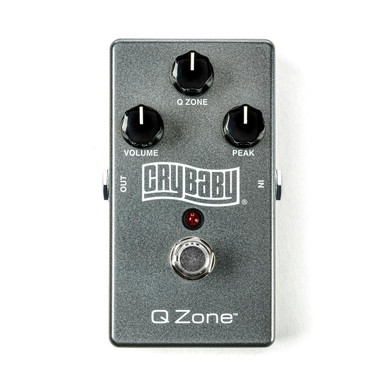
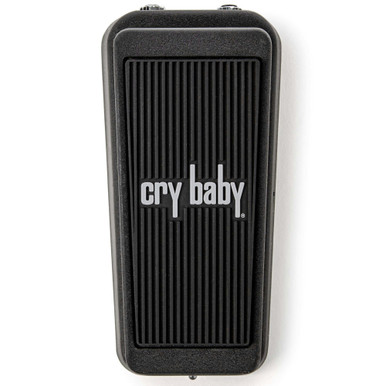
Jim Dunlop QZ1 Cry Baby Q Zone

£169.99

This is a New Jim Dunlop QZ1 Cry Baby Q Zone from Jim Dunlop, listed in Wah & Filter Pedals on Just Pedals. Read More below.

View Just
more

Here's what Jim Dunlop say about the Crybaby Q Zone pedal

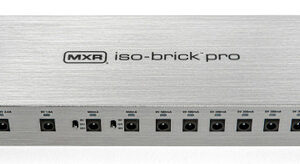
Get the rich, resonant vocality of a fixed-position Cry Baby Wah in a standard pedal box with this reissue of the Cry Baby Q Zone Fixed Wah. This pedal can be powered by a 9-volt battery, a Dunlop ECB003 9-volt adapter, or the DC Brick™, Iso-Brick™, and Mini Iso-Brick™ power supplies (not included).

Now you can get the rich, resonant vocality of a fixed-position Cry Baby Wah in a standard pedal box. With this reissue of the Cry Baby Q Zone Fixed Wah, there's no need to mess around with the rocker and try to listen for the sweet spot every time you go onstage. Like the Cry Baby 95Q Wah, this pedal allows you to boost your effect signal and adjust the bandpass shape from wide to narrow with the Volume and Q Zone controls respectively. The Peak control acts like the rocker pot of a wah pedal, setting the frequency center of the effect exactly where you want it so that you don't have worry about bumping the rocker and losing your position. Find your sweet spot and start jamming.
Related videos

Brand

Jim Dunlop

In the current JustPedals catalogue, Jim Dunlop is represented by Wah & Filter Pedals, Fuzz Pedals and Volume Pedals. Current listings include MXR GT Overdrive, DVP4 Volume X Mini and Slash Wah. That makes the range relevant to players looking for drive, gain and clipping, plus time-based effects and ambience. Check each model for its exact circuit or processing platform, controls, power requirements and connections, particularly where the catalogue includes both pedals and supporting gear.

Category

Wah & Filter Pedals

Wah effects sweep a resonant band-pass or related filter through the frequency spectrum, creating the vowel-like movement associated with the treadle. Envelope filters move automatically in response to picking level, while fixed and sequenced filters use other control sources. Sweep range, resonance, direction, sensitivity and input loading determine whether the response is vocal, percussive, smooth or sharply synthetic.