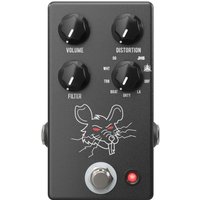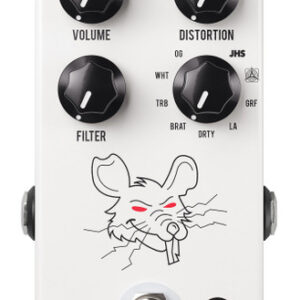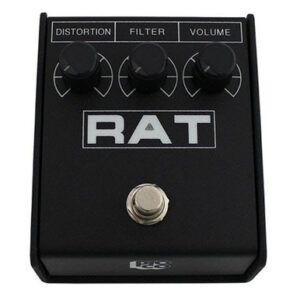
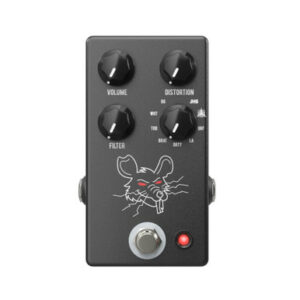
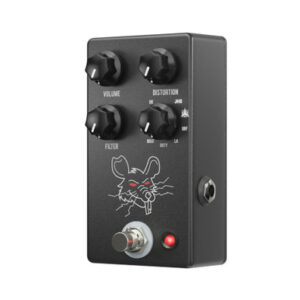
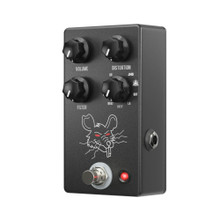

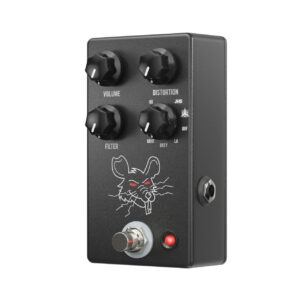
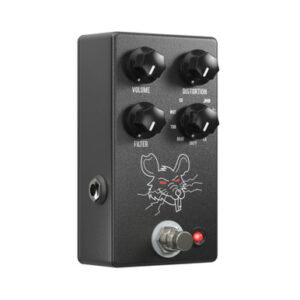
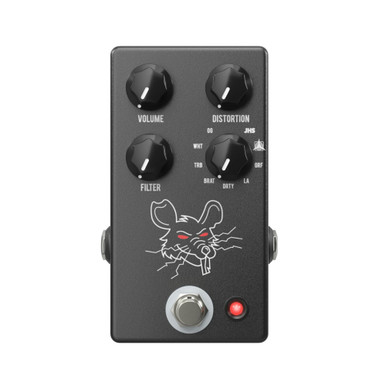
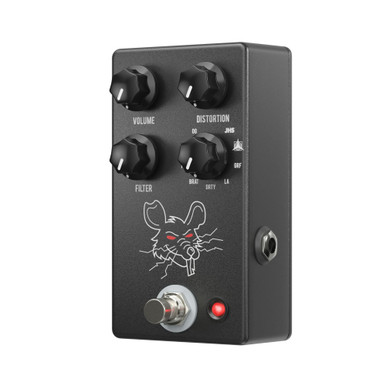
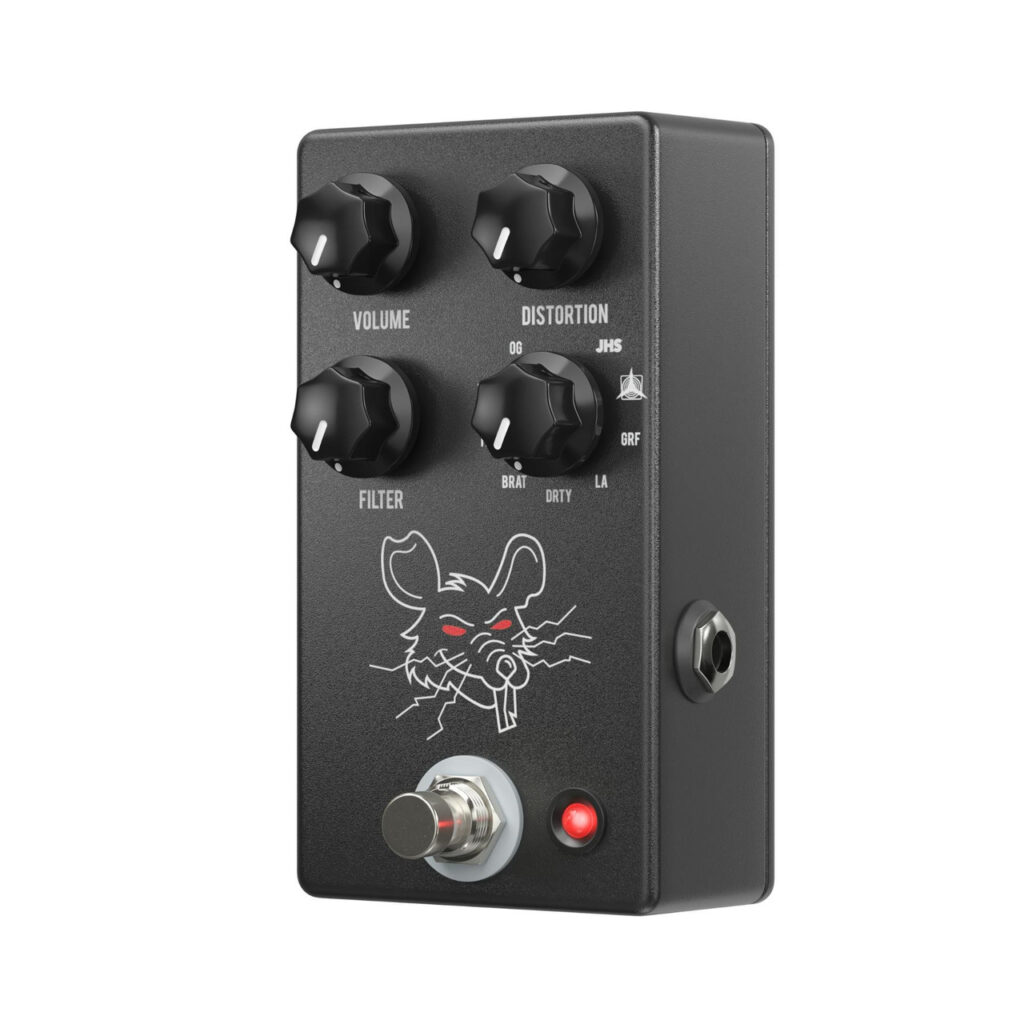
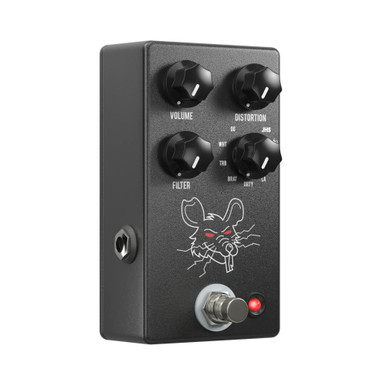
The JHS Packrat is the ultimate tribute to one of the most versatile and influential distortion pedals of all time…the mighty ProCo RAT! JHS tracked down and studied 45 different RAT specimens and interviewed numerous ProCo employees about the circuit design, evolution and production of the RAT over the years. The result is an all new pedal loaded with nine, that’s NINE different RAT modes ranging from the original circuit to JHS’s own take on the legendary stompbox.
Analogue Circuits
Featuring 100% analogue circuits, each of the nine modes perfectly recreates the respective RAT pedals on which they are based, even down to the aging components (also known as component drift). If you purchased these nine hard-to-find pedals on the used market today, you would be several thousand pounds out of pocket without breaking a sweat, so the Packrat represents incredible bang for your buck!
9 Modes
In the forty plus years since the original RAT was released, the iconic distortion pedal has been through a number of changes. The Packrat features nine independent circuits based on various RAT pedals and modded units from over the decades.
- The OG (1979-83) – The OG mode is a perfect recreation of the first production RATs ever made. This era of roughly four years covers what is referred to historically as the V1 and V2 models.
- White Face V3 (1984-1986) – In 1984, the RAT transitioned into a smaller “square” enclosure with a new white rectangle logo. The word RAT was in all black caps inside the white rectangle; this model gained the “White Face RAT” nickname due to this aesthetic.
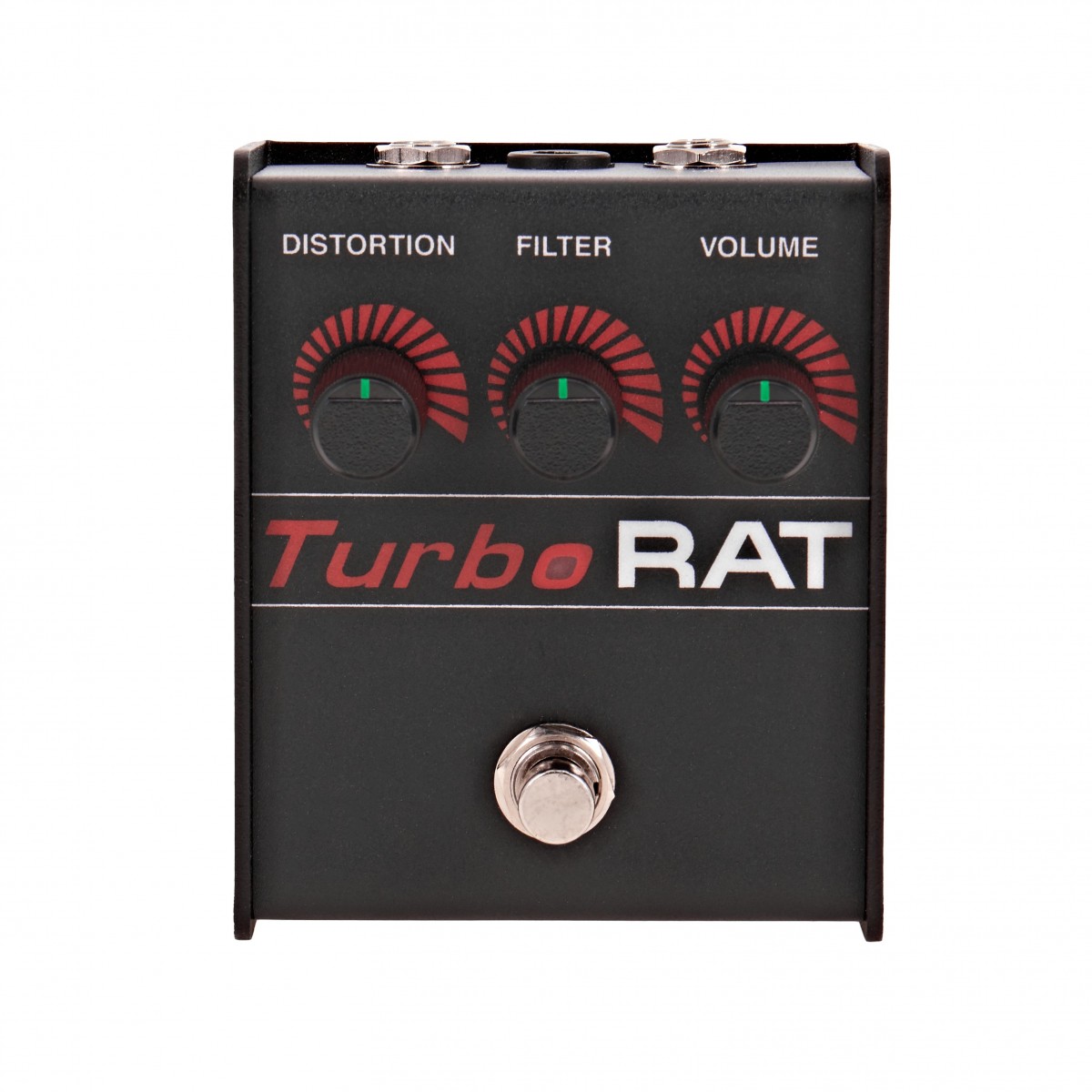
- Turbo V6 (1989) – The heart of the RAT’s tone comes from a design technique called “Symmetrical Hard Clipping.” In this approach, a simple amplifier circuit amplifies the guitar’s signal and pushes it across a pair of clipping diodes. The result is that these diodes clip off the top of the waveform of the guitar and create a type of square wave distortion.
- BRAT (1997) – In 1997 ProCo got into the budget pedal game by releasing the BRAT which added an input buffer circuit and soft clipping (inside the loop of the op amp) on top of the standard hard clipping of the previous RATs.
- Dirty (2004) – In 2002, ProCo released a 2-in-1 RAT pedal called the Deucetone. This pedal allowed you to have two completely separate RATs and activate them independently or stack them together. It also introduced two brand new sounds into the RAT topology: “Clean RAT” mode and “Dirty RAT.”
- LA (1986) – In 1986, Ibanez released the “10 Series” line of pedals that featured three RAT style pedals including the “LA Metal”. It includes a great input buffer, several key capacitor changes for frequency response, and no clipping diodes at all. The distortion is produced by overloading or “clipping the rails” of the op amp.
- Landgraff MO’D (1999) – Between 1999-2000, John Landgraff started building pedals by hand in Pensacola, FL. One of his most popular pedals was the “MO’D,” a distant cousin of the RAT and a really fantastic pedal in its own right.
- Caroline (2010) – Shortly after forming JHS, Josh Scott purchased a fascinating distortion pedal from a brand new company in South Carolina. That pedal was called the Wave Cannon and was designed by Philippe Herndon. The “Caroline” mode is his take on the classic RAT circuit.
- JHS Mode – Whilst working in a tiny guitar shop in Northwest Alabama, Josh acquired a vintage “small-box” RAT which later inspired him to start modding and building pedals. The “JHS Mode” is based around the “PackRat” modification that was performed on thousands of RAT pedals from 2008-2018. In Josh’s words…”The JHS Mode lets me keep what makes the RAT unique and add in a few of my personal favorurite mods…”