
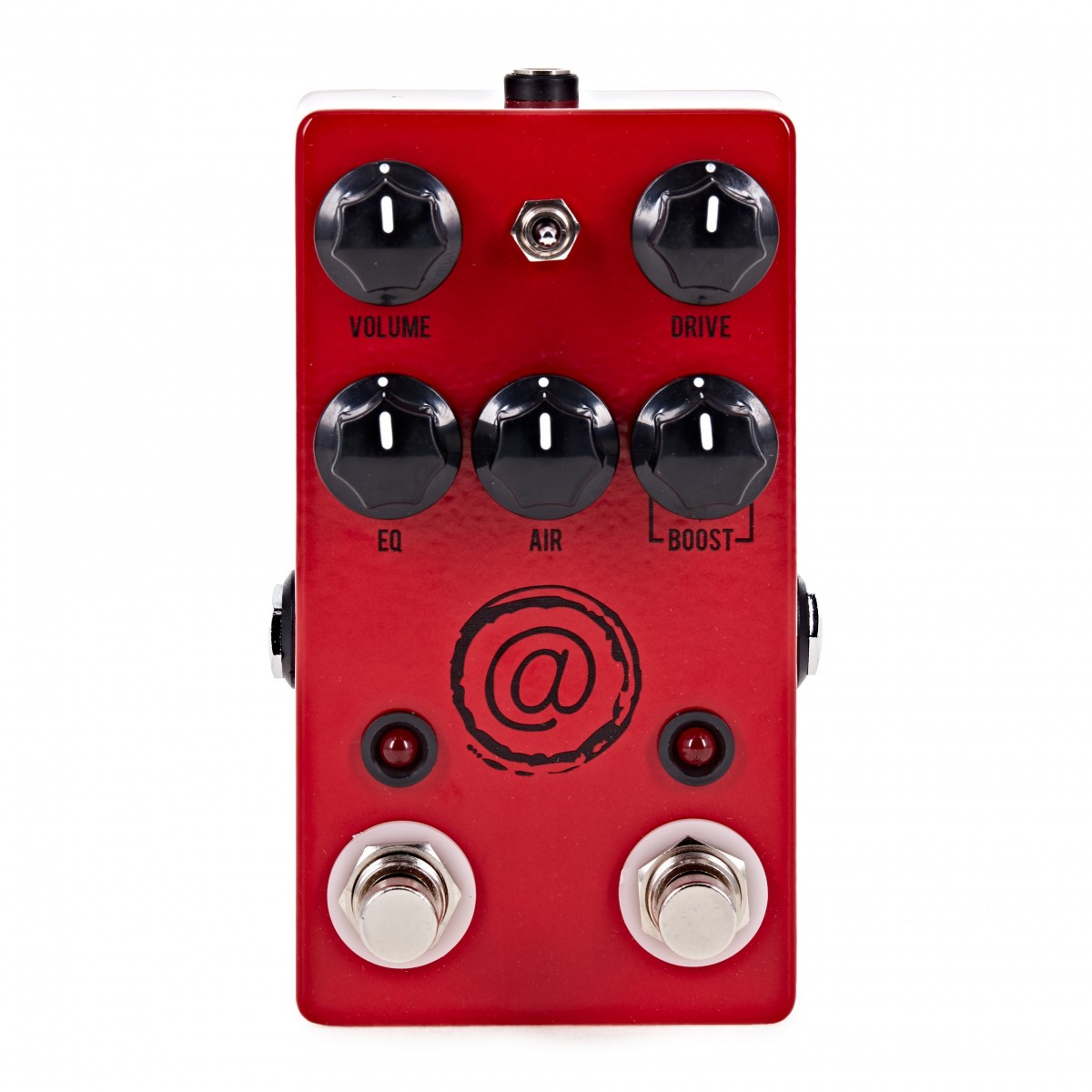
The JHS Pedals AT + Andy Timmons Signature Drive is a pedal that takes the popular JHS AT and adds a new independent boost for even more versatile functionality. The original AT pedal delivered Andy Timmons signature overdrive sound characterized in his unmistakable lead and rhythm tones. This initial pedal was based on the JHS Angry Charlie and now JHS has improved at the AT pedal design even further in the AT+ with an independent boost circuit – effectively contributing three additional sounds to your current rig (overdrive/boost/overdrive + boost). The AT+ has a versatile range of tone shaping controls along with a highly musical overdrive circuit to create soaring lead tones and powerful rhythm sounds. It also has a mini toggle letting you choose the wattage mode; this simulates the break-up and compression characteristics of a 25/50/100-watt valve amplifier with their varying degrees of headroom. The AT+ packs this wealth of features into a compact and road-worthy chassis making it a portable and powerful choice for your overdrive needs.
JHS Pedals AT+ Andy Timmons Signature Drive
This is a New JHS Pedals AT+ Andy Timmons Signature Drive from JHS Pedals, listed in Specialist Effects Pedals on Just Pedals. Read More below.
As an affiliate partner, we may earn a small commission when you buy through our links — at no extra cost to you.
Related videos



Brand
JHS Pedals
JHS Pedals grew from Josh Scott’s pedal-modification work in 2007 into a Kansas City effects maker. Scott’s first original designs followed in 2008; the Morning Glory began as his reinvention of the Marshall Bluesbreaker. The JustPedals catalogue carries the Morning Glory V4 and Muffuletta, along with practical tools such as the Little Black Buffer, Buffered Splitter and Little Black Amp Box. JHS describes its guitar pedals as made in Kansas City, USA. The range mixes original drive and fuzz designs with utility pedals, so the current listings show more than a single “boutique overdrive” identity.
Category
Specialist Effects Pedals
Specialist effects alter the signal in ways that do not sit cleanly inside one established family. They may use granular processing, frequency shifting, resonators, freeze or sustain, bit reduction, ring modulation, feedback networks or combinations of several techniques. The relevant distinction is the underlying process, its tracking or latency, and how completely the dry signal can be blended or replaced.
Others Just Ordered :
- I Love A Happy Accident… – Animals Pedal

- Animals Pedal Vintage Van Driving is Very Fun Overdrive
- Animals Pedal Sunday Afternoon Is Infinity Bender

- Ninevolt Pedals | Bath Time Reverb (Animals Pedal)
- This Fuzz Pedal Makes No Sense… But It Sounds Incredible

- ANIME Pedals | Animals Pedal Custom Illustrated Series