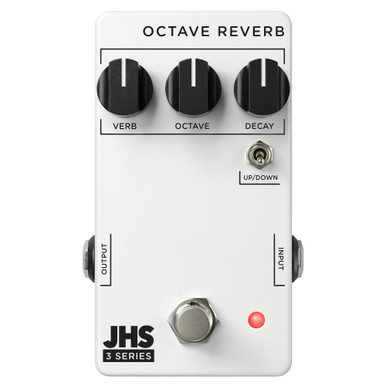
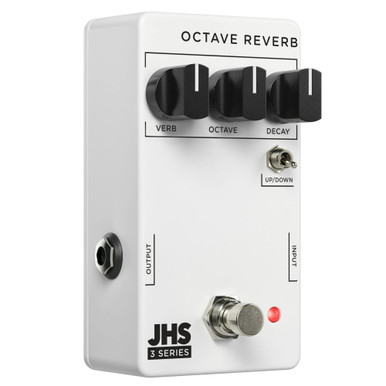
JHS 3 Series Octave Reverb Pedal

£89.99

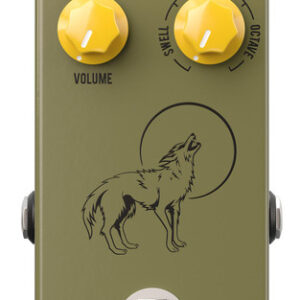
This is a New JHS 3 Series Octave Reverb Pedal from JHS Pedals, listed in Octave Pedals on Just Pedals. Read More below.

View Just
more
and

The JHS 3 Series has been a huge hit! These understated guitar pedals are acclaimed for their simplicity and affordability, without sacrificing anything when it comes to quality or sonics. They’re all made in the USA to a superb standard, and serve as brilliant “plug-in-and-play” stompboxes — thanks to their no-frills, 3-knob layouts and single toggle switches; allowing for generous amounts of tone-shaping.

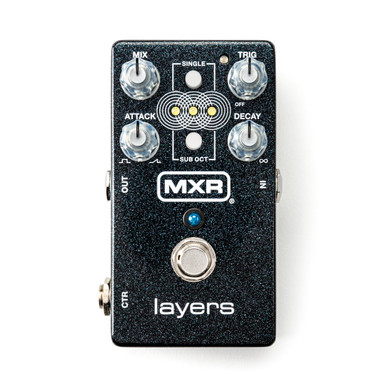
In the early ’80s, the legendary Brian Eno invented an effect that many refer to as “shimmer”, which was popularised in U2’s The Unforgettable Fire (1984) — an album that Eno famously co-produced. The effect essentially mixed ambient reverb and octave effects in the reverb’s decay, and the 3 Series Octave Reverb is JHS’ take on this now classic effect!

The Octave Reverb allows you to create pads and ethereal textures that fill out ambient space, making your guitar sound like something completely otherworldly! Toggle up layers in upper octave sounds, while toggle down layers in lower octave sounds.

Specifications

  • Voltage: 9V DC Negative Centre
  • Current Draw: 65 mA
  • Dimensions (L x W x H): 4.42″ x 2.38″ x 1.22″
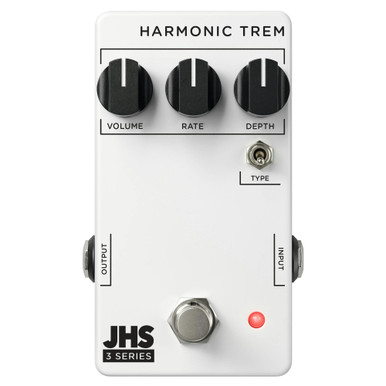
Related videos

Brand

JHS Pedals

In the current JustPedals catalogue, JHS Pedals is represented by Overdrive Pedals, Distortion Pedals and Delay Pedals. Current listings include Switchback, Mute Switch and Summing Amp. That makes the range relevant to players looking for drive, gain and clipping, plus time-based effects and ambience. Check each model for its exact circuit or processing platform, controls, power requirements and connections, particularly where the catalogue includes both pedals and supporting gear.

Category

Octave Pedals

Octave pedals generate one or more notes above or below the input, either by analogue tracking, digital processing or a blend of both. Monophonic circuits often track best with clean, single-note playing; polyphonic designs can handle chords more reliably but may introduce a different feel or latency. Controls such as octave-up, octave-down, dry level, filter and tracking range shape the result. Check the intended instrument, register, input impedance and whether the pedal remains stable before or after other gain effects.

Tags

Reverb

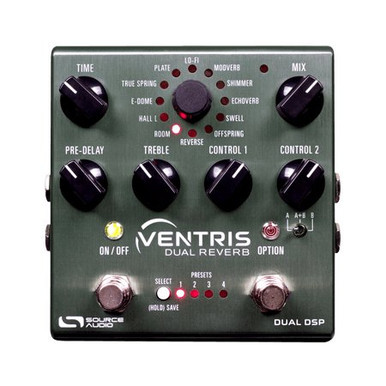
Reverb creates a field of reflections around the dry signal to suggest a room, plate, spring, hall or other space. Decay controls length; pre-delay separates the attack from the ambience; damping, tone, diffusion, modulation and mix shape size, brightness and movement. Short settings add depth without washing out a part, while long tails become a deliberate texture. Check trails, spillover, stereo routing, presets and headroom when placing reverb after gain or delay.