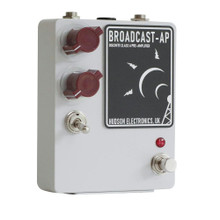
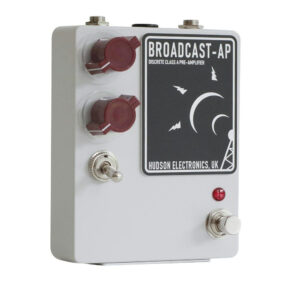
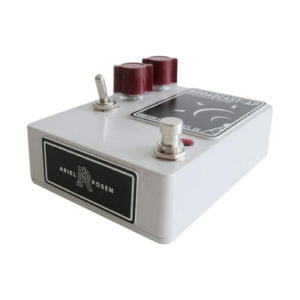
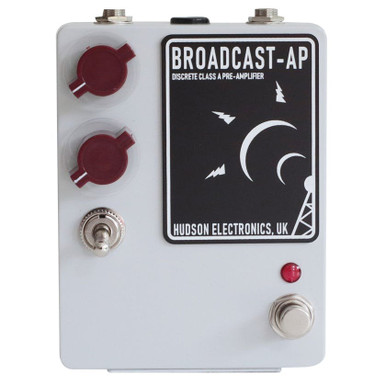
Hudson Broadcast-AP Ariel Posen Signature Preamp Pedal

£199.99

Also available on Andertons, Amazon, eBay & Reverb

Fresh on the menu for 2026 are the Guitar Pedals, freshly added and carefully selected. These New units are available to order online with fast, secure delivery from trusted UK retailers. Read on for full details, specifications, demos, videos, reviews, and the best places to buy the Guitar Pedals today.


Description

Fresh on the menu for 2026 are the Guitar Pedals, freshly added and carefully selected. These New units are available to order online with fast, secure delivery from trusted UK retailers. Read on for full details, specifications, demos, videos, reviews, and the best places to buy the Guitar Pedals today.

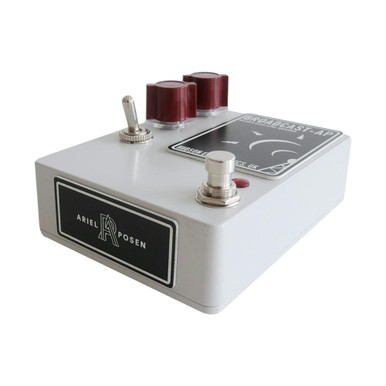
You may recognise Ariel Posen as the co-presenter in many of our 'Guitar Paradiso' videos on Andertons TV, regularly displaying his tasteful chops alongside Peter "Danish Pete" Honore. Also an established solo artist in his own right, Ariel relies on very particular gear to create his soulful sounds.

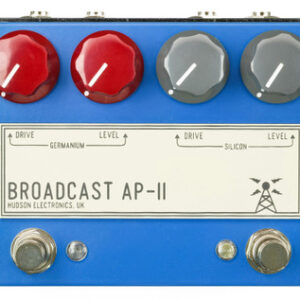
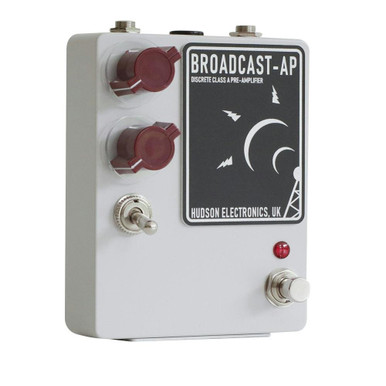
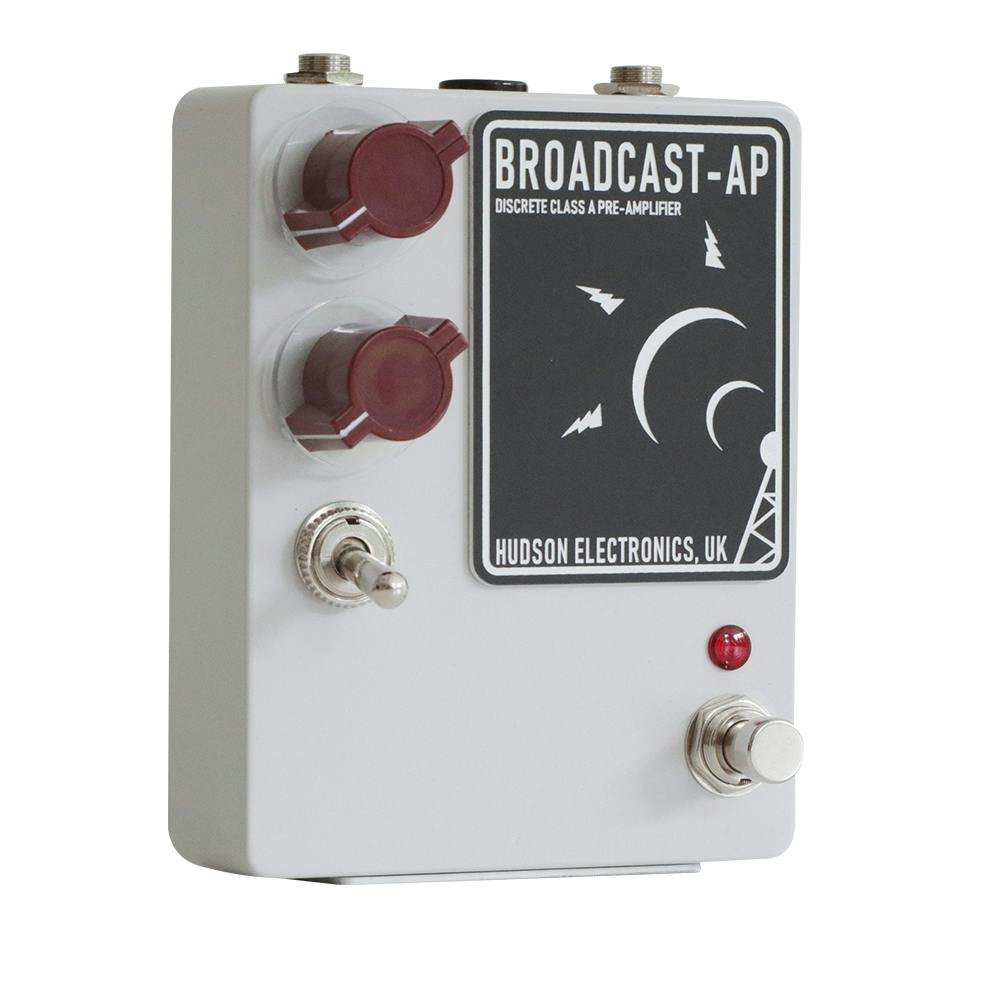
Posen's signature Hudson Broadcast-AP preamp pedal is an essential ingredient. Providing a smooth yet powerful medium-gain tone that has plenty of low-end grunt, clear upper mids and airy highs; the Broadcast-AP achieves its distinctive character via a pair of silicon transistors and an OEP transformer that keeps frequencies below 100Hz cleaner than the standard Broadcast pedal can.

Here's what Hudson Electronics says about the Ariel Posen Signature Broadcast:

I’ve been very excited to collaborate with Ariel Posen to produce the Broadcast-AP. It’s an evolution of the Broadcast, designed to integrate with Ariel’s unique sound. At the heart of the Broadcast-AP – as the name may suggest – is the same circuitry as the Broadcast. A class-A discrete, transformer-coupled circuit, designed to saturate in a unique way reminiscent of certain recording and broadcast consoles.

We took the low-gain side of the standard Broadcast as the starting point. Together, Ariel and I exchanged the Germanium transistor for a Silicon and used an OEP transformer – the OEP transformer saturates and distorts less below 100Hz compared to the Triad transformer used in the standard Broadcast. These two changes together give the Broadcast-AP a darker, smoother, more powerful tone compared to the standard version. Greater weight in the lows, whilst retaining the open highs and upper-mids, giving the Broadcast a ‘3D’ effect.

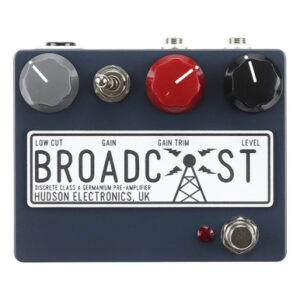
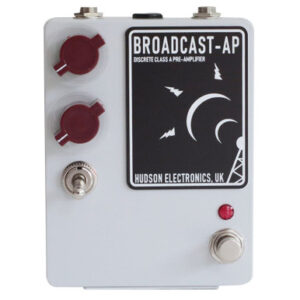
The control layout features both Level and Gain Trim potentiometers and a switchable high-pass / low-cut filter – 100Hz @ 6dB/oct. The Gain Trim control has 12dB more gain than the low-gain side of standard Broadcast, allowing the Broadcast-AP to cover ground from clean boost through to medium gain overdrive tones. In addition, the gain of the pedal can be increased via an internal trimmer and – when pushed to the max – the sound becomes overloaded, broken and fuzzy. The high-pass / low-cut filter can help keep the low end together, especially when driving amps at higher gain and volume levels.

Features

  • Pair of selected Silicon transistors
  • OEP Transformer (made in England) selected to give less THD below 100Hz 
  • BI Technologies potentiometers
  • Lumberg jack sockets (rated for >5000 cycles)
  • Heavy duty Alpha foot switches (rated for >30,000 cycles)

Controls

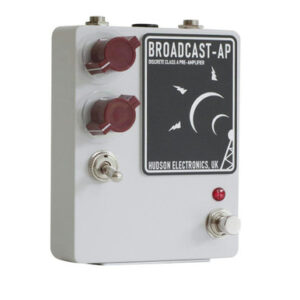
  • Level – Controls the overall volume of the pedal.
  • Gain Trim – Controls the gain level of the Broadcast-AP (can be increased via internal trimmer).
  • Low Cut Switch – Activates a high-pass / low-cut filter (this can be adjusted via two internal trimmers).

Power Requirements

  • DC Socket – The Broadcast-AP requires a DC power supply unit (PSU) and can run at voltages between 9v and 24v; running the Broadcast-AP at voltages higher than 9v gives it more headroom, output level and clarity. This is great for use with higher output instruments (bass guitar, synth, studio line level equipment) or when using the Broadcast-AP as a clean pre-amp boost.
  • Please ensure your PSU can supply between 9v and 24v, a minimum current of 20mA and has a 2.1mm negative centre barrel plug. Any other type may damage your pedal. If you plan on sharing the same PSU with other pedals, we recommend using a PSU with isolated outputs.
  • Current Draw – Typically less than 20mA
Additional information

Weight 1 kg

Category

Guitar Pedals

Tags

Boost

A boost pedal does one simple thing brilliantly — it makes your signal louder, stronger, and more alive. Whether you’re pushing a valve amp into natural breakup, lifting a solo above the band, or adding a touch more presence to your core tone, a clean boost gives you extra headroom without changing your character.

Use it at the front of your chain to drive other pedals harder, or after your gain stages to raise volume without adding distortion. Subtle or powerful, transparent or slightly coloured, a boost is one of the most useful tools on any pedalboard — small box, big difference.

Filter

A filter pedal shapes your tone by emphasising or cutting specific frequencies, letting you sculpt everything from subtle tonal shifts to bold, sweeping textures. Unlike traditional wah or envelope effects, filters can be static or controlled in different ways, giving you focused control over how bright, dark, sharp, or resonant your sound becomes.

Use a filter to tighten the low end, tame harsh highs, or create synth-like sweeps and rhythmic movement. Whether you’re refining your core tone or pushing into experimental territory, a filter pedal gives you precise control over the flavour of your sound.

New

This is brand new, fresh in, and a UK warranty is included. New Gear always comes from trusted UK music retailers.

Overdrive

Like a golden layer of melted cheese — warm, gooey, and just put it all over. It adds just the right amount of richness and grit, turning a clean signal into something smooth and savoury. Designed to mimic the natural breakup of a tube amp pushed to its sweet spot, overdrive delivers the flavour of classic rock and blues in every bite. From creamy mid-gain warmth to crisp edge-of-breakup sparkle, it’s the comfort food of guitar tone — simple, satisfying, and endlessly versatile. Whether it’s a mild crunch or a full-bodied roar, overdrive is where good taste begins.

Preamp

A preamp pedal shapes and boosts your guitar’s signal before it reaches your amp or recording interface, giving you control over tone, gain, and headroom. It acts as the first stage of amplification, adding warmth, clarity, and character while preparing your signal for the next part of the chain. Some preamps emulate the response of classic valve circuits, while others offer clean, transparent tone shaping ideal for acoustic instruments or direct recording setups.

Used on its own, a preamp pedal can serve as the foundation of your tone, providing a consistent core sound wherever you play. When combined with other effects, it enhances dynamics and helps each pedal sound more defined and natural. Whether you’re looking to push your amp harder, bring life to a dull signal, or refine your sound for the studio, a good preamp pedal adds presence, punch, and musicality to any rig.

Synth

A synth pedal transforms your guitar signal into rich, layered tones that mimic the sounds of a synthesiser. Using pitch tracking and waveform generation, it can produce everything from deep bass lines to shimmering pads and futuristic leads. Synth pedals open up a wide creative range, blending the expressiveness of guitar playing with electronic textures, making them ideal for experimental sounds, ambient music, or adding a modern edge to classic riffs.

used

Used pedals bring character, value, and often a bit of history to your board. Whether it’s a well-loved classic or a recent release looking for its next home, a used pedal offers the same core tone at a more accessible price. Fully tested and described clearly, it’s a chance to grab great gear without paying brand-new money.

Go used to explore different sounds, track down discontinued favourites, or build your setup more affordably. Sometimes a pedal with a few marks on the casing still delivers flawless tone — and might even have a story or two behind it.

Volume

Volume pedals control the output level of a guitar signal using a foot-operated treadle. They allow smooth volume swells, dynamic control during playing, and easy muting between songs. Volume pedals can be placed at different points in the signal chain to either control overall loudness or adjust gain and drive behaviour when positioned before distortion or overdrive pedals.