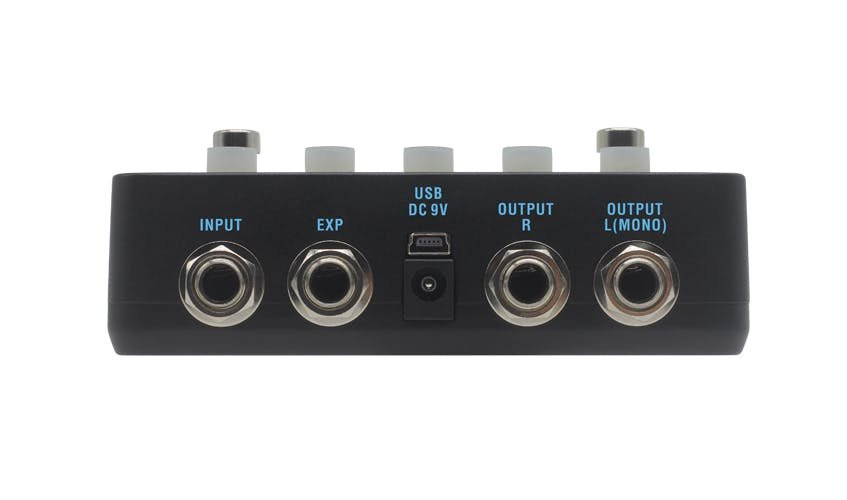
Hotone Binary EKO delay Pedal

£59.99

This is a New Hotone Binary EKO delay Pedal from Hotone, listed in Delay Pedals on Just Pedals. Read More below.

View Just
more
and , ,

Here's What Hotone Say About the Binary Eko

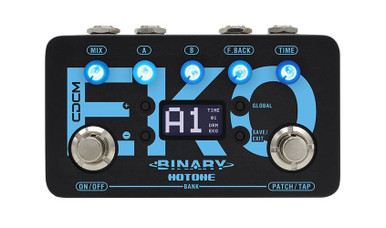
Grown out of next-generation XTOMP technology, the Hotone Binary Series lets loose versatile pro-level effects in compact cases. Based on the same modeling/original effect library that amazed XTOMP users worldwide, Binary Series are dedicated to gather a bunch of high quality effects in a box with more affordable, competitive price. They feature compact casing, dual-footswitch design, versatile inputs/outputs and bright, clear OLED display, which blur the line between “classic pedals” and multi-effects.
 
At the core of all Binary Series pedals, a powerful dual-DSP platform and CDCM (Comprehensive Dynamic Circuit Modeling) modeling system ensure a realistic playing experience. The CDCM system is built on an extremely complex dynamic variation matrix, able to realistically express every detailed change that occurs during the operational process of actual circuitry: Everything is ALIVE and performs like its original. 
 
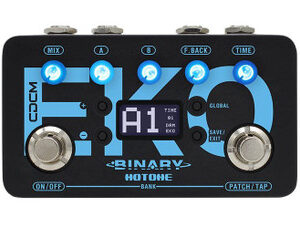
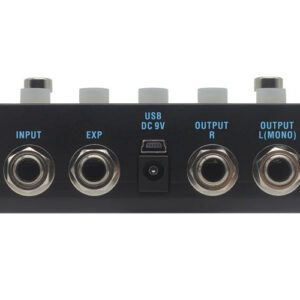
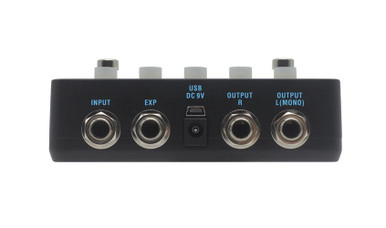
The Binary Eko is a delay effects pedal with stereo I/O and expression pedal support for delivering authentic classic, as well as a new and inspiring Hotone original delay sounds. 17 high-quality delay effects types include analog, digital, tape, dual, ping pong, filtered, modulated, slap back and more.

Features:

  • Compact, easy-to-use dual-footswitch delay effects pedal 
  • Advanced CDCM modeling system ensures realistic playing experience
  • Dual DSP-powered platform ensures high sound quality
  • 24-bit A/D/A conversion, up to 110dB S/N ratio 
  • 17 high-quality delay effects, including CDCM-based classics and Hotone originals
  • Variable maximum delay time ranging from 1000–4000ms
  • Tap Tempo function 
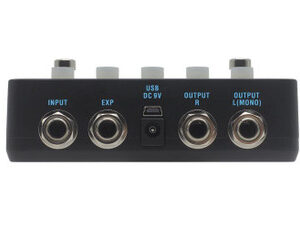
  • Stereo I/Os 
  • EXP jack for expression pedal control
  • USB jack for firmware upgrading and loading/managing effects via free Mac/PC software
  • 10 presets (5 presets x 2 banks)
  • OLED screen with clear display
  • Pure Analog Buffered Bypass switching with flat frequency response
  • Five translucent knobs with LEDs 

Specifications

  • Numbers of Effects: 17 (For full list see here)
  • Numbers of Patches: 10 (2 banks x 5 patches)
  • Max. Delay Time: 4000ms
  • Digital Processing: 24-bit A/D/A conversion, 44.1 kHz sample rate
  • Frequency Response: 20 Hz-20 kHz
  • S/N Ratio: Up to 110dB
  • Input Impedance: 1M Ohms
  • Output Impedance: 100 Ohms
  • Power Requirement: DC 9V, center negative
  • Current Consumption: 200mA minimum
  • Dimensions: 121mm (D) x 72mm (W) x 47mm (H)
  • Weight: 340g

Related videos

Brand

HOTONE

In the current JustPedals catalogue, HOTONE is represented by Multi-Effects Pedals, Wah & Filter Pedals and Pedal Switchers. Current listings include Ampero Mini Vanilla, Binary EKO delay and Ampero Multi-Effects Unit. That makes the range relevant to players looking for drive, gain and clipping, plus time-based effects and ambience. Check each model for its exact circuit or processing platform, controls, power requirements and connections, particularly where the catalogue includes both pedals and supporting gear.

Category

Delay Pedals

Delay pedals repeat the input after a set time, from a short slapback to long ambient trails. Feedback controls how many repeats continue; filtering, modulation, saturation and mix shape their tone and prominence. Tap tempo can keep rhythmic delays aligned with a song, while presets and MIDI help when several timings are needed. Analogue, tape-style and digital designs respond differently to transients and overload. Check maximum delay time, spillover, stereo routing, trails and headroom before choosing a model for the rest of the board.

Tags

Analogue

Analogue products use continuous audio circuitry for some or all of the signal path, so clipping, filtering or modulation arises from physical components rather than sampled algorithms. The label does not guarantee a particular tone; component choice, headroom, bias, noise and the surrounding gain stages still matter. Check whether the switching, presets, control section or cabinet stage is digital when the exact signal path is important.

Digital

Digital products use conversion and processing to create, store or control the effect. This can provide presets, complex routing, repeatable algorithms, USB, MIDI and firmware features, but conversion, latency, power requirements and clocking depend on the design. Check the input and output levels, sample or impulse-response support, bypass behaviour and current draw when combining a digital unit with analogue pedals or a direct recording setup.

Stereo

Stereo products provide separate left and right audio paths, which may widen modulation, preserve independent delays or route a pedalboard into two amplifiers or a mixer. Input and output behaviour is not always symmetrical: some units sum a stereo input, while others create stereo from a mono source. Check whether the effect collapses safely to mono, how the dry signal is routed, the socket format and the destination’s panning and phase requirements.