Brand
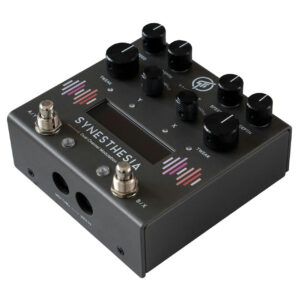
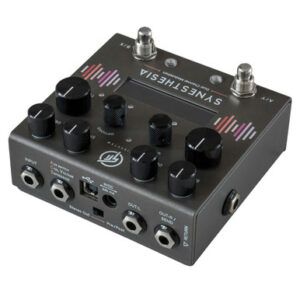
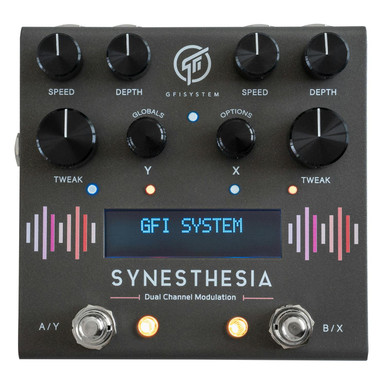
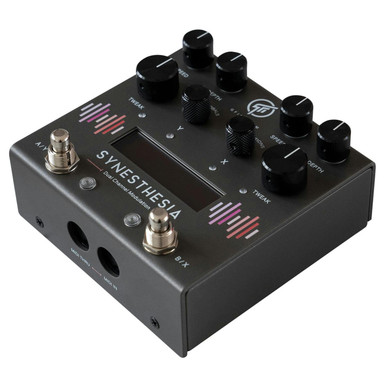
GFI System is a boutique pedal company based in Jakarta, Indonesia, recognized for its high-quality guitar effects pedals and advanced signal processing units. Founded by Henry Widjaja, GFI System has gained acclaim for its commitment to innovation, craftsmanship, and sonic excellence.
The company offers a diverse range of effects pedals, including modulation, delay, reverb, and overdrive pedals, each designed with meticulous attention to detail and utilizing cutting-edge technology. GFI System pedals are celebrated for their versatility, pristine sound quality, and intuitive user interface, making them a favorite among discerning musicians and recording engineers worldwide.
One of GFI System’s standout products is the Specular Tempus, a stereo delay and reverb pedal renowned for its studio-quality sound and extensive feature set. The Specular Tempus offers a wide range of delay and reverb algorithms, customizable parameters, and MIDI functionality, making it a powerful tool for ambient musicians, sound designers, and performing guitarists alike.
In addition to effects pedals, GFI System also produces advanced signal processing units, such as the Clockwork Delay and the Cabzeus Mono, which offer studio-grade effects and amp simulation in a compact and portable format.
With its dedication to innovation, quality, and sonic excellence, GFI System continues to be a respected name in the guitar effects industry, inspiring musicians to explore new sonic territories and push the boundaries of their creativity.
Category
GFI System is a boutique pedal company based in Jakarta, Indonesia, recognized for its high-quality guitar effects pedals and advanced signal processing units. Founded by Henry Widjaja, GFI System has gained acclaim for its commitment to innovation, craftsmanship, and sonic excellence.
The company offers a diverse range of effects pedals, including modulation, delay, reverb, and overdrive pedals, each designed with meticulous attention to detail and utilizing cutting-edge technology. GFI System pedals are celebrated for their versatility, pristine sound quality, and intuitive user interface, making them a favorite among discerning musicians and recording engineers worldwide.
One of GFI System’s standout products is the Specular Tempus, a stereo delay and reverb pedal renowned for its studio-quality sound and extensive feature set. The Specular Tempus offers a wide range of delay and reverb algorithms, customizable parameters, and MIDI functionality, making it a powerful tool for ambient musicians, sound designers, and performing guitarists alike.
In addition to effects pedals, GFI System also produces advanced signal processing units, such as the Clockwork Delay and the Cabzeus Mono, which offer studio-grade effects and amp simulation in a compact and portable format.
With its dedication to innovation, quality, and sonic excellence, GFI System continues to be a respected name in the guitar effects industry, inspiring musicians to explore new sonic territories and push the boundaries of their creativity.
Tags
A delay pedal records your signal and plays it back after a set time, creating echoes that can range from tight, slapback repeats to long, atmospheric trails. It’s one of the most versatile effects, used to thicken tones, add rhythmic depth, or build spacious, ambient layers. Analogue delays offer warm, decaying repeats that blend naturally with your tone, while digital units provide pristine echoes with precise control over time, feedback, and mix levels.
From classic rockabilly and tape-style echoes to modern looping and shimmer effects, delay pedals have become essential tools for shaping sound. They can make solos soar, rhythms pulse, or transform simple chord progressions into cinematic textures. Whether used subtly to add dimension or boldly to create soundscapes, a good delay pedal can completely redefine the feel and atmosphere of your music.
Expression pedals allow real-time control over specific parameters on compatible guitar pedals, such as volume, delay time, modulation depth, or filter sweep. Used with an expression input, they let players shape effects dynamically with their foot, adding movement and performance control that cannot be achieved with fixed knob settings.
A flanger is a type of guitar effects pedal used to create a swirling, whooshing sound by modulating the phase of an audio signal. It works by combining the original signal with a slightly delayed and modulated version of itself. As the two signals interact, they create peaks and troughs in the frequency spectrum, resulting in the characteristic “jet plane” or “swooshing” sound associated with flanging.
Key features of a flanger pedal include:
1. **Rate**: Controls the speed at which the delayed signal is modulated. Higher rates produce faster modulation, while lower rates create slower, more subtle effects.
2. **Depth**: Adjusts the intensity of the modulation effect. Higher depth settings result in more pronounced sweeps, while lower settings produce a gentler effect.
3. **Manual (or Range)**: Sets the center frequency of the modulation. This control allows you to focus the effect on specific frequency ranges, altering the tonal character of the flanging.
4. **Feedback (or Regeneration)**: Determines the amount of modulated signal that is fed back into the effect. Increasing feedback can create more pronounced peaks and troughs, resulting in a more intense effect.
Flanger pedals are commonly used in various music genres, including rock, metal, and psychedelic music, to add movement, depth, and texture to guitar tones. They can be used subtly to add a touch of modulation and dimension to a guitar sound, or more prominently to create dramatic swirling effects. Overall, flanger pedals offer guitarists a versatile tool for shaping and enhancing their tone, adding a dynamic and expressive element to their playing.
Your pedal is like a signature dish for your sound — a flavour-packed creation that transforms the bland ingredients of your guitar into something unforgettable. Each one adds its own seasoning, texture, and heat, turning a simple meal into a feast of tone.
These tasty little boxes sit in a row, like plates on a buffet, letting you mix and match flavours as you play. With one tap of your foot, you can swap sweet for spicy, subtle for smoky, and serve up something completely new. From the comfort food of warm overdrive to the fiery kick of fuzz, from smooth jazz sauce to heavy-metal spice, pedals give players a full menu of options to express their taste. And just like with food, once you’ve tried one dish, you’ll want to sample them all.
Collecting, trading, and discovering new flavours soon becomes part of the joy of being a tone-loving gourmet geek with a guitar.
MIDI pedals use the Musical Instrument Digital Interface standard to communicate with other guitar pedals, effects units, and hardware. They allow control over presets, parameters, and switching across multiple devices from a single controller. MIDI integration makes it possible to build complex, synchronised pedal setups while keeping control simple and consistent.
This is brand new, fresh in, and a UK warranty is included. New Gear always comes from trusted UK music retailers.
A phaser is a type of guitar effects pedal that creates a swirling, sweeping sound by modulating the phase of the audio signal. It works by splitting the incoming signal into two paths, shifting the phase of one path, and then recombining them. This creates peaks and troughs in the frequency spectrum, resulting in a distinctive, “phasing” effect characterized by moving notches in the frequency response.
Here’s how a phaser pedal typically works and some common features:
1. **Rate**: The rate control adjusts the speed at which the phase-shifting effect oscillates. Increasing the rate produces faster modulation, creating a more pronounced swirling effect, while decreasing the rate slows down the modulation for a smoother, more subtle effect.
2. **Depth**: The depth control adjusts the intensity or depth of the phase-shifting effect. Higher depth settings result in more pronounced peaks and troughs in the frequency response, while lower settings produce a more subtle modulation.
3. **Feedback (or Regeneration)**: Some phaser pedals feature a feedback control that determines the amount of modulated signal fed back into the effect. Increasing the feedback creates more pronounced peaks and troughs in the frequency spectrum, resulting in a more intense and resonant phasing effect.
4. **Stages**: Phasers typically have multiple stages (usually four, six, or eight), each of which contributes to the overall phase-shifting effect. More stages generally result in a more complex and textured phasing sound.
5. **Sweep (or Manual)**: The sweep control adjusts the center frequency of the phase-shifting effect. This allows you to focus the phasing effect on specific frequency ranges, altering the tonal character of the modulation.
6. **Resonance (or Feedback)**: Some phaser pedals feature a resonance control that emphasizes the peaks and troughs in the frequency response, creating a more pronounced and resonant effect. This control can add richness and depth to the phasing sound.
Phaser pedals are commonly used in various music genres, including rock, funk, and psychedelic music, to add movement, depth, and texture to guitar tones. They can be used to create swirling, swirling effects on rhythm parts, add dynamics to lead lines, or create atmospheric textures for ambient music. Overall, phaser pedals offer guitarists a versatile tool for shaping their tone and adding expressive modulation effects to their playing.
A reverb pedal is like the rich sauce that ties every flavour on the plate into one smooth experience. It adds depth, warmth, and atmosphere — the sonic equivalent of a perfectly reduced glaze that lingers on the tongue. Whether you’re after the subtle ambience of a cosy café (spring or plate reverb) or the grand echoes of a cathedral (hall or shimmer reverb), this is where your tone breathes and expands. A touch of reverb can turn a dry sound into something lush and inviting — but pour on too much, and it’s all you can taste. Used with finesse, it’s the finishing touch that transforms your tone from plain to unforgettable.
A tremolo pedal modulates the volume of your guitar signal up and down in a rhythmic pattern, creating a pulsing or wavering effect that can sound vintage and hypnotic or sharp and choppy depending on the settings. It’s one of the oldest effects in guitar history, famously used on classic amps from the 1950s and ’60s.
Most tremolo pedals let you control the speed, depth, and wave shape, allowing you to go from smooth, subtle swells to intense stuttering tones. It’s a simple but expressive effect that adds movement and character to your sound.
Vibrato refers to a guitar pedal effect that modulates pitch slightly up and down, creating movement and a sense of wobble in the sound. Unlike tremolo, which changes volume, vibrato affects pitch only, producing anything from subtle shimmer to pronounced, warbling textures. It is often used to add character, depth, and vintage-style modulation to guitar tones.
Volume pedals control the output level of a guitar signal using a foot-operated treadle. They allow smooth volume swells, dynamic control during playing, and easy muting between songs. Volume pedals can be placed at different points in the signal chain to either control overall loudness or adjust gain and drive behaviour when positioned before distortion or overdrive pedals.