
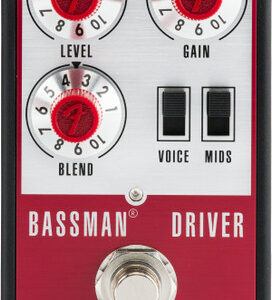
The Fender Bassman Driver pedal is a meticulously crafted effects pedal designed to expand your bass tone with analog and digital circuits inspired by the original Bassman tube amp line. This pedal allows you to conjure varying shades of gain from light tube-like breakup to hi-gain chunk all while keeping your low end intact. Utilizing JFET circuitry and dynamic clipping stages the Bassman Driver emulates the behaviour of a bass tube amp driven to breakup. The voice switch adds an additional layer of clipping for heavy modern distortion while the mids switch offers two levels of growl. An internal tone control lets you set the high frequency content to your liking and the blend control keeps your low end solid by mixing in your clean tone.The Bassman Driver is built for durability and performance featuring a soft-touch relay true bypass with auto bypass when no power is present. The side-mounted pad switch is perfect for active basses and the top-mounted jacks make for easy pedalboard integration. The road-ready aluminium enclosure and inset aluminium face plate draw in vintage Fender aesthetics ensuring this pedal not only sounds great but looks great on any setup. Whether youre performing live or recording in the studio the Bassman Driver is a versatile addition to your bass rig.
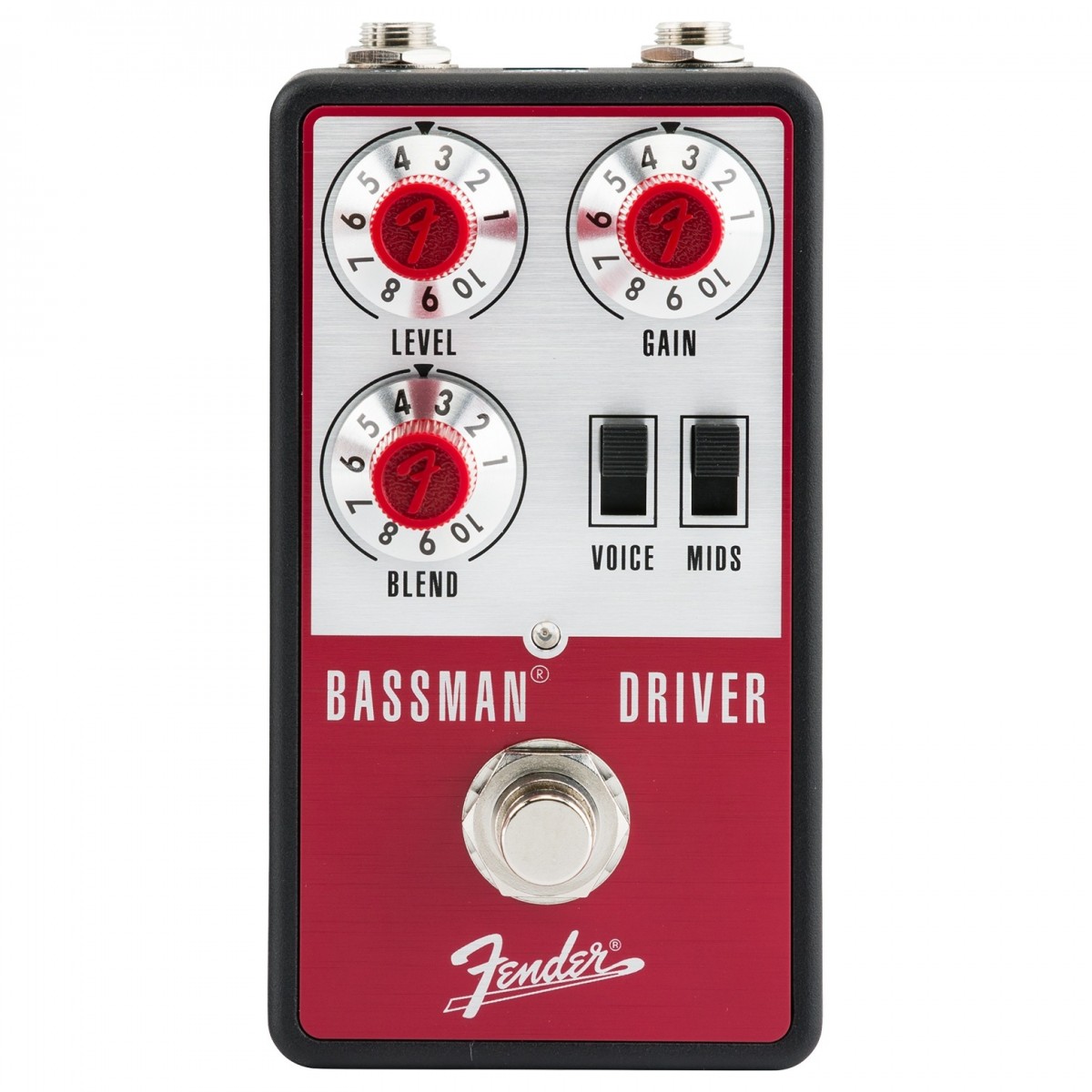
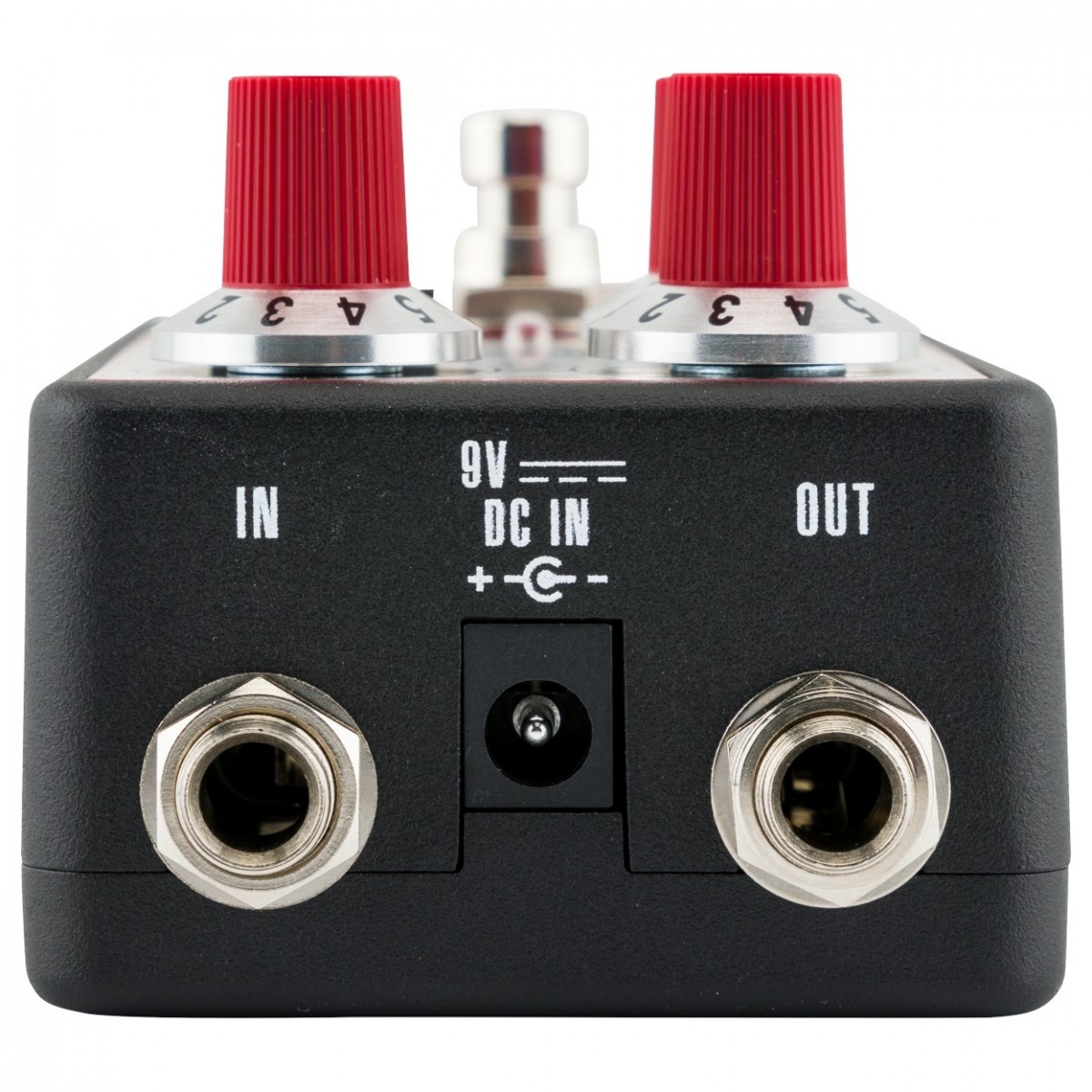
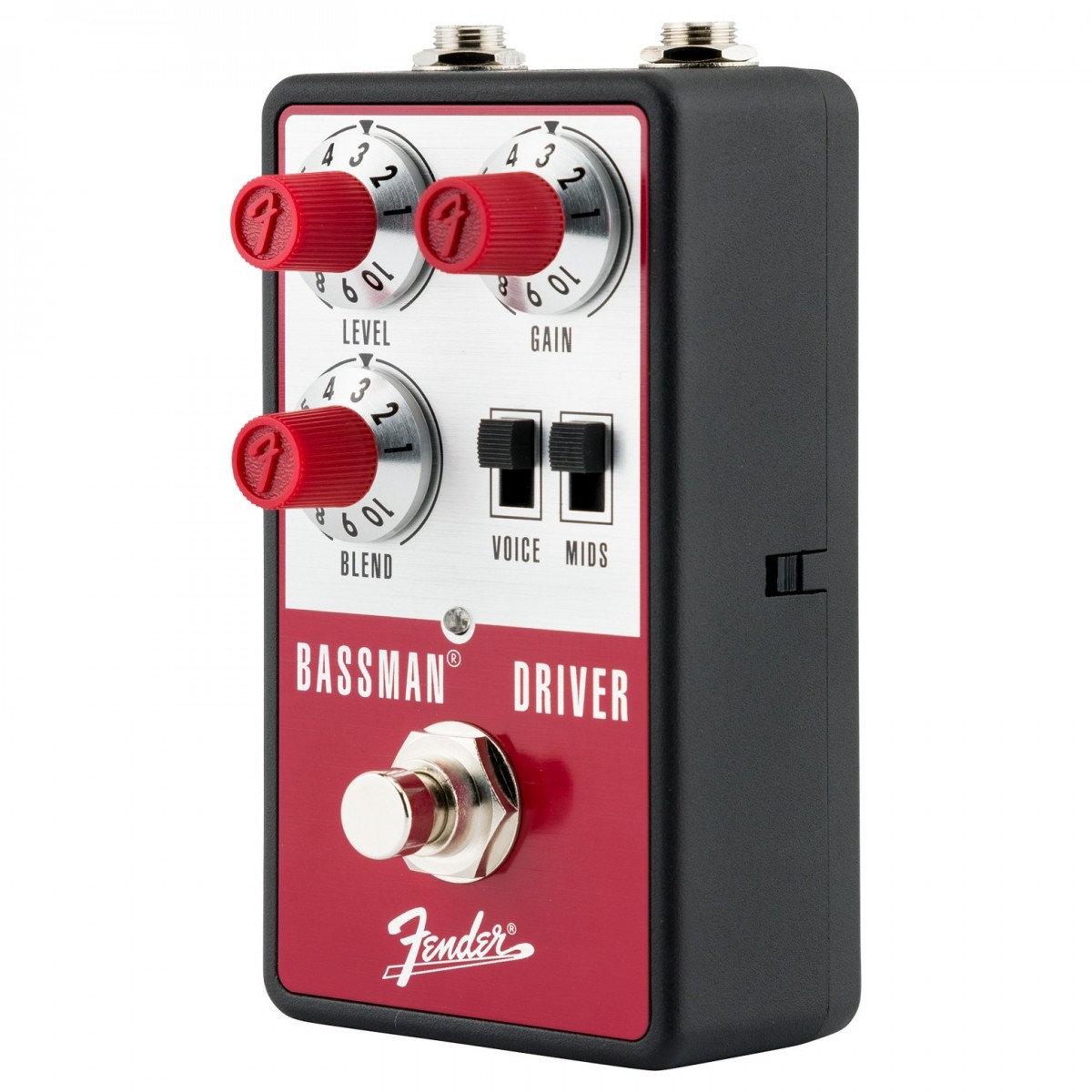
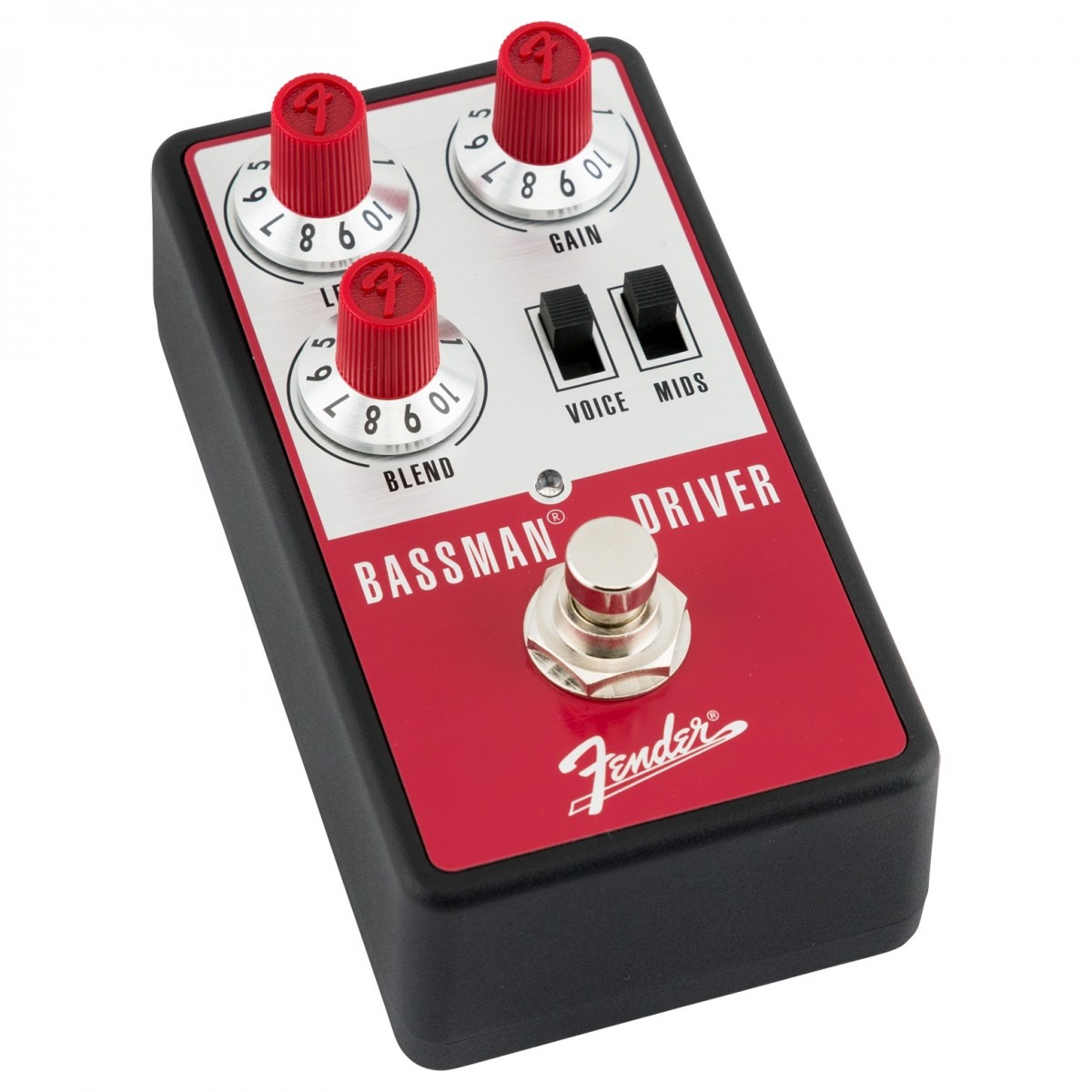
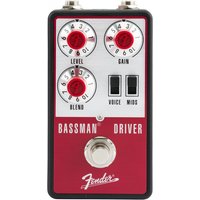
Fender Bassman Driver Pedal
This is the Fender Bassman Driver Pedal from Fender, listed in Specialist Effects Pedals on Just Pedals. Read More below.
As an affiliate partner, we may earn a small commission when you buy through our links — at no extra cost to you.
Related videos

Brand
Fender
Fender’s effects line draws on the company’s Southern California instrument-and-amplifier history. The all-original pedal range Fender introduced in the late 2010s was designed in Southern California with input from gigging and studio musicians. JustPedals listings include The Bends compressor, Marine Layer reverb, Pugilist distortion, Tre-Verb and Smolder Acoustic Overdrive. That range connects familiar Fender amplifier sounds with dedicated stompboxes, while also covering bass and acoustic applications. The brand name does not indicate where every model was manufactured; compare each pedal’s controls, routing and model-specific specifications.
Category
Specialist Effects Pedals
Specialist effects alter the signal in ways that do not sit cleanly inside one established family. They may use granular processing, frequency shifting, resonators, freeze or sustain, bit reduction, ring modulation, feedback networks or combinations of several techniques. The relevant distinction is the underlying process, its tracking or latency, and how completely the dry signal can be blended or replaced.
Tags
Analogue
The signal is shaped by continuously varying electronic circuitry rather than being converted into a digital effect algorithm. Component choice, operating voltage and circuit tolerances influence headroom, noise, clipping texture and the small variations in response between designs.
Bass
Voiced or equipped to retain low-frequency fundamentals and the higher headroom of a bass signal. Clean blends, crossovers and bass-specific filter ranges can preserve weight and articulation while the effected portion adds harmonics, movement or ambience.
Digital
Converts the signal or control process into numerical data for algorithmic processing. Digital designs can provide precise timing, long memory, complex routing and repeatable presets; sample rate, conversion, internal resolution and latency influence fidelity and response.
True Bypass
Connects input directly to output through mechanical or relay switching when the effect is off, removing the active circuit from the audio path. It avoids buffer colour but leaves cable capacitance and switching design to influence high-frequency loss and possible switching noise.
Vocal
Designed for microphone-level signals and the frequency, dynamics and feedback behaviour of the human voice. Input gain, balanced connections, phantom power and pitch tracking may be provided so effects respond correctly before the signal reaches a mixer or PA.
Others Just Ordered :
- I Love A Happy Accident… – Animals Pedal

- Animals Pedal Vintage Van Driving is Very Fun Overdrive
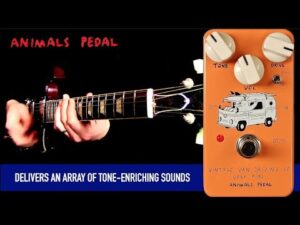
- Animals Pedal Sunday Afternoon Is Infinity Bender

- Ninevolt Pedals | Bath Time Reverb (Animals Pedal)
- This Fuzz Pedal Makes No Sense… But It Sounds Incredible

- ANIME Pedals | Animals Pedal Custom Illustrated Series