
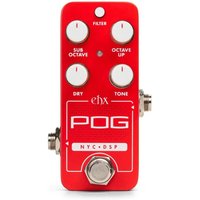
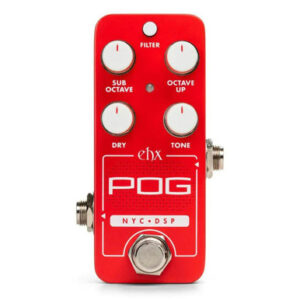
The Electro Harmonix Pico POG Polyphonic Octave Generator is a game-changer for guitarists offering unparalleled sound in a compact pocket-sized pedal. This ultra-compact powerhouse combines the simplicity of the micro and nano POGs with a powerful control all housed in a pedalboard-friendly chassis. With lightning-fast tracking and precise tones this model delivers exceptional performance across all musical styles. Add the sub octave for deep rumbling lows or crank it up for ethereal soaring tones. Blend all three voices together for a fat synth-like sound that will take your playing to another level. The Pico POG features dedicated volume knobs allowing you to perfectly balance the levels. And in the low pass filter mode higher frequencies are cut in the sub and octave up voices while high pass mode cuts lower frequencies in these voices. Compact yet powerful the Pico POG is the ultimate pedal for any guitarist.
Electro Harmonix Pico POG Polyphonic Octave Generator
This is a New Electro Harmonix Pico POG Polyphonic Octave Generator from Electro Harmonix is in our Octave Pedals category on Just Pedals. Read More below.
As an affiliate partner, we may earn a small commission when you buy through our links — at no extra cost to you.
Related videos

Brand
Electro Harmonix
Founded by Mike Matthews in New York City in 1968, Electro-Harmonix became known for inventive effects that brought new sounds within reach of guitarists. Its first product was the LPB-1 Linear Power Booster; the company’s long-running catalogue ranges from fuzz and overdrive to delay, modulation, octave and experimental processing. JustPedals listings include the Small Clone chorus, Small Stone phaser, Memory Boy delay, POG 2 octave generator and Micro Q-Tron envelope filter. Check the exact version and power requirements when comparing EHX models, since familiar names often span different generations and formats.
Category
Octave Pedals
An octave effect generates notes one or more octaves above or below the input. Analogue circuits often create raw monophonic sub-octaves, while digital pitch tracking can follow chords and provide several intervals with cleaner separation. Tracking speed, polyphonic accuracy, latency and the balance of dry, upper and lower voices determine whether the result feels tight, organ-like, synthetic or deliberately unstable.
Others Just Ordered :
- I Love A Happy Accident… – Animals Pedal

- Animals Pedal Vintage Van Driving is Very Fun Overdrive
- Animals Pedal Sunday Afternoon Is Infinity Bender

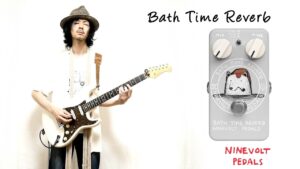
- Ninevolt Pedals | Bath Time Reverb (Animals Pedal)
- This Fuzz Pedal Makes No Sense… But It Sounds Incredible

- ANIME Pedals | Animals Pedal Custom Illustrated Series