
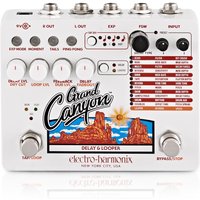
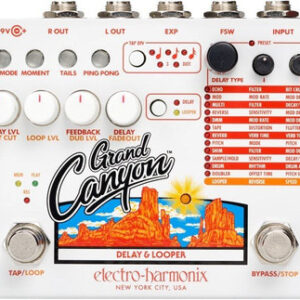
The inclusion of 12 effects and a fully functional looper makes the Electro Harmonix Grand Canyon one of the most detailed and comprehensive delay pedals available on the market. Inject a new lease of life into your tone. The Grand Canyon is incredibly versatile. Youll be able to achieve a whole host of sounds ranging from subtle delays to energetic pitch effects. The on-board looper empowers you with up to 16 minutes of recording possibilities. Even when youre done with the pedal and turn it off. The next time you power up your previous loop will remain in-tact. Inject a new lease of life into your playing today!
Electro Harmonix Grand Canyon Delay & Looper
£260.00
This is a New Electro Harmonix Grand Canyon Delay & Looper from Electro Harmonix its found in our Looper Pedals on the Just Pedals menu. Read More below.
View Just Electro Harmonix
As an affiliate partner, we may earn a small commission when you buy through our links — at no extra cost to you.
Related videos

Brand
Electro Harmonix
Founded by Mike Matthews in New York City in 1968, Electro-Harmonix became known for inventive effects that brought new sounds within reach of guitarists. Its first product was the LPB-1 Linear Power Booster; the company’s long-running catalogue ranges from fuzz and overdrive to delay, modulation, octave and experimental processing. JustPedals listings include the Small Clone chorus, Small Stone phaser, Memory Boy delay, POG 2 octave generator and Micro Q-Tron envelope filter. Check the exact version and power requirements when comparing EHX models, since familiar names often span different generations and formats.
Category
Looper Pedals
A looper records a passage and plays it back repeatedly so additional parts can be overdubbed over the cycle. Loop length, audio quality, storage and the number of independent tracks define the basic capability. Undo, quantisation, synchronisation, rhythm guides, reverse and half-speed functions determine how recordings can be corrected, transformed and aligned with other equipment.
Tags
Delay
Creates one or more time-separated copies of the signal. Delay time sets their spacing, feedback determines how many repeats continue, and filtering, modulation or saturation decides whether successive echoes remain clean, darken, wobble or break apart.
Others Just Ordered :
- I Love A Happy Accident… – Animals Pedal

- Animals Pedal Vintage Van Driving is Very Fun Overdrive
- Animals Pedal Sunday Afternoon Is Infinity Bender

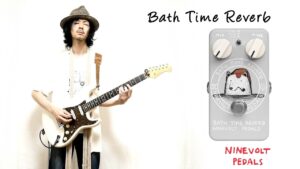
- Ninevolt Pedals | Bath Time Reverb (Animals Pedal)
- This Fuzz Pedal Makes No Sense… But It Sounds Incredible

- ANIME Pedals | Animals Pedal Custom Illustrated Series