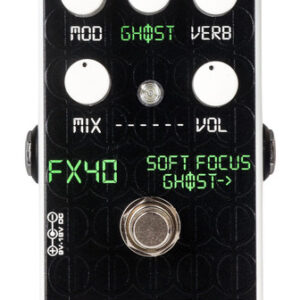
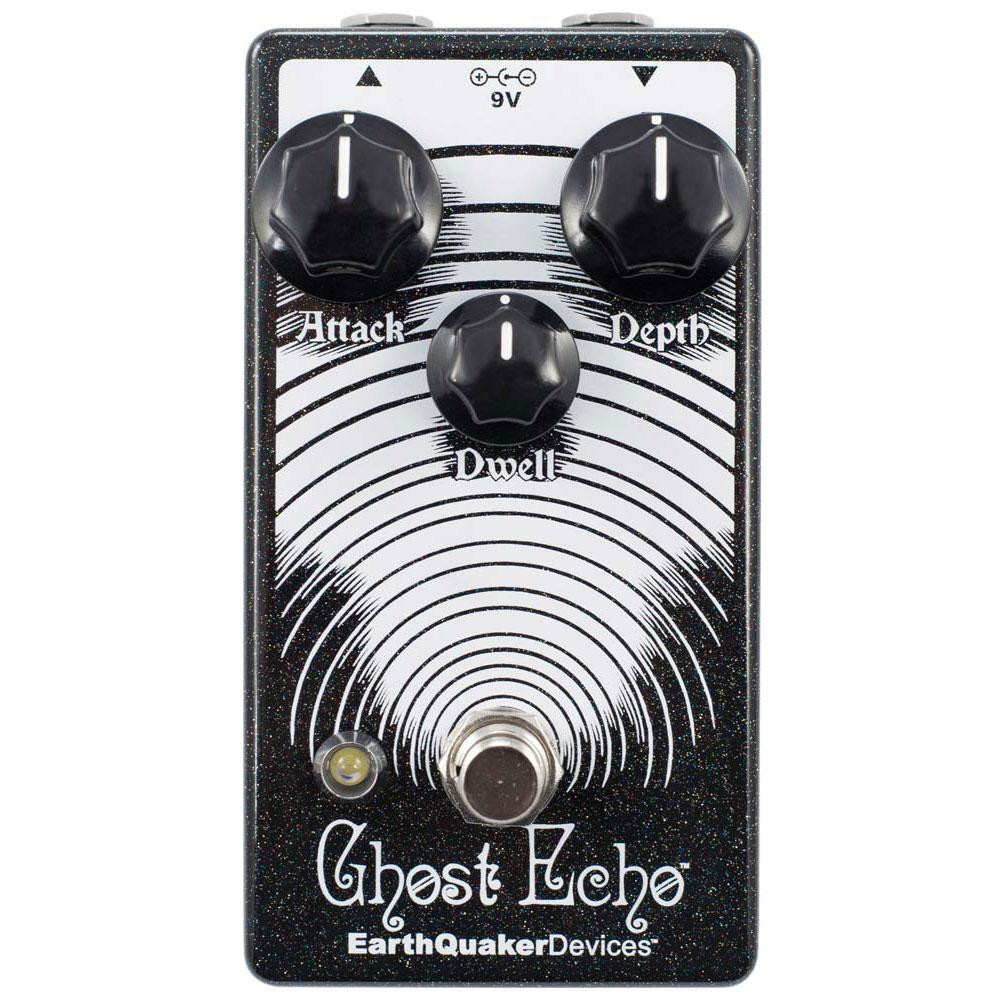
EarthQuaker Devices Ghost Echo V3 Reverb Pedal

£214.99

This is a New EarthQuaker Devices Ghost Echo V3 Reverb Pedal from EarthQuaker Devices, listed in Reverb Pedals on Just Pedals. Read More below.

View Just
more
and , ,

Here’s what EarthQuaker Devices say:

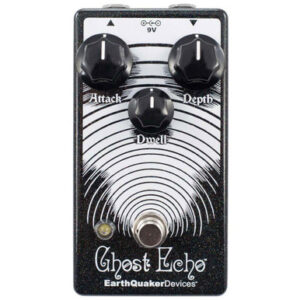
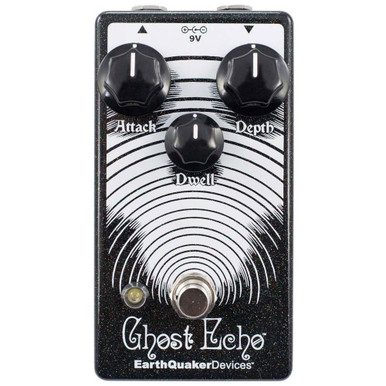
You hear that EVP, bud? It’s the all new, extra spook-tacular, Ghost Echo calling out from beyond the void! The Ghost Echo is our spooky take on the haunted* amp-top spring reverberation units of yesteryear. This creepy analog/digital spring reverb emulation machine boasts a terrifying 30ms – 150ms of pre-delay, controllable via the Attack knob, for everything from a quick rockabilly slapback to viscous pools of ectoplasmic reverberations. When playing staccato, you’ll hear the tortured trails of the reverb, resulting in more of a slapback or echo sound. Legato playing will reveal a massive ambient “depth” that fattens up the sound – and look out, it’s right behind you!

Phew, that was close. The Dwell control sets the length and thickness of the decay, which is to say that it controls how long the disembodied spirits of notes no longer with us float through the ether. At the maximum setting it will descend into an infinite loop of self-oscillation. The Depth sets the intensity of the reverb, which you probably know as the wet/dry mix, but we like to think of it more as how scary the overall effect is.

*Not actually haunted. Or are they?

Controls

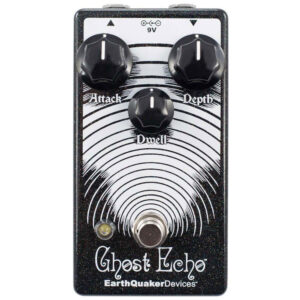
  • Attack: Adjusts the length of the pre-delay, from 30ms at minimum to about 150ms at maximum. When the Dwell is set to self-oscillate, this will change the pitch of the oscillations.
  • Dwell: Adjusts the length of the decay. This will start to self oscillate around 3 O’clock, the pitch of the oscillations can be changed by turning the Attack control.
  • Depth: Mixes in the wet signal with the dry, unity is around noon and everything after is boosted.

Specifications

  • Dimensions: 4.75 x 2.50 x 2.25 in. (121 x 64 x 57 mm) with knobs
  • Current Draw: 86 mA
  • Input Impedance: 10 MΩ
  • Output Impedance: 1 kΩ
  • Switching: This device is true bypass and uses electronic relay-based switching. Audio will not pass without power.
  • Power: 9V

Related videos

Brand

EarthQuaker Devices

In the current JustPedals catalogue, EarthQuaker Devices is represented by Octave Pedals, Fuzz Pedals and Overdrive Pedals. Current listings include Organizer V2, Hoof Fuzz V2 and Buffer/Splitter. That makes the range relevant to players looking for drive, gain and clipping, plus time-based effects and ambience. Check each model for its exact circuit or processing platform, controls, power requirements and connections, particularly where the catalogue includes both pedals and supporting gear.

Category

Reverb Pedals

Reverb pedals create the impression of rooms, plates, springs, halls or other spaces by surrounding the dry sound with a field of reflections. Decay controls length; pre-delay separates the attack from the ambience; damping, tone, modulation, diffusion and mix set size, brightness and movement. Short settings can add depth without washing out a part, while long tails become a deliberate texture. Check trails, spillover, stereo routing, presets, tap or MIDI control and the pedal’s headroom after drives.

Tags

Analogue

Analogue products use continuous audio circuitry for some or all of the signal path, so clipping, filtering or modulation arises from physical components rather than sampled algorithms. The label does not guarantee a particular tone; component choice, headroom, bias, noise and the surrounding gain stages still matter. Check whether the switching, presets, control section or cabinet stage is digital when the exact signal path is important.

Delay

Delay repeats the input after a set time. Feedback controls how long the repeats continue, while filtering, modulation, saturation and mix shape their character and prominence. Tap tempo can set rhythmic timing hands-free, and presets or MIDI can recall several timings. Check maximum delay time, spillover, trails, stereo routing, headroom and whether the pedal is analogue, tape-style or digital when the repeat response is important.

Digital

Digital products use conversion and processing to create, store or control the effect. This can provide presets, complex routing, repeatable algorithms, USB, MIDI and firmware features, but conversion, latency, power requirements and clocking depend on the design. Check the input and output levels, sample or impulse-response support, bypass behaviour and current draw when combining a digital unit with analogue pedals or a direct recording setup.