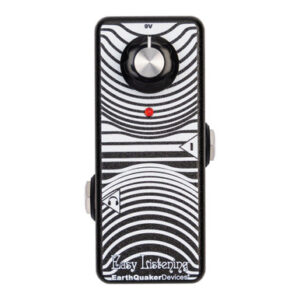
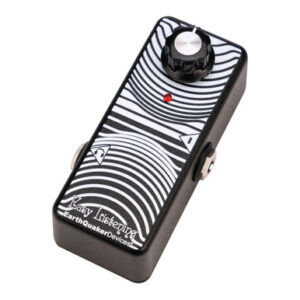
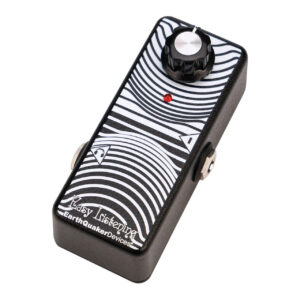
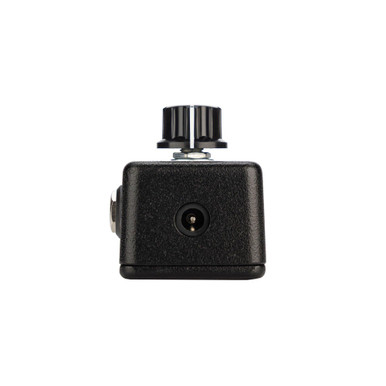
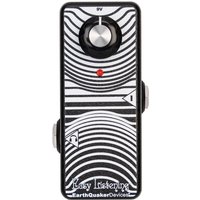
EarthQuaker Devices Easy Listening Analog Amp Simulator Pedal

£114.99

This is the EarthQuaker Devices Easy Listening Analog Amp Simulator Pedal from EarthQuaker Devices, listed in Amp & Cab Simulator Pedals on Just Pedals. Read More below.

View Just
more
and , ,

With its finely tuned preamp circuitry and sweet analog cabinet simulation, Easy Listening delivers a big, lush sound with zero latency and no harsh digital artifacts. Think of it as the perfect marriage of vintage tone and modern convenience, offering all the high headroom and low noise of an actual tube amp but small enough to fit in your pocket. No menu diving, no IR loading, and nothing else getting in-between you and your tone.

Internally, it’s meticulously voiced to capture the soul of one of our favorite classic American guitar amps—a ’65 Deluxe—with all the harmonic complexity guitar players crave. Its all-analog circuitry provides a more immediate feel with rich low-end resonance, slightly scooped mids, and that crystalline top end chime that makes electric guitars sing.  

Specifications

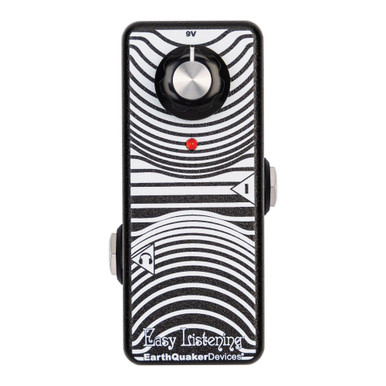
  • Controls: Output level (it can get loud!)
  • Dimensions: 3.625 x 1.875 x 1.5 in. (92 × 48 × 38 mm)
  • Current Draw: 75 mA
  • Input Impedance: 1 MΩ
  • Output Impedance: 39 Ω
  • Input: Mono TS 1/4″
  • Output: Stereo TRS 1/4″ (Tip is the left channel, Ring is the right channel)
  • For use with headphones: Requires headphones with a 1/4″ TRS plug.
  • For use with a DAW: You can use either a mono TS cable into one channel of your interface or a stereo TRS cable with a splitter into two channels.
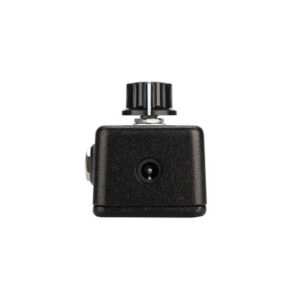
  • Power: This device takes a standard 9V DC power supply with a 2.1mm negative center barrel. We always recommend pedal-specific, transformer-isolated wall-wart power supplies or multiple isolated-output supplies. Pedals will make extra noise if there is ripple or unclean power. Switching-type power supplies, daisy chains and non-pedal specific power supplies do not filter dirty power as well and let through unwanted noise. DO NOT RUN AT HIGHER VOLTAGES!
Related videos

Brand

EarthQuaker Devices

EarthQuaker Devices is renowned for its innovative and high-quality guitar effects pedals. Some of their most popular products include the Avalanche Run, a versatile stereo reverb and delay pedal, and the Afterneath, known for its unique and atmospheric reverb sounds. The Hoof Fuzz is another favorite, offering rich, creamy fuzz tones, while the Plumes delivers a fresh take on the classic overdrive pedal. Each pedal is handcrafted with meticulous attention to detail in Akron, Ohio, and is celebrated for both its robust build and distinctive sound-shaping capabilities.

We are pleased to offer a wide selection of EarthQuaker Devices products for sale online in the UK, with efficient postage options available. Whether you’re looking for the lush modulations of the Sea Machine chorus or the dynamic range of the Dispatch Master delay and reverb, our inventory is well-stocked to meet your needs. Browse our extensive catalog to find the perfect addition to your pedalboard, and enjoy the convenience of having these exceptional pedals delivered straight to your door.

Category

Amp & Cab Simulator Pedals

Amp and cabinet simulators reproduce the gain stages, tone stack, power-amp response, loudspeaker colour and microphone character of a recorded amplifier chain. Analogue circuits, digital models and impulse responses approach this in different ways. The important distinctions are the available amp and cabinet types, editable microphone or room settings, latency, output routing, preset recall and whether speaker simulation can be bypassed for a real amplifier.

Tags

Analogue

The signal is shaped by continuously varying electronic circuitry rather than being converted into a digital effect algorithm. Component choice, operating voltage and circuit tolerances influence headroom, noise, clipping texture and the small variations in response between designs.

Digital

Converts the signal or control process into numerical data for algorithmic processing. Digital designs can provide precise timing, long memory, complex routing and repeatable presets; sample rate, conversion, internal resolution and latency influence fidelity and response.

Stereo

Processes, creates or passes two audio channels. True stereo preserves separate left and right inputs, while mono-to-stereo effects generate spatial differences internally; routing, phase behaviour and whether trails remain stereo determine the resulting image. Some outputs sum to mono when only one socket is connected, which can change level or modulation depth.