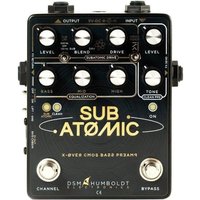
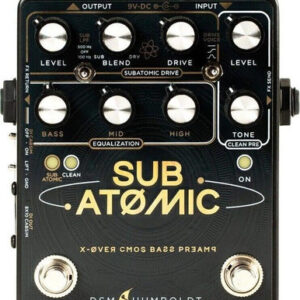
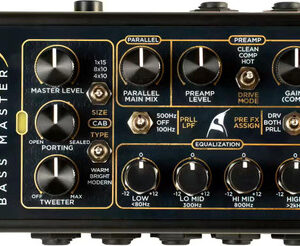
The DSM/Humboldt Sub-Atomic is a compact all-analogue bass preamp designed to deliver huge aggressive bass tones while maintaining clarity punch and low-end definition. Featuring dual channels cascading CMOS gain stages and parallel signal processing it produces heavily distorted bass sounds without sacrificing the natural body and fullness that bass players rely on. Whether youre adding gritty edge to modern rock tones or chasing extreme high-gain bass sounds the Sub-Atomic balances raw aggression with practical tone shaping and responsive analogue feel. The clean channel delivers warm tube-like response with subtle compression while the dedicated Sub-Atomic drive channel introduces powerful distortion with an integrated clean blend to preserve low-end weight and articulation. A shared 3-band passive EQ provides tone shaping across both channels while the onboard analogue 8×10 cabinet simulation and balanced XLR DI output make direct performance and recording setups simple. An integrated FX loop allows easy use of post-drive effects without requiring a separate DI box and soft-touch footswitches provide smooth bypass and channel switching.
DSM/Humboldt Sub-Atomic
This is a New DSM/Humboldt Sub-Atomic from DSM & Humboldt is in our Specialist Effects Pedals category on Just Pedals. Read More below.
As an affiliate partner, we may earn a small commission when you buy through our links — at no extra cost to you.
Brand
DSM & Humboldt
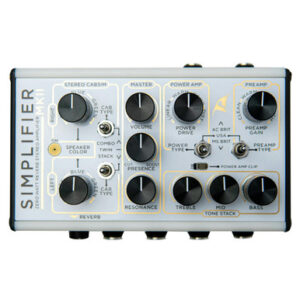
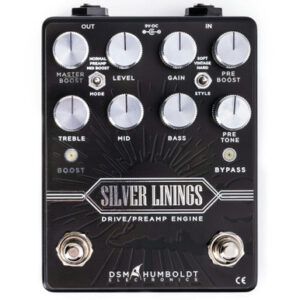
In the current JustPedals catalogue, DSM & Humboldt is represented by Amp & Cab Simulator Pedals, Preamp & DI Pedals and Overdrive Pedals. Current listings include DSM/Humboldt Sub-Atomic, DSM/Humboldt Simplifier X and DSM/Humboldt Simplifier Mk II. That makes the range relevant to players looking for drive, gain and clipping, plus modelling, direct rigs and multi-effects. Check each model for its exact circuit or processing platform, controls, power requirements and connections, particularly where the catalogue includes both pedals and supporting gear.
Category
Specialist Effects Pedals
Specialist effects alter the signal in ways that do not sit cleanly inside one established family. They may use granular processing, frequency shifting, resonators, freeze or sustain, bit reduction, ring modulation, feedback networks or combinations of several techniques. The relevant distinction is the underlying process, its tracking or latency, and how completely the dry signal can be blended or replaced.
Tags
Analogue
The signal is shaped by continuously varying electronic circuitry rather than being converted into a digital effect algorithm. Component choice, operating voltage and circuit tolerances influence headroom, noise, clipping texture and the small variations in response between designs.
Bass
Voiced or equipped to retain low-frequency fundamentals and the higher headroom of a bass signal. Clean blends, crossovers and bass-specific filter ranges can preserve weight and articulation while the effected portion adds harmonics, movement or ambience.
Others Just Ordered :
- I Love A Happy Accident… – Animals Pedal

- Animals Pedal Vintage Van Driving is Very Fun Overdrive

- Animals Pedal Sunday Afternoon Is Infinity Bender

- Ninevolt Pedals | Bath Time Reverb (Animals Pedal)

- This Fuzz Pedal Makes No Sense… But It Sounds Incredible

- ANIME Pedals | Animals Pedal Custom Illustrated Series