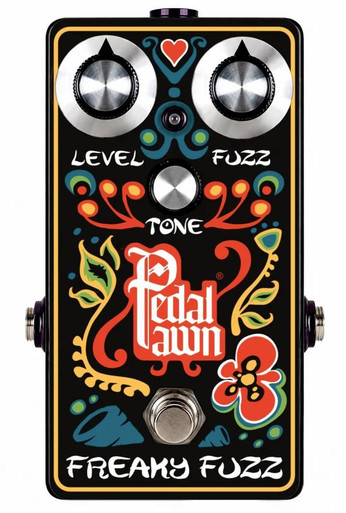
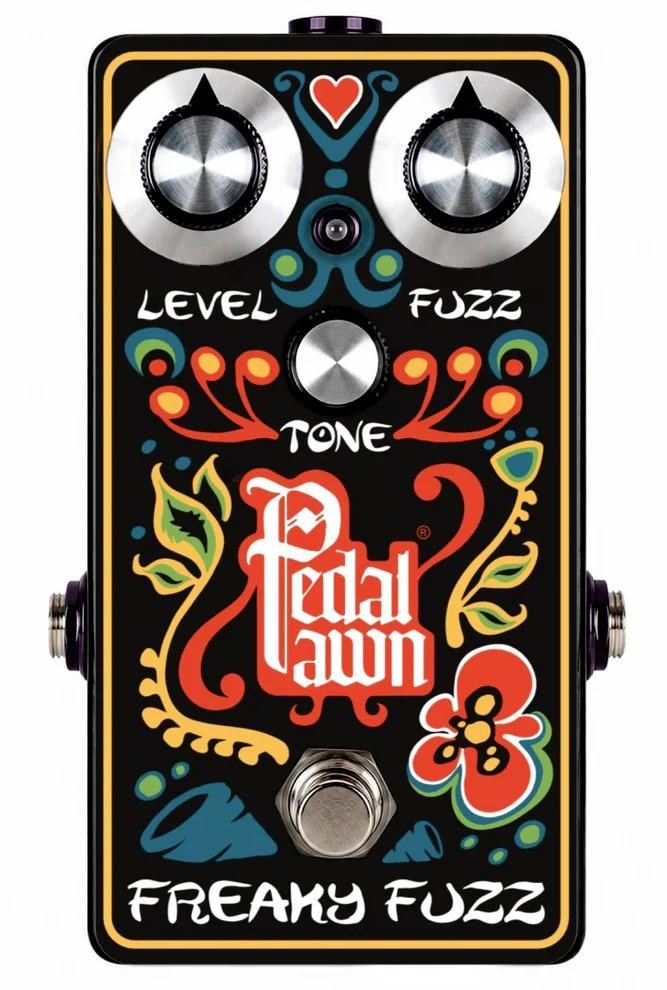



Powered by a unique three-silicon transistor design, the Freaky Fuzz is built for pure psychedelic energy, delivering huge output, aggressive saturation and amp-pushing power while still keeping notes tight, fat and articulate. Chords sound massive, riffs hit hard, and lead tones cut through with huge sustain, bite and gnarly character. Roll your guitar volume back, and the Freaky Fuzz transforms into a woody plexi-style pushed amp tone full of late-night psychedelic character and expressive dynamics. Raw, unpredictable and seriously addictive, this is a fuzz that feels alive under your fingers.Key Features Massive output to push your amp harder Wild psychedelic fuzz on tap Powerful tone control for dialing in clarity, bite and low-end response Dynamic woody plexi-style clean-up response Handcrafted in the UK Specifications Unique three-silicon-transistor design Standard 9v power input True bypass switching



Pedal Pawn Freaky Fuzz Pedal
This is a New Pedal Pawn Freaky Fuzz Pedal from Pedal Pawn its found in our Fuzz Pedals on the Just Pedals menu. Read More below.
As an affiliate partner, we may earn a small commission when you buy through our links — at no extra cost to you.


Brand
Pedal Pawn
In the current JustPedals catalogue, Pedal Pawn is represented by Overdrive Pedals, Fuzz Pedals and Octave Pedals. Current listings include Fuzz, Freaky Fuzz and Octone Octave Fuzz. That makes the range relevant to players looking for drive, gain and clipping, plus modulation and movement. Check each model for its exact circuit or processing platform, controls, power requirements and connections, particularly where the catalogue includes both pedals and supporting gear.
Category
Fuzz Pedals
Fuzz drives the signal into extreme clipping, often flattening the waveform and generating a thick spectrum of harmonics. Transistor type, bias, input loading and tone filtering create markedly different responses, from loose and velvety to gated, spluttering or octave-rich. Some circuits interact strongly with pickup impedance and guitar volume, while others include buffers or blends for a more consistent response.
Tags
True Bypass
Connects input directly to output through mechanical or relay switching when the effect is off, removing the active circuit from the audio path. It avoids buffer colour but leaves cable capacitance and switching design to influence high-frequency loss and possible switching noise.
Others Just Ordered :
- I Love A Happy Accident… – Animals Pedal

- Animals Pedal Vintage Van Driving is Very Fun Overdrive

- Animals Pedal Sunday Afternoon Is Infinity Bender

- Ninevolt Pedals | Bath Time Reverb (Animals Pedal)

- This Fuzz Pedal Makes No Sense… But It Sounds Incredible

- ANIME Pedals | Animals Pedal Custom Illustrated Series