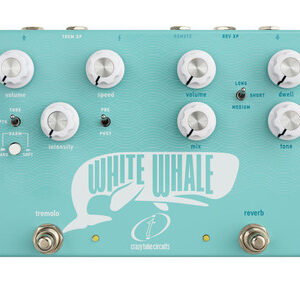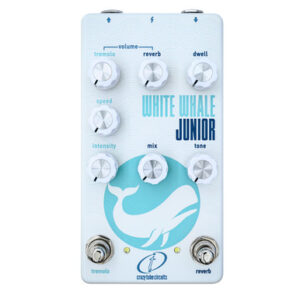
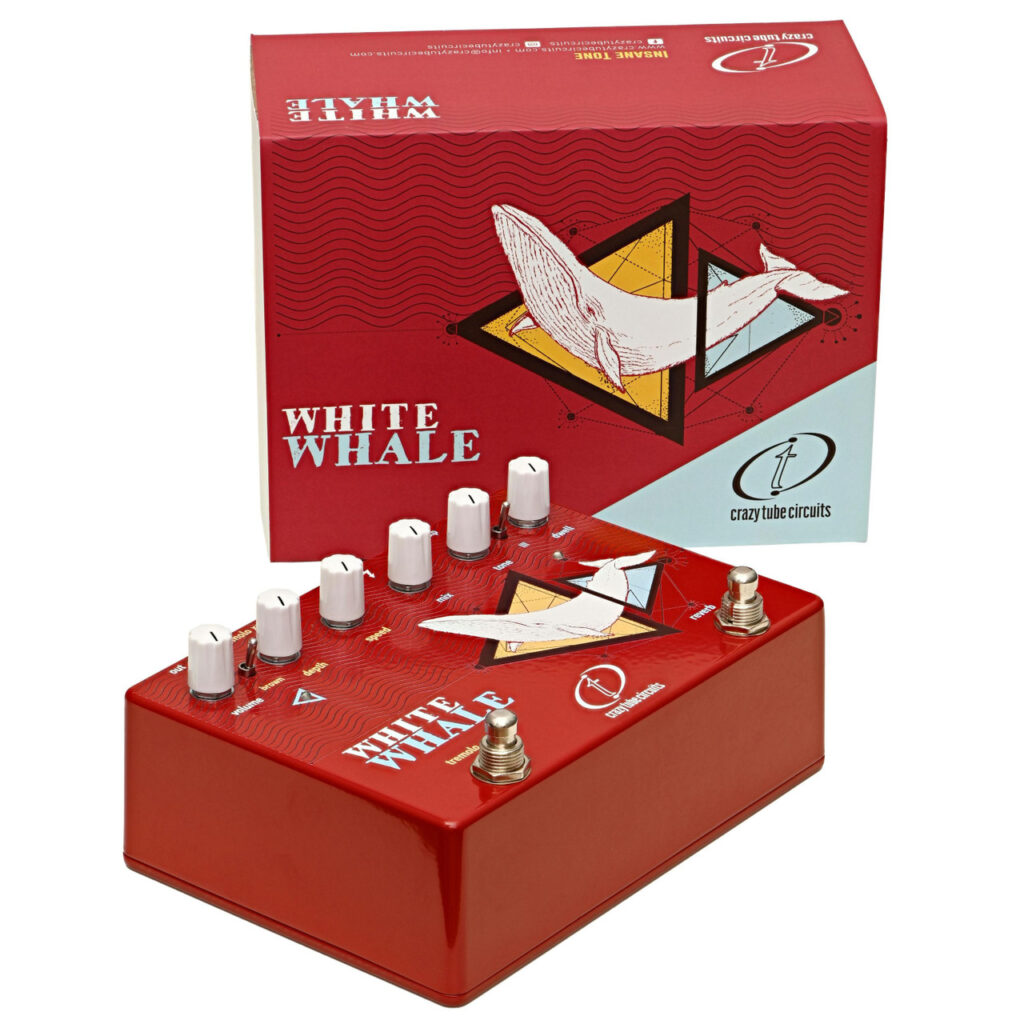
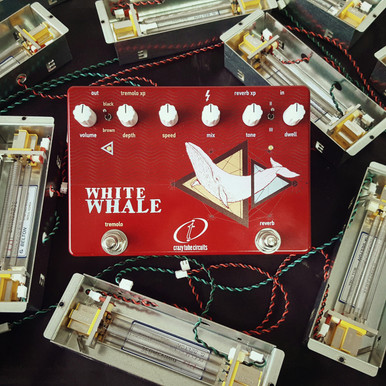
Crazy Tube Circuits White Whale Analogue Spring Reverb & Tremolo Pedal

£269.00

This is a New Crazy Tube Circuits White Whale Analogue Spring Reverb & Tremolo Pedal from Crazy Tube Circuits, listed in Tremolo & Vibrato Pedals on Just Pedals. Read More below.

View Just
more
and , , ,

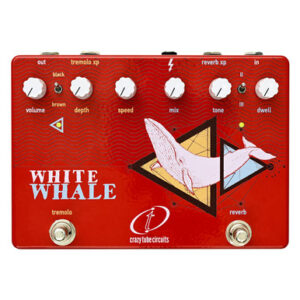
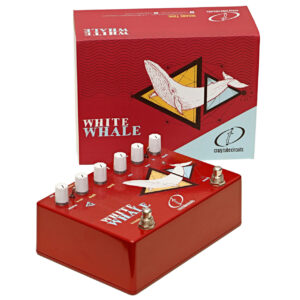
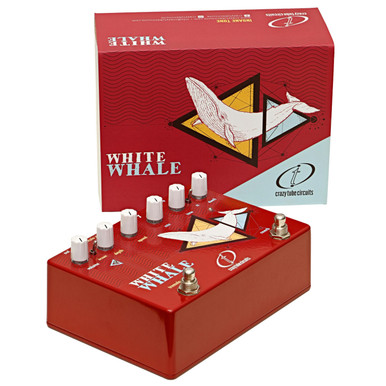
Why do you have to struggle for a digital emulation of two classic effects, when you can have the real thing! That's what Crazy Tube Circuits asked themselves when capturing the concept of the White Whale pedal.

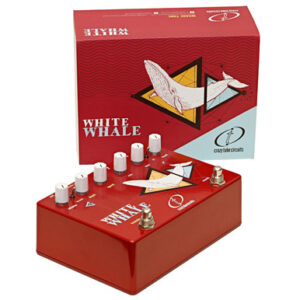
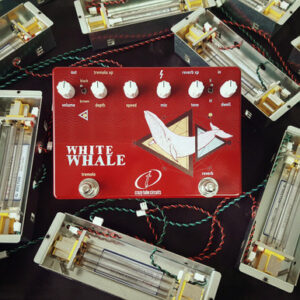
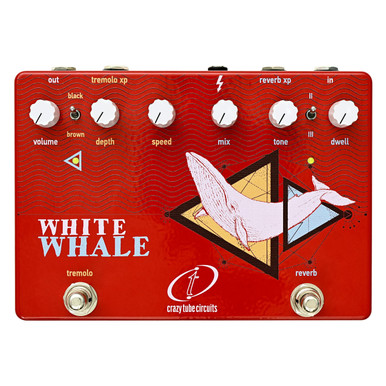
It features a real 3-spring reverb tank along with controls for dwell, mix, and tone — to provide the lushest analogue spring reverb you'll ever find in a pedal of its size (17 x 12.5 x 7.5 cm) to experience the ultimate ride of a wave. Combined with its two selectable modes of an all-analogue tremolo, opto (black) and bias-shifting style (brown), the White Whale is all you'll ever need to deliver old-school surf tones!

Each effect has its own true bypass function (via the onboard footswitches or remote switching units) so that you can have simultaneous or independent operation. With 2 separate expression pedal inputs, you can control parameters like reverb mix and tremolo speed. Classic sounds, with modern flexibility.

Specifications

  • Voltage: 9V DC, centre negative (PSU – sold separately)
  • Current Draw: 130mA
  • True Bypass
  • Made in Greece

Related videos

Brand

Crazy Tube Circuits

In the current JustPedals catalogue, Crazy Tube Circuits is represented by Overdrive Pedals, Tremolo & Vibrato Pedals and Multi-Effects Pedals. Current listings include Mirage JR Reverb, Time Digital Delay and Unobtanium Dual Overdrive. That makes the range relevant to players looking for drive, gain and clipping, plus time-based effects and ambience. Check each model for its exact circuit or processing platform, controls, power requirements and connections, particularly where the catalogue includes both pedals and supporting gear.

Category

Tremolo & Vibrato Pedals

Tremolo and vibrato pedals create movement by changing amplitude or pitch. Tremolo varies volume, while vibrato varies the pitch of the signal; combined units may add harmonic, bias or rotary-style voices. Rate, depth, waveform, phase, mix and tap tempo shape the feel, from gentle pulse to pronounced rhythmic interruption. Check whether the effect is placed before or after drive, whether it preserves the dry signal, and whether stereo or expression control is available for a more animated setup.

Tags

Analogue

Analogue products use continuous audio circuitry for some or all of the signal path, so clipping, filtering or modulation arises from physical components rather than sampled algorithms. The label does not guarantee a particular tone; component choice, headroom, bias, noise and the surrounding gain stages still matter. Check whether the switching, presets, control section or cabinet stage is digital when the exact signal path is important.

Digital

Digital products use conversion and processing to create, store or control the effect. This can provide presets, complex routing, repeatable algorithms, USB, MIDI and firmware features, but conversion, latency, power requirements and clocking depend on the design. Check the input and output levels, sample or impulse-response support, bypass behaviour and current draw when combining a digital unit with analogue pedals or a direct recording setup.

Reverb

Reverb creates a field of reflections around the dry signal to suggest a room, plate, spring, hall or other space. Decay controls length; pre-delay separates the attack from the ambience; damping, tone, diffusion, modulation and mix shape size, brightness and movement. Short settings add depth without washing out a part, while long tails become a deliberate texture. Check trails, spillover, stereo routing, presets and headroom when placing reverb after gain or delay.

True Bypass

True bypass removes the effect circuit from the audio path when bypassed, usually by mechanical, relay or switching circuitry. This can preserve the direct signal but does not automatically solve long-cable loading, and it may create a pop or leave no buffer for the rest of the board. Check the actual switching method, trails or spillover, input and output loading and the number of other true-bypass pedals in the chain.