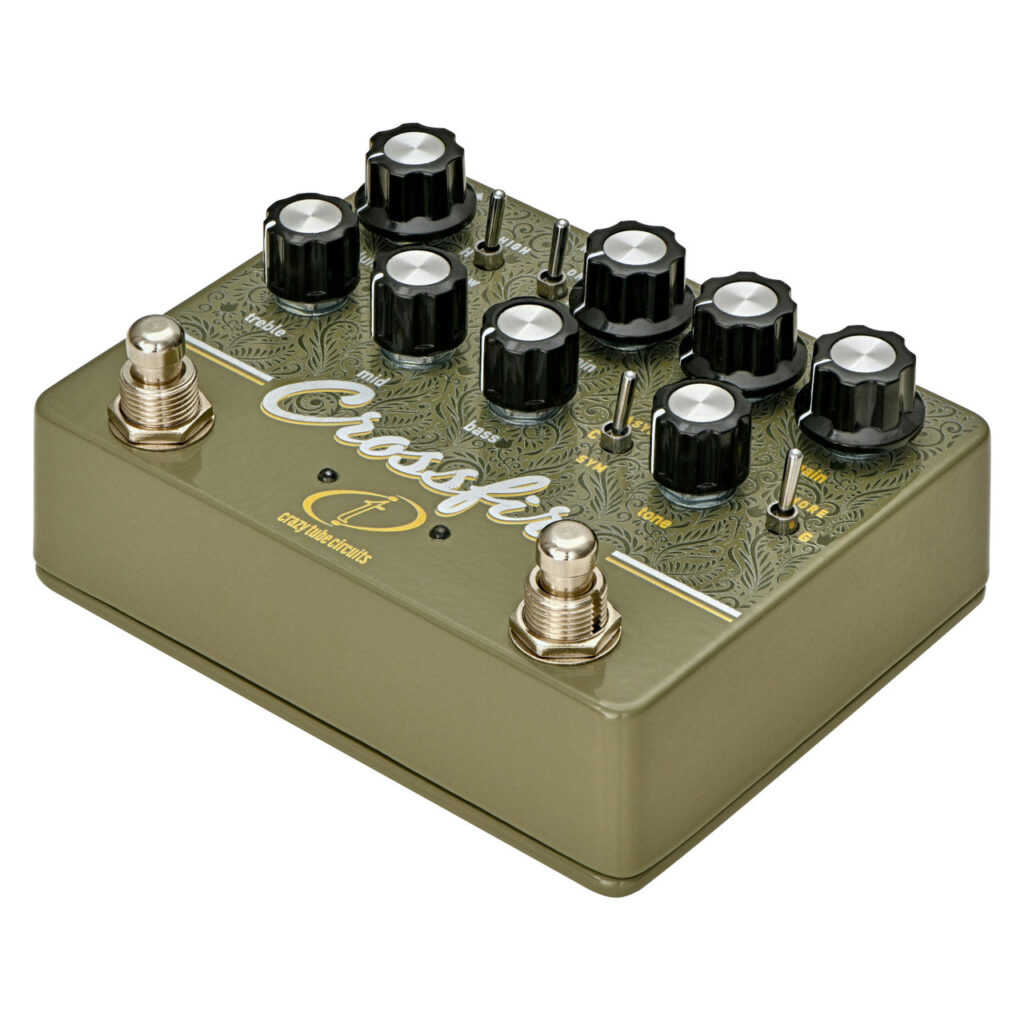
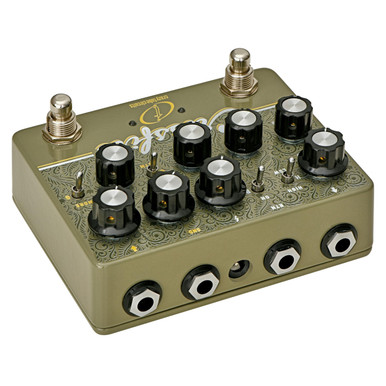
Crazy Tube Circuits CROSSFIRE Dual Channel Overdrive Pre-Amp FX Pedal

£189.99

This is the Crazy Tube Circuits CROSSFIRE Dual Channel Overdrive Pre-Amp FX Pedal from Crazy Tube Circuits, listed in Preamp & DI Pedals on Just Pedals. Read More below.

View Just
more
and ,

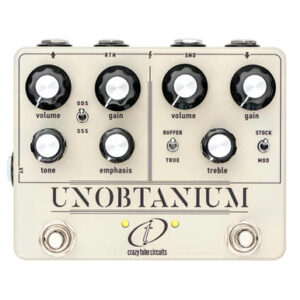
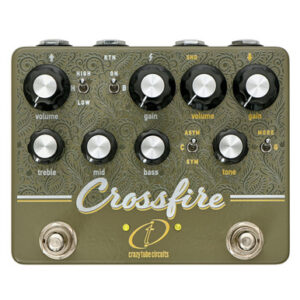
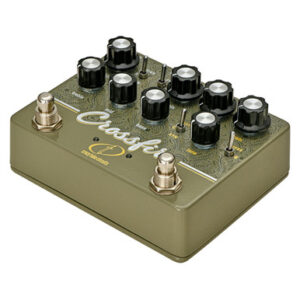
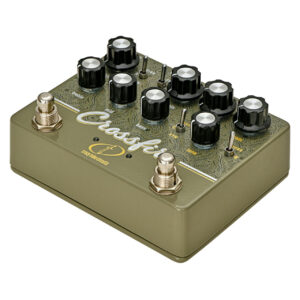
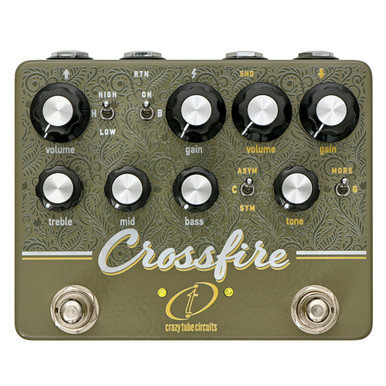
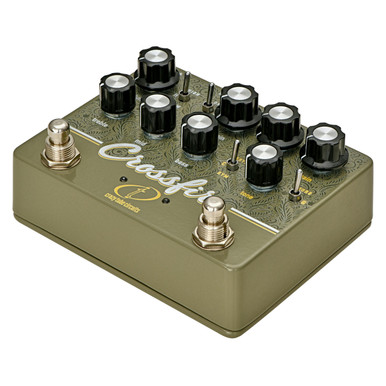
The Crazy Tube Circuits Crossfire is inspired by one of the most iconic pedal and amp combinations in guitar history. The left side is voiced after the legendary "Blackface" amps that defined clean electric guitar sounds. All-analogue and following the circuit path to the exact detail, CTC managed to include all of the essential sonic ingredients! From the big bold lows to the sparkly highs and slightly scooped mids.

2-in-1 Design!

Match that to the green "mid-hump" overdrive we've all grown to love, upon its inception in the late '70s, found on the right side. CTC chose to accurately recreate the circuit of this classic overdrive but with the addition of some of the most common modifications the pedal has seen throughout the years of its mass production or boutique variations. A clipping toggle switch selects between symmetrical (original) or asymmetrical clipping for enhanced touch-sensitive drive characteristics, while a gain toggle adds more gain and alters the low frequency response making it reminiscent of placing two of the same overdrive pedals in series. An internal switch offers additional headroom by providing 18V DC to the overdrive circuit.

Built-In Effects Loop

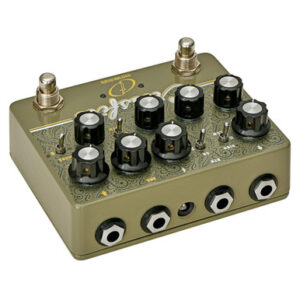
A passive effects loop gives you the option to connect your beloved pedals in the signal chain, building your ideal rig or use the two sides independently (send is the output of the overdrive side, return is the input of the amp side). When both sides are in bypass mode, the loop is true bypass as well, so your signal won't be affected at all.

Specifications

  • Voltage: 9V DC, centre negative (PSU – sold separately)
  • Current Draw: 83mA
  • Made in Greece

Related videos

Brand

Crazy Tube Circuits

Crazy Tube Circuits is a boutique pedal manufacturer based in Athens, Greece, known for its handcrafted effects pedals designed to deliver classic and modern tones with a unique twist. Founded by Christos Ntaifotis in 2009, Crazy Tube Circuits has gained recognition for its commitment to quality, innovation, and attention to detail.

One of Crazy Tube Circuits’ standout pedals is the Time Delay, a tape echo-inspired delay pedal that offers warm, vintage-style delay tones with modern features and flexibility. The Time Delay pedal includes controls for delay time, feedback, and modulation, allowing musicians to dial in a wide range of delay effects, from subtle ambiance to lush, modulated repeats.

In addition to the Time Delay, Crazy Tube Circuits offers a variety of other effects pedals, including overdrive, distortion, fuzz, modulation, and reverb pedals. Each pedal is handcrafted using high-quality components and features unique circuit designs, ensuring exceptional sound quality and reliability.

Crazy Tube Circuits pedals are highly regarded by musicians and enthusiasts for their versatility, tone quality, and distinctive aesthetic. With their dedication to craftsmanship and innovation, Crazy Tube Circuits continues to push the boundaries of what is possible in the world of guitar effects pedals, inspiring musicians to explore new sonic territories.

Category

Preamp & DI Pedals

A preamp brings an instrument signal to a controlled level and shapes its impedance, gain and frequency balance before amplification or recording. A DI converts the signal for a balanced, low-impedance connection and may include ground lift, pad and transformer isolation. Combined units can add drive, cabinet filtering, effects loops and parallel outputs while keeping the direct path stable.

Tags

Analogue

The signal is shaped by continuously varying electronic circuitry rather than being converted into a digital effect algorithm. Component choice, operating voltage and circuit tolerances influence headroom, noise, clipping texture and the small variations in response between designs.

Overdrive

Uses moderate clipping and gain-dependent compression to add harmonics while retaining much of the original note contour. Bass filtering, mid emphasis, clipping symmetry and available headroom decide whether it sounds open and amplifier-like, tightly focused or heavily saturated.