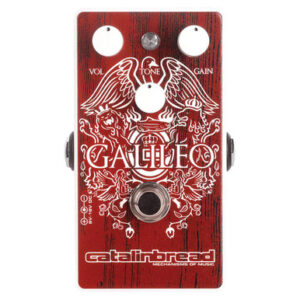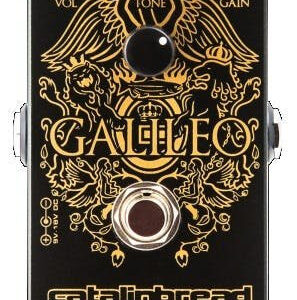
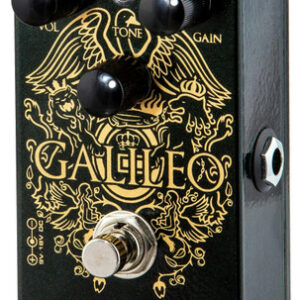
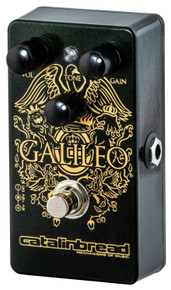
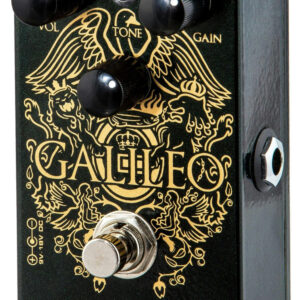
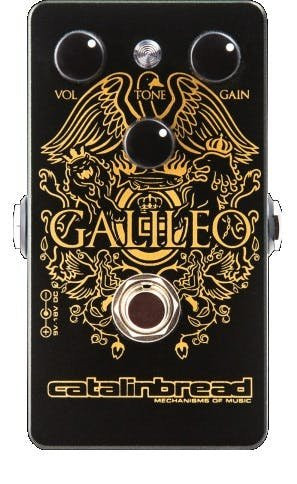
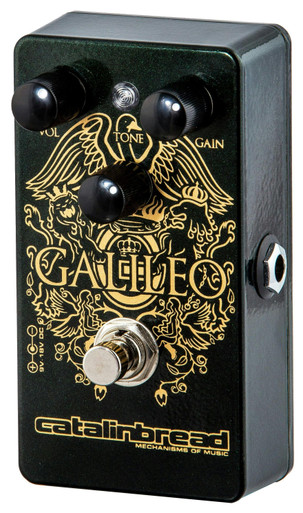
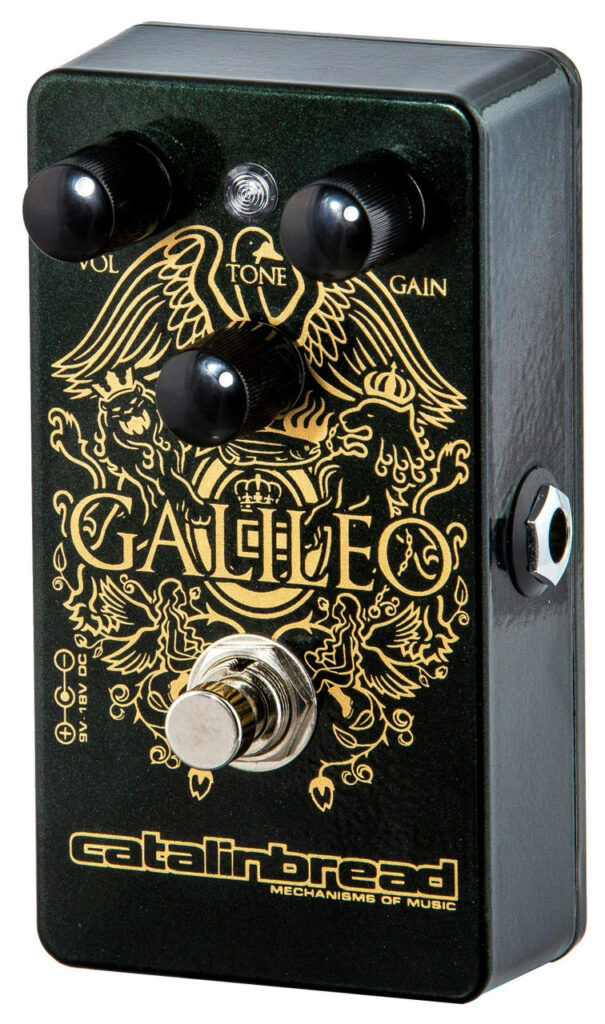
Catalinbread Galileo 2.0 Drive Pedal

£149.99

This is the Catalinbread Galileo 2.0 Drive Pedal from Catalinbread, listed in Specialist Effects Pedals on Just Pedals. Read More below.

View Just
more

Here’s What Catalinbread Say About the Galileo Overdrive Pedal

Captures the regal and soaring tones of a Rangemaster Treble-Booster into a cranked up Vox AC30

“Queen in a box”

Brian May’s sonic signature not only comes from his home built “Red Special” guitar, but also from a treble-booster pummeling banks of AC30s. He never turns the treble booster off, accessing a wide range of tones simply by manipulating his volume knobs and pickup settings. From his guitar, to the treble booster, to the amps, his entire rig is essentially a singular musical instrument. One that inspires the sort of playing May is known for. We designed the Galileo with this playing approach in mind, that with it you can roll your guitar volume back for jangly AC30 cleans, and crank it up for searing leads and aggressive yet focused rhythm tones.
Related videos

Brand

Catalinbread

Catalinbread is a renowned boutique pedal company based in Portland, Oregon, USA. Founded in 2003 by Nicholas Harris and Howard Gee, Catalinbread has established itself as a leading manufacturer of high-quality and innovative guitar effects pedals.

Catalinbread pedals are crafted with a deep respect for vintage tone and a flair for innovation. Hand-built in Portland, Oregon, they capture the spirit of classic amps, echoes, and fuzz circuits while adding modern versatility and character. Each pedal feels like a piece of sonic art, from their shimmering reverbs to their amp-inspired drives and dynamic boosts. Catalinbread’s approach is all about musical feel and responsiveness, giving players inspiring tools that make every note come alive.

Category

Specialist Effects Pedals

Specialist effects alter the signal in ways that do not sit cleanly inside one established family. They may use granular processing, frequency shifting, resonators, freeze or sustain, bit reduction, ring modulation, feedback networks or combinations of several techniques. The relevant distinction is the underlying process, its tracking or latency, and how completely the dry signal can be blended or replaced.