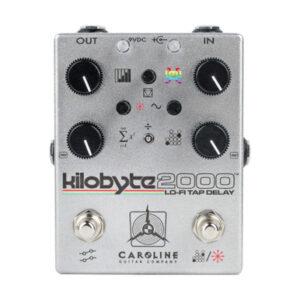
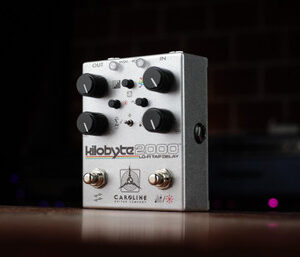
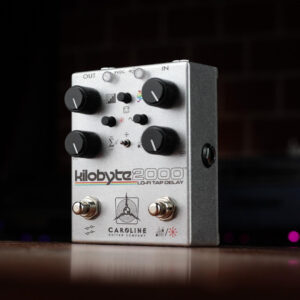
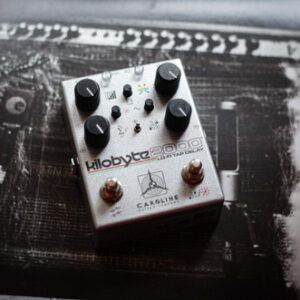
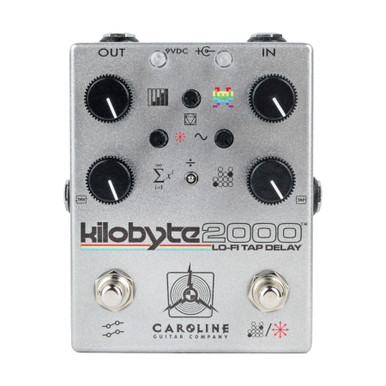
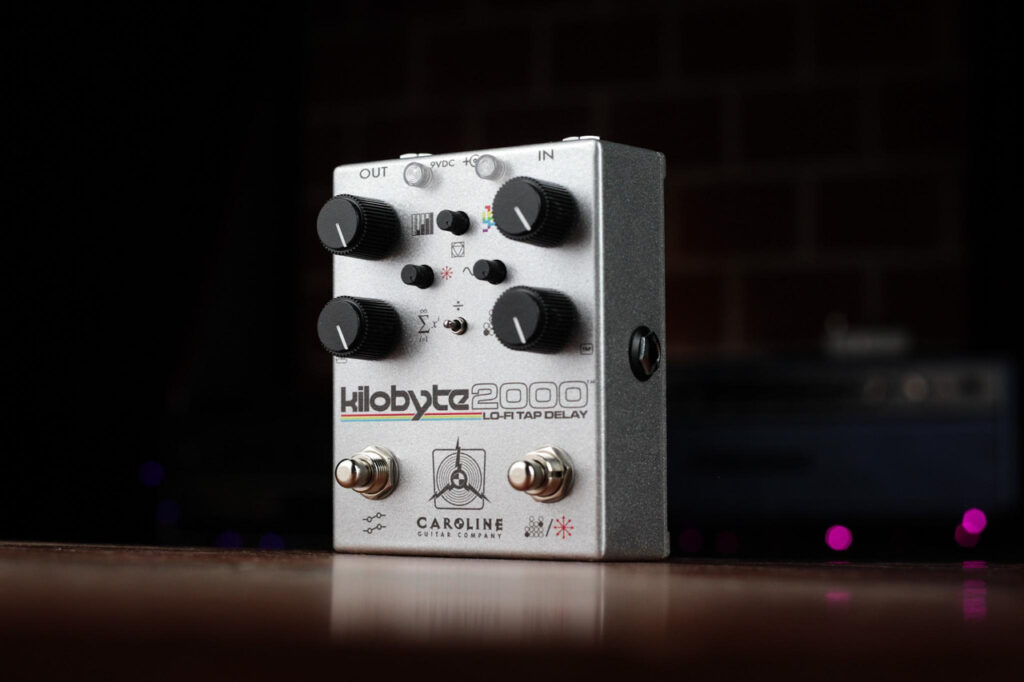
Caroline Guitar Company Kilobyte 2000 Lo-Fi Tap Delay Pedal

£279.00

This is the Caroline Guitar Company Kilobyte 2000 Lo-Fi Tap Delay Pedal from Caroline Guitar Company, listed in Delay Pedals on Just Pedals. Read More below.

View Just
more
and , ,

Here’s what Caroline Guitar Company say:

We are proud to present to you the Twentieth Century’s delay pedal of the future…the Caroline KILOBYTE 2000! Based on our original KilobyteTM delay from 2013, described by our customers as their “gateway drug to boutique” because there was nothing else out there quite like it.

While the sound is still familiar and beautiful, the features have been expanded from the original and include special edition mods offered to our MEGABYTE release from 2020.

Key Features

  • Delay time up to one full second.
  • Trails bypass and tap tempo control.
  • A new sharpness control lets the user set the preamp’s gain range and its voicing from “bark” to “bite”
  • A havoc control adjusts the intensity of the runaway effect when held down.
  • An external FX loop allows you to put other effects just on the repeats of the delay, or to get a 100% wet signal for other applications.

We deliberately compromised the dynamic range and frequency response to be different not only from other digital delays of the era, but also from other popular devices that used the PT-2399 “karaoke echo” chip.

We didn’t smother it to make it sound “analog”, but we also didn’t try to clean it up. In fact, with a dedicated drive preamp just for the wet side, we wanted players to clip the repeater circuit and make it even nastier.
Brand

Caroline Guitar Company

Category

Delay Pedals

Delay records the incoming signal for a chosen interval and repeats it after the original note. Feedback returns repeats to the delay line, while tone, filtering, modulation and saturation determine whether echoes remain clear, darken progressively, wobble like tape or degrade like analogue bucket-brigade circuits. Delay time and rhythmic subdivisions govern the spacing and musical pattern of the repeats.

Tags

Analogue

The signal is shaped by continuously varying electronic circuitry rather than being converted into a digital effect algorithm. Component choice, operating voltage and circuit tolerances influence headroom, noise, clipping texture and the small variations in response between designs.

Digital

Converts the signal or control process into numerical data for algorithmic processing. Digital designs can provide precise timing, long memory, complex routing and repeatable presets; sample rate, conversion, internal resolution and latency influence fidelity and response.

Tap Tempo

Measures repeated foot taps and converts their interval into an effect rate or delay time. Subdivisions translate that pulse into dotted, triplet or other rhythmic values, while averaging and range limits influence how quickly and accurately the tempo settles.