
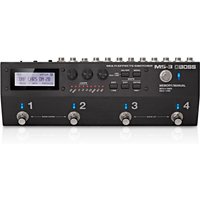
The Boss MS-3 Multi effects switcher is designed to maximise players creative freedom combining a powerful multi-effects engine with the flexibility of a multi-pedal switcher. With extensive effects and connectivity the MS-3 makes it possible for anyone to create a professional effects system both compact and versatile enough to suit a wide range of playing styles. Capable of running 6 different onboard effects alongside three of your favourite stompboxes. The Boss MS-3 can stand against the most powerful units on the market. Set it up as the foundation of your rig or as the main control center or as a standalone unit for times when you need to travel light. Also featuring the MS-3 editor/librarian to organize and customize the pedals effects the Boss MS-3 Multi Effects unit is perfect for both new and seasoned players.
Boss MS-3 Multi Effects Switcher
This is a New Boss MS-3 Multi Effects Switcher from Boss its found in our Pedal Switchers on the Just Pedals menu. Read More below.
As an affiliate partner, we may earn a small commission when you buy through our links — at no extra cost to you.
Related videos

Brand
Boss
BOSS began in Osaka in 1973 as MEG Electronics, a company dedicated to effects. Its first BOSS-branded effect was the CE-1 Chorus Ensemble in 1976; the OD-1, SP-1 and PH-1 launched the compact-effects series in 1977. The JustPedals catalogue includes familiar overdrives and distortions such as the OD-3, SD-1, BD-2, DS-1 and MT-2 Metal Zone, as well as utility items such as the PCS-20A cable. BOSS now spans compact pedals, multi-effects, loopers, tuners and controllers. Manufacturing origin should be checked by model rather than inferred from the brand’s Japanese history.
Category
Pedal Switchers
A pedal switcher routes effects through independently controlled loops so several pedals can be engaged, bypassed or reordered from one set of footswitches. Simple loop strips shorten the live signal path; programmable systems store combinations as presets and may send MIDI commands or change amplifier channels. Loop count, buffer placement, stereo support, spillover and routing flexibility define the system.
Others Just Ordered :
- I Love A Happy Accident… – Animals Pedal

- Animals Pedal Vintage Van Driving is Very Fun Overdrive

- Animals Pedal Sunday Afternoon Is Infinity Bender

- Ninevolt Pedals | Bath Time Reverb (Animals Pedal)

- This Fuzz Pedal Makes No Sense… But It Sounds Incredible

- ANIME Pedals | Animals Pedal Custom Illustrated Series
