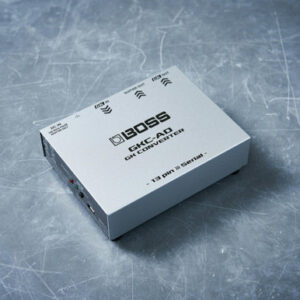
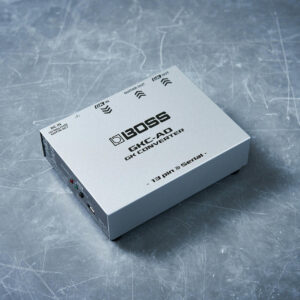
Boss GKC-AD GK Guitar Synth Converter – 13 Pin to Serial

£172.99

This is the Boss GKC-AD GK Guitar Synth Converter – 13 Pin to Serial from Boss, listed in Specialist Effects Pedals on Just Pedals. Read More below.

View Just
more
and , , , ,

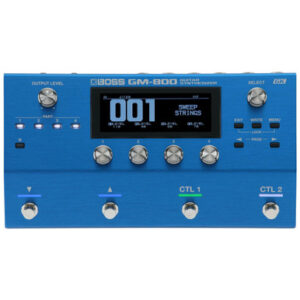
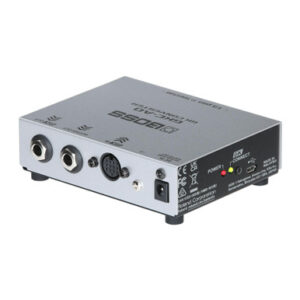
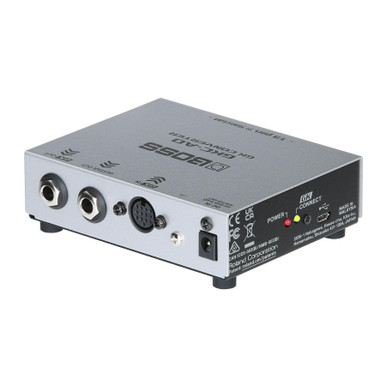
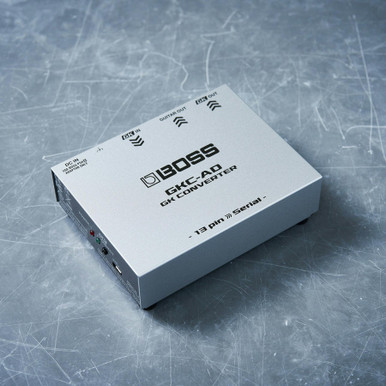
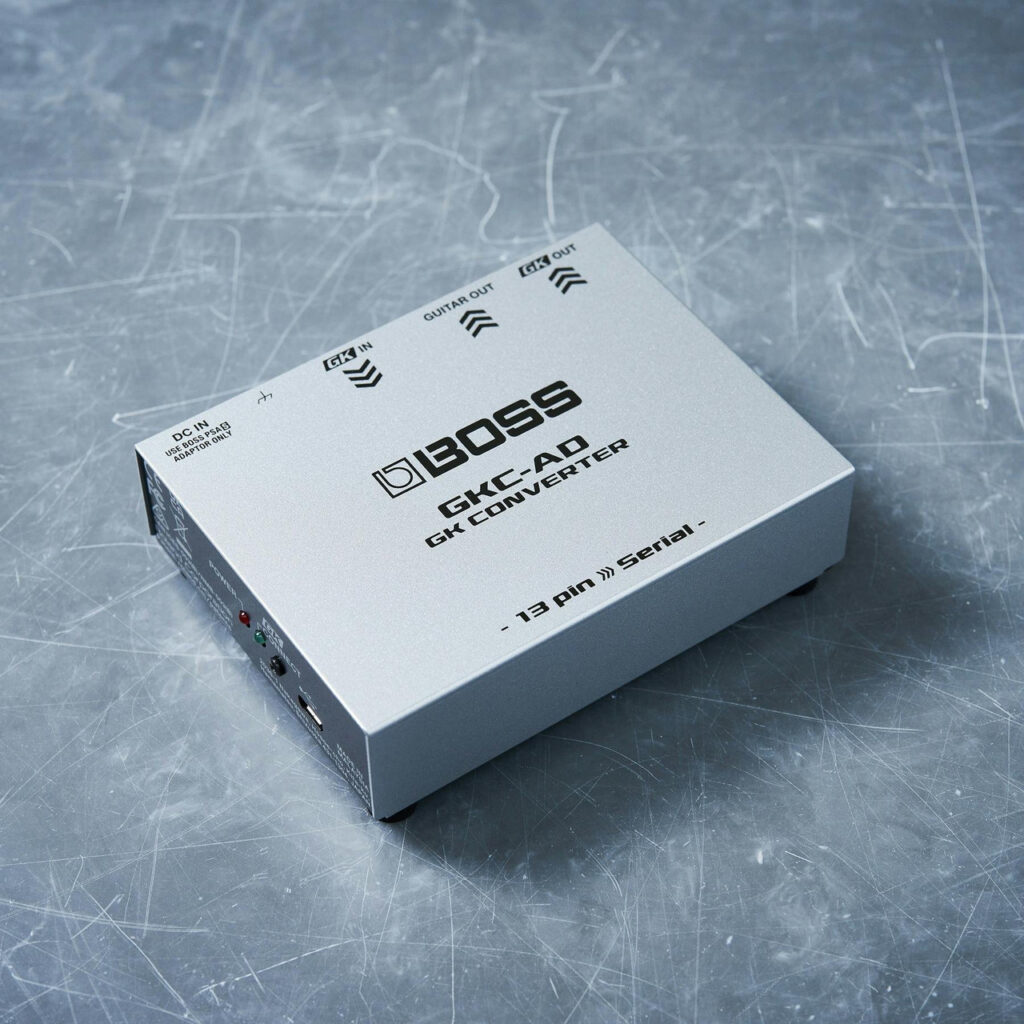
The latest Boss guitar synthesizer products feature the Serial GK digital interface, a newly-developed connection method that delivers evolved performance over the analogue 13-pin GK interface used in earlier Boss and Roland guitar synth and modelling products. The GKC-AD GK Converter allows you to drive the Serial GK input on the GM-800 Guitar Synthesizer from a Roland GK-3 or GK-3B Divided Pickup, or an instrument equipped with a 13-pin GK output.

Key Features

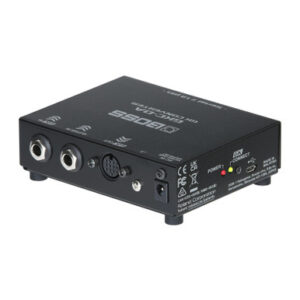
  • Converts analogue 13-pin GK pickup systems to the newly-developed Serial GK digital interface.
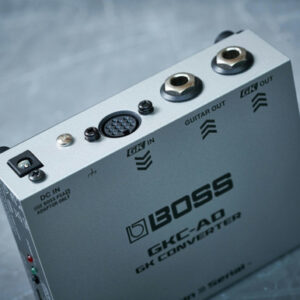
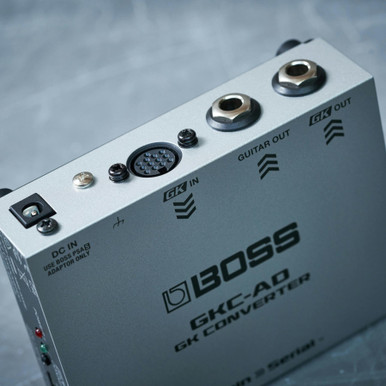
  • 13-pin GK input and Serial GK output.
  • Instrument output for passing normal guitar/bass pickup sounds embedded in the 13-pin connection.
  • Compact and rugged metal design.

Specifications

  • Nominal Output Level: -10 dBu (GUITAR OUT)
  • Recommended Load Impedance: 10 k Ohms or Greater (GUITAR OUT)
  • Current Draw: 240 mA
  • Power Supply: AC Adaptor (Included)

Connectors

  • GK IN Connector: 13 Pins DIN Type
  • GK OUT Jack: 1/4-inch TRS Phone Type (for BGK Cable Only)
  • GUITAR OUT Jack: 1/4-inch Phone Type
  • DC IN Jack
  • USB Port: USB Micro-B (Program Update Only)

Weight & Dimensions

  • Weight: 340 g / 12 oz
  • Dimensions (W x D x H): 115 x 92 x 36 mm / 4.528 x 3.622 x 1.417 inches

Accessories (Included)

  • AC Adaptor
  • Owner’s Manual
  • Leaflet (Using the Unit Safely)

Options (Sold Separately)

  • Serial GK Cable: BGK-15, BGK-30

Related videos

Brand

Boss

Boss is a prominent manufacturer of guitar effects pedals, multi-effects units, and related musical equipment, known for their durability, reliability, and wide range of effects. Founded in 1973 as a division of the Roland Corporation, Boss quickly became synonymous with high-quality effects pedals that are popular among guitarists and musicians worldwide.

Boss pedals are renowned for their rugged construction, intuitive controls, and signature sound quality. The company offers a comprehensive lineup of effects pedals covering various categories, including distortion, overdrive, delay, modulation, and more. Iconic pedals like the DS-1 Distortion, the DS-2 Turbo Distortion, the DD-3 Digital Delay, and the MT-2 Metal Zone have become staples on countless pedalboards due to their versatility and reliability.

Category

Specialist Effects Pedals

Specialist effects alter the signal in ways that do not sit cleanly inside one established family. They may use granular processing, frequency shifting, resonators, freeze or sustain, bit reduction, ring modulation, feedback networks or combinations of several techniques. The relevant distinction is the underlying process, its tracking or latency, and how completely the dry signal can be blended or replaced.

Tags

Analogue

The signal is shaped by continuously varying electronic circuitry rather than being converted into a digital effect algorithm. Component choice, operating voltage and circuit tolerances influence headroom, noise, clipping texture and the small variations in response between designs.

Bass

Voiced or equipped to retain low-frequency fundamentals and the higher headroom of a bass signal. Clean blends, crossovers and bass-specific filter ranges can preserve weight and articulation while the effected portion adds harmonics, movement or ambience.

Digital

Converts the signal or control process into numerical data for algorithmic processing. Digital designs can provide precise timing, long memory, complex routing and repeatable presets; sample rate, conversion, internal resolution and latency influence fidelity and response.

Synth

Generates or reshapes the signal through oscillator, filter and envelope behaviour associated with synthesis. Tracking, envelope response, pitch range, polyphony and dry blend determine whether the generated voice follows the instrument as bass, lead, pad or abstract texture.

USB

Provides a Universal Serial Bus connection for power, audio, MIDI, firmware or editing data. The supported USB class and connector do not by themselves show its purpose; channel count, sample format, host compatibility and power demand define the actual function.