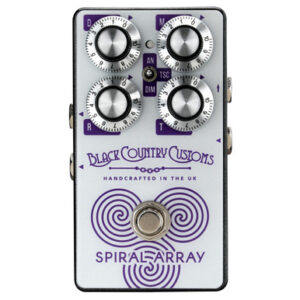
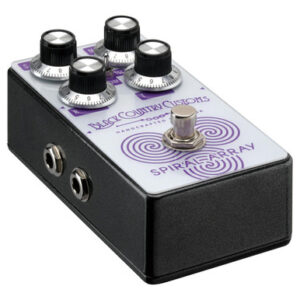
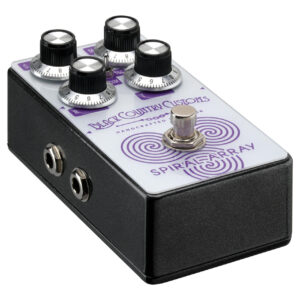
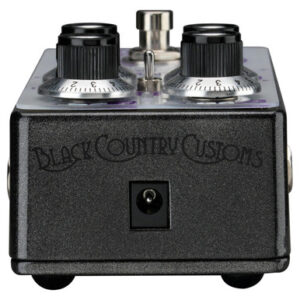
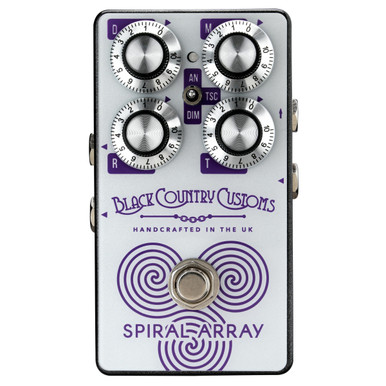
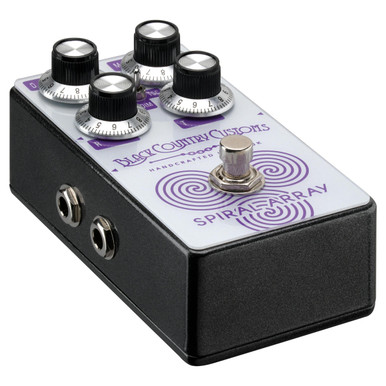
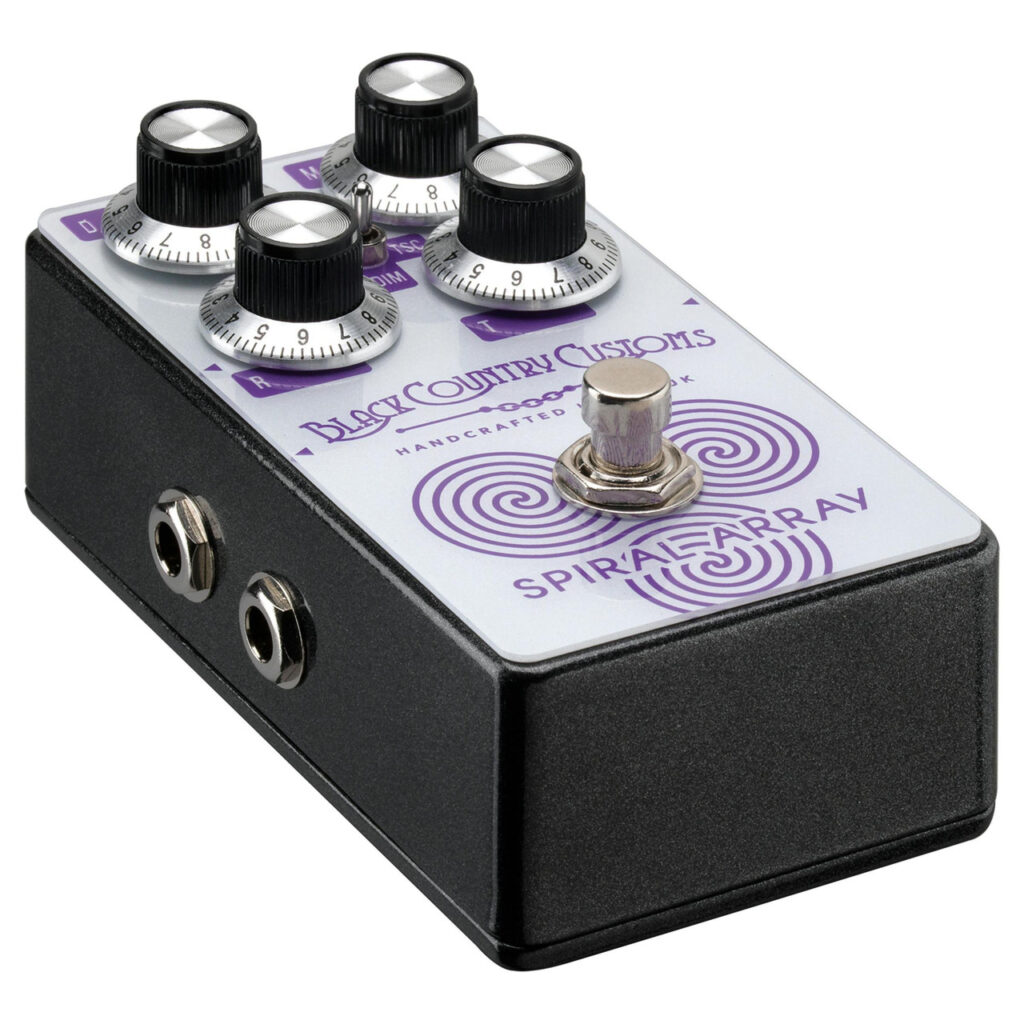
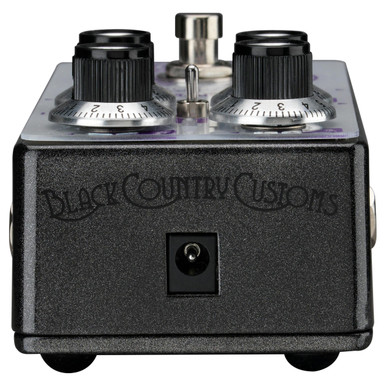
Black Country Customs by Laney Spiral Array Chorus Pedal

£139.99

This is the Black Country Customs by Laney Spiral Array Chorus Pedal from Black Country Customs, listed in Chorus Pedals on Just Pedals. Read More below.

View Just
more
and , ,

The Laney Black Country Customs Spiral Array is essentially 3 chorus pedals packed into one compact stompbox! Housing 3 classic modulation tones modelled on iconic mid-'70s to mid-'80s units, the Spiral Array takes you on a sweet nostalgia trip whenever you turn it on!

Whether you're looking to capture the distinctive and lush analogue sound of the 1976 Boss CE-1, the spatial digital chorus of the 1979 Roland Dimension D, or the uber-rich vibe of the 1985 Dytronics Tri Stereo Chorus — the Spiral Array gives you access to all three. This is Andy Timmons' chorus pedal of choice too, so you know it must be exceptional!

Key Features

  • 3 Chorus Modes — Analogue, Digital & Tri Stereo settings emulate the sounds of legendary '70s & '80s chorus units.
  • Transparent Tone — Spiral Array is an "additive" pedal that embellishes your sound, it doesn't affect your core guitar tone or EQ.
  • Expression Pedal Input — Lets you control the effect intensity on-the-fly!
  • Stereo Outputs — Pedal can be routed into two separate amplifiers to create an immersive chorus sound.
  • Tri-Colour LED — Provides a clear visual reference for which mode the pedal is running in.
  • Silent Switching — Prevents an audible "pop" when the effect is engaged. The only thing you should hear is a great-sounding product!

Specifications

  • Solid Metal Chassis Construction
  • Dimensions (H x W x D): 58mm x 74mm x 121mm
  • Weight: 0.35kg

Brand

Black Country Customs

Category

Chorus Pedals

Chorus mixes the dry signal with one or more short, continuously modulated delays. The small pitch and timing movement between the paths creates width, shimmer and the impression of several instruments playing together. Rate controls the modulation speed, depth controls its excursion, and delay or mix settings determine whether the result is subtle thickening, a liquid wobble or a broad stereo image.

Tags

Analogue

The signal is shaped by continuously varying electronic circuitry rather than being converted into a digital effect algorithm. Component choice, operating voltage and circuit tolerances influence headroom, noise, clipping texture and the small variations in response between designs.

Digital

Converts the signal or control process into numerical data for algorithmic processing. Digital designs can provide precise timing, long memory, complex routing and repeatable presets; sample rate, conversion, internal resolution and latency influence fidelity and response.

Stereo

Processes, creates or passes two audio channels. True stereo preserves separate left and right inputs, while mono-to-stereo effects generate spatial differences internally; routing, phase behaviour and whether trails remain stereo determine the resulting image. Some outputs sum to mono when only one socket is connected, which can change level or modulation depth.