
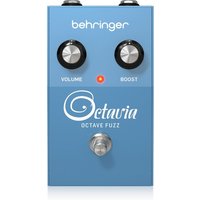
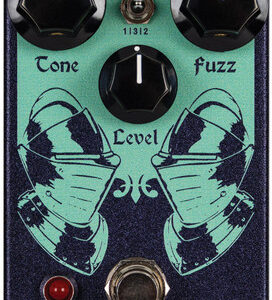
The Behringer OCTAVIA OCTAVE FUZZ is perfect for guitarists seeking the vintage tones of the 60s with an unmistakable octave-up fuzz effect. Whether you?re chasing Hendrix-inspired sounds or creating your own unique style this pedal delivers bold and aggressive fuzz powered by silicone transistors for a truly analog experience. Designed to respond dynamically to your playing the OCTAVIA works seamlessly with different pickups offering versatile sound shaping. True bypass ensures your signal remains pristine when the pedal is off while the robust housing guarantees long-term reliability with a classic retro aesthetic. Power it with a 9 V battery or the Behringer PSU-SB DC power supply (sold separately).
Behringer OCTAVIA OCTAVE FUZZ
£43.50
This is a New Behringer OCTAVIA OCTAVE FUZZ from Behringer is in our Octave Pedals category on Just Pedals. Read More below.
View Just Behringer
As an affiliate partner, we may earn a small commission when you buy through our links — at no extra cost to you.
Related videos



Brand
Behringer
Behringer was founded in 1989 by musician and sound engineer Uli Behringer, who began building equipment because he could not afford the studio gear he needed. The company has since grown into a broad audio supplier, and its JustPedals listings cover guitar, bass and utility units rather than effects alone. Examples include the DR600 digital reverb, EQ700 graphic equalizer, UT300 tremolo, BDI21 bass preamp, acoustic preamp and TU300 tuner. This spread makes model-level detail useful: check the instrument, circuit type and intended signal-chain role instead of assuming every Behringer listing is a guitar effect.
Category
Octave Pedals
An octave effect generates notes one or more octaves above or below the input. Analogue circuits often create raw monophonic sub-octaves, while digital pitch tracking can follow chords and provide several intervals with cleaner separation. Tracking speed, polyphonic accuracy, latency and the balance of dry, upper and lower voices determine whether the result feels tight, organ-like, synthetic or deliberately unstable.
Tags
Analogue
The signal is shaped by continuously varying electronic circuitry rather than being converted into a digital effect algorithm. Component choice, operating voltage and circuit tolerances influence headroom, noise, clipping texture and the small variations in response between designs.
Fuzz
Pushes the signal into extreme clipping, often approaching a square wave and producing dense harmonics. Transistor type, bias, input loading and filtering govern whether the texture is smooth, woolly, gated, spluttering, octave-rich or highly responsive to the instrument volume.
True Bypass
Connects input directly to output through mechanical or relay switching when the effect is off, removing the active circuit from the audio path. It avoids buffer colour but leaves cable capacitance and switching design to influence high-frequency loss and possible switching noise.
Others Just Ordered :
- I Love A Happy Accident… – Animals Pedal

- Animals Pedal Vintage Van Driving is Very Fun Overdrive

- Animals Pedal Sunday Afternoon Is Infinity Bender

- Ninevolt Pedals | Bath Time Reverb (Animals Pedal)

- This Fuzz Pedal Makes No Sense… But It Sounds Incredible

- ANIME Pedals | Animals Pedal Custom Illustrated Series