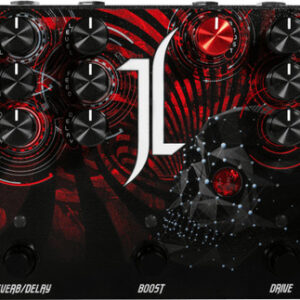
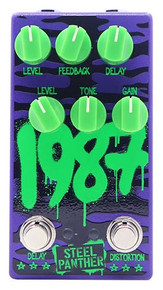

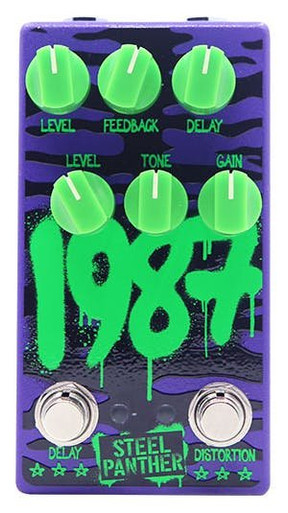
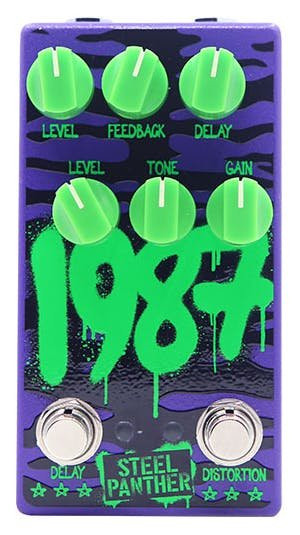
Behold, the Radness that is the 1987 pedal! The sound of 1987 perfectly packaged and delivered by your trusted stomp-box connoisseurs, Steel Panther.
This tag-team of Distortion and Delay is like a three-way with You, Ginger Lynn, and Christy Canyon. Just yourself, the talent in your extremities, and two of the baddest bitches on the planet. Just like most of the Dallas Cowboys cheerleaders, this has Satchel’s flavour all over it. With the grit of 100 chainsaws and the ability to repeat itself more than that super stoned dude from Chemistry Class, it is truly the ultimate badass accessory…next to eyeliner.
Key Features
- Steel Panther Signature Distortion / Delay Effects Pedal – Makes your pedalboard stand-out from the rest!
- 2-in-1 solution for replicating legendary 80’s Distortion and Delay tones – Saves Pedalboard Real-Estate.
- Ultra-powerful Distortion circuit with searing British Tone – Cut through the mix with ease.
- Distortion and Delay Channels Switchable Separately – Full control over how you want each effect to sound instantly.
Specifications
- Analogue Delay with 50-500ms delay time
- True bypass Switching
- Powered by a regular 9V DC PSU (centre -, 2,1 mm, 45 mA current draw)