AllPedal Devils Triad Jeff Loomis Signature Distortion Boost Delay Reverb Pedal

£349.00

This is a New AllPedal Devils Triad Jeff Loomis Signature Distortion Boost Delay Reverb Pedal from AllPedal, listed in Delay & Reverb Pedals on Just Pedals. Read More below.

View Just
more
and ,

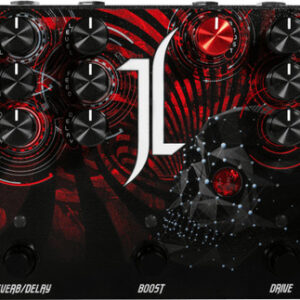
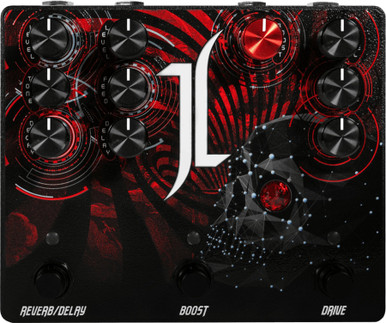
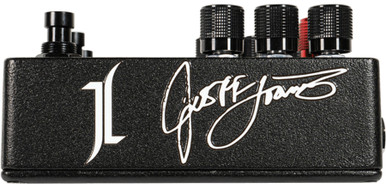
Designed in collaboration with Jeff Loomis (from Nevermore and Arch Enemy) in order to be an all-in-one solution for his live and studio performances, the Devil’s Triad offers particularly crafted high gain / lead toners fine-tuned by Jeff over his career. The Devil’s Triad is an overdrive / distortion pedal that features a boost, a delay and a reverb, as well as a complete routing system that can adapt to every configuration types, from beginners to professionals.

The Devil's Triad is a powerhouse of pedal tones in a single package, with the Drive section feeding into the Boost, which then cascades into Reverb and Delay.

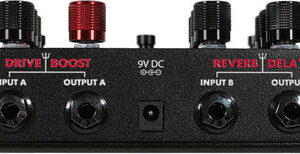
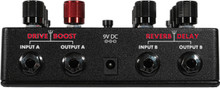
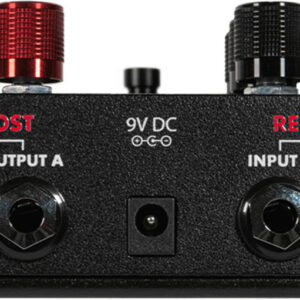
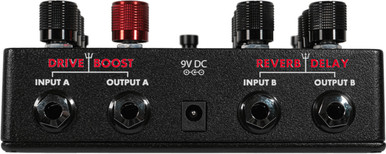
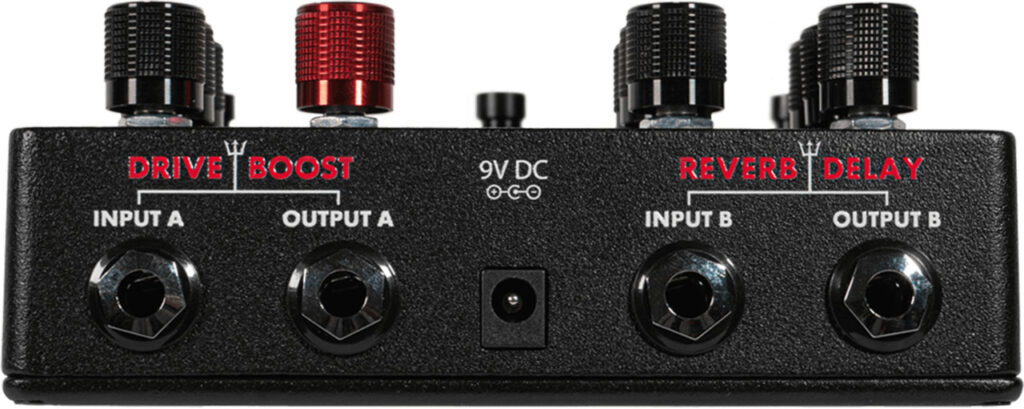
To use all effects in one signal path, you can simply plug your Guitar into Input A and run a second cable from Output B into your amplifier’s input.

In addition to that, Devil’s Triad can be used as a preamp, by plugging Output B into the FX Return of your amplifier’s effects loop, bypassing the amp’s preamp entirely. The pedal’s tone, gain and level controls will now function as the front end of your amplifier.

To give you the most flexibility possible, the Devil’s Triad was designed with separate IN and OUT jacks for the Reverb/Delay section. This allows routing the Reverb and Delay effects to your amplifiers effects loop while still allowing you to use the Drive and Boost to shape the tone and gain at the front end of your amplifier’s signal path, just like Jeff Loomis does!

Specifications

  • Jeff Loomis Signature Overdrive / Boost / Reverb / Delay Effects Pedal
  • All- in one solution that works as pedalboard preamp, in front of an amp or routed through an amp’s effects loop
  • Analogue Op-Amp drive section with soft LED-clipping – from expressive overdrive to powerful distortion that tightens up any amp and accentuates pick attack
  • Analogue Op-amp- Boost with up to 20 dB of added volume
  • Digital Delay with 50-500 ms delay time
  • Digital Plate Reverb
  • 2 TS inputs and outputs for multiple routing options for Drive/Boost and Delay/Reverb sections
  • True bypass Switching
  • Made in the USA
  • Powered by a regular 9 V DC PSU – (centre -, 2,1 mm, 160 mA current draw)
Brand

AllPedal

In the current JustPedals catalogue, AllPedal is represented by Distortion Pedals and Delay & Reverb Pedals. Current listings include Steel Panther Signature Delay Distortion and Devils Triad Jeff Loomis Signature Distortion Boost Delay Reverb. That makes the range relevant to players looking for drive, gain and clipping, plus time-based effects and ambience. Check each model for its exact circuit or processing platform, controls, power requirements and connections, particularly where the catalogue includes both pedals and supporting gear.

Category

Delay & Reverb Pedals

Delay and reverb pedals create space by repeating or surrounding the dry signal with reflections. Delay time, feedback and filtering set the rhythm and character of repeats, while reverb decay, pre-delay, damping and diffusion shape the sense of room or distance. Combined units can save pedalboard space and provide presets, but the routing may be serial, parallel, stereo or mono-summed. Check spillover, tap tempo, trails, mix range and stereo connections if the effect will be used live or into a mixer.

Tags

Boost

Boost pedals raise level, add gain or do both. A clean boost mostly preserves the source voice and pushes the next gain stage harder; a coloured boost changes the frequency balance as it lifts the level, while treble or mid boosts narrow the emphasis deliberately. Gain, output, tone, presence and headroom shape the result. Place the boost before overdrive for more clipping, after gain for more level, or into a clean amp when a louder signal is the aim.

Distortion

Distortion uses deliberate clipping to add harmonics, compression and sustain. Some circuits are voiced for amp-like crunch, others for high-gain rhythm or an abrasive texture. Gain, tone, presence, resonance, blend and noise-control features determine how the pedal interacts with pickups and the next stage. Before choosing, decide whether it will push an amplifier, run into a clean platform or feed a cabinet simulation, because the same control settings can behave very differently in each route.