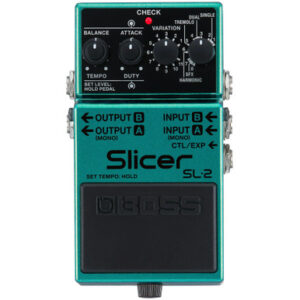
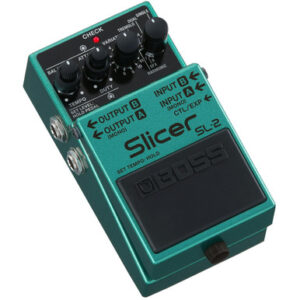
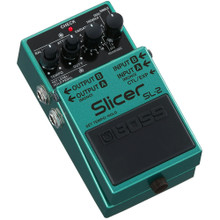

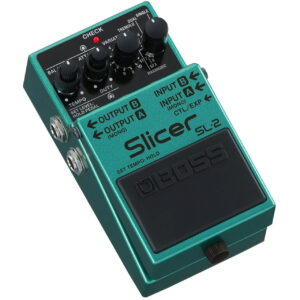
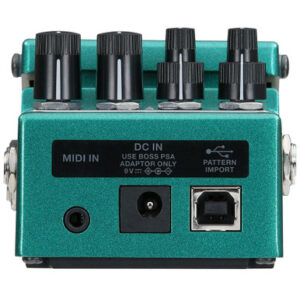
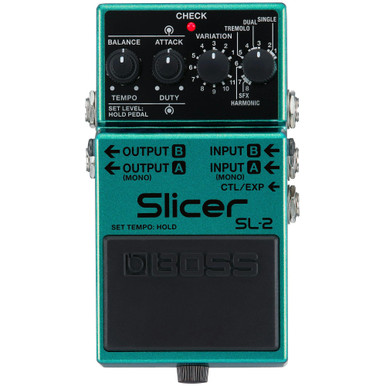
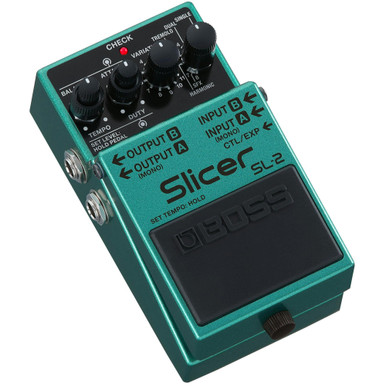
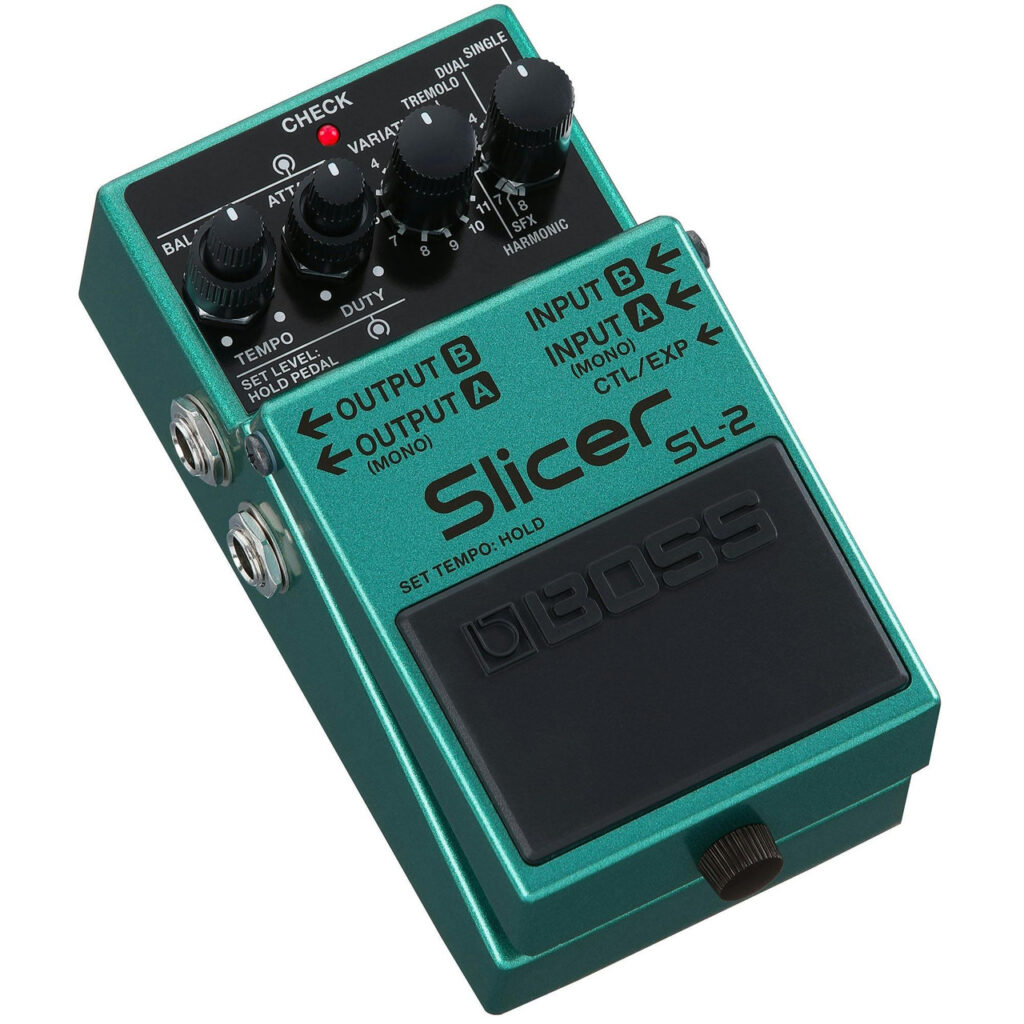
The Boss SL-2 Slicer is an inspiring creative tool packed with colourful sonic grooves and rhythmic energy. It works by "slicing" up your sound into unique percussive patterns, many of which include internal filters and effects, adding a new dimension to your rig. An evolution of the famous SL-20 Slicer, the SL-2 offers expanded capabilities in the smaller, pedalboard-friendly Boss compact format you know and love.
The SL-2 elevates your performances with 88 onboard patterns with the option to tap into more via the Boss Tone Studio app. Tweak slices on the fly and sync to songs via the tap tempo and MIDI functions. Mostly importantly though, the SL-2 is fun and easy to use, opening up a wealth of creative options to guitarists, keyboardists, DJs, beatmakers, and more!
Key Features
- The famous BOSS Slicer effect in an advanced compact pedal
- Instantly create compelling sonic grooves with single and dual Slicer paths processed with multiple internal effects
- 88 memory locations with pre-loaded patterns (eight types with 11 variations for each)
- Control the wave shape and length of sliced audio with Attack and Duty knobs
- Adjust the overall effect level with +/-12 dB range
- Mono/stereo input and output for integration with any setup
- Seven stereo output modes: Fixed, EFX/Direct, Random, Ping-Pong, Auto, 3D Cross, and 3D Rotation
- Connect to the BOSS Tone Studio app (macOS/Windows) via USB to explore and load alternate patterns
- Control bypass and tap tempo with the onboard pedal switch
- Connect up to two footswitches or an expression pedal for external parameter control
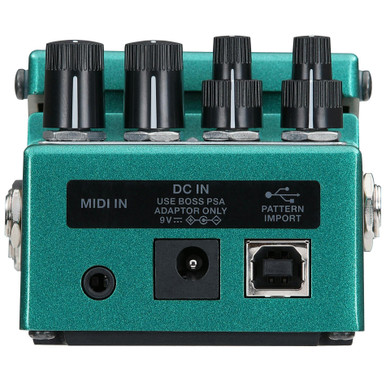
- TRS MIDI input for clock sync and CC control
- BOSS five-year warranty
Specifications
- Foot-Sample Rate: 48 kHz
- AD Conversion: 24 bits + AF method – AF method (Adaptive Focus method) This is a proprietary method from Roland & BOSS that vastly improves the signal-to-noise (SN) ratio of the AD and DA converters.
- DA Conversion: 32 bits
- Patterns: 88
- Nominal Input Level: INPUT A (MONO), INPUT B: -20 dBu
- Maximum Input Level: INPUT A (MONO), INPUT B: +7 dBu
- Input Impedance: INPUT A (MONO), INPUT B: 1 MΩ
- Nominal Output Level: OUTPUT A (MONO), OUTPUT B: -20 dBu
- Maximum Output Level: OUTPUT A (MONO), OUTPUT B: +7 dBu
- Output Impedance: OUTPUT A (MONO), OUTPUT B: 1 kΩ
- Recommended Load Impedance: OUTPUT A (MONO), OUTPUT B: 10 kΩ or greater
- Bypass: Buffered bypass
- Controls: TYPE, VARIATION, ATTACK, DUTY, TEMPO, BALANCE, Pedal switch
- Indicator: CHECK indicator (Used for indication of Tempo and check battery)
- Connectors: INPUT A (MONO) jack, INPUT B jack, OUTPUT A (MONO) jack, OUTPUT B jack: 1/4-inch phone type, CTL/EXP jack: 1/4-inch TRS phone type, DC IN jack, MIDI IN jack: Stereo miniature phone type, USB port: USB B
- Power Supply: Alkaline battery (9 V, 6LR61 or 6LF22, commercially available) AC adaptor (PSA series: sold separately)
- Current Draw: 95 mA
- Expected battery life under continuous use (These figures will vary depending on the actual conditions of use.) Alkaline: Approx. 2.5 hours
- Dimensions: 73 (W) x 129 (D) x 59 (H) mm, 2-7/8 (W) x 5-1/8 (D) x 2-3/8 (H) inches
- Weight (including battery): 450 g, 1 lb
- Accessories: Leaflet ("USING THE UNIT SAFELY," "IMPORTANT NOTES," and "Information"), Dry battery (9 V, 6LR61 or 6LF22)