Brand
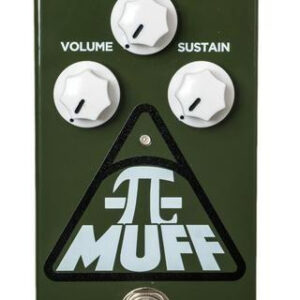
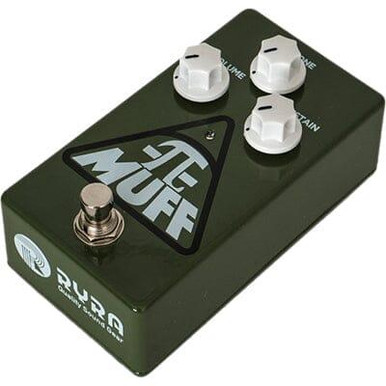
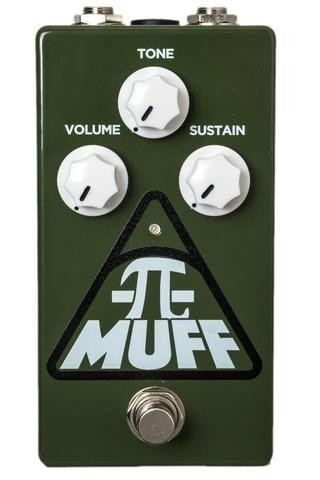
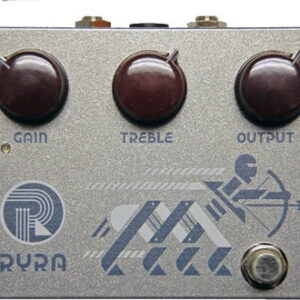
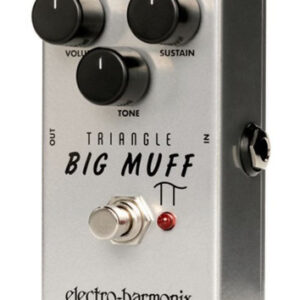
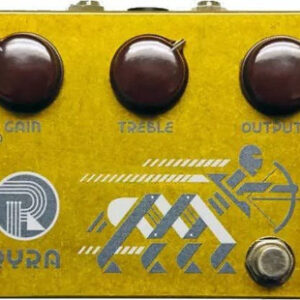
In the current JustPedals catalogue, RYRA is represented by Overdrive Pedals and Fuzz Pedals. Current listings include The Klone in Gold, The Klone in Silver and Tri-Pi Muff Fuzz. That makes the range relevant to players looking for drive, gain and clipping. Check each model for its exact circuit or processing platform, controls, power requirements and connections, particularly where the catalogue includes both pedals and supporting gear.
Category
Fuzz drives the signal into extreme clipping, often flattening the waveform and generating a thick spectrum of harmonics. Transistor type, bias, input loading and tone filtering create markedly different responses, from loose and velvety to gated, spluttering or octave-rich. Some circuits interact strongly with pickup impedance and guitar volume, while others include buffers or blends for a more consistent response.
Tags
Can operate from an internal replaceable battery, usually with different available current and running time from an external supply. Battery chemistry, access and automatic disconnection through the input socket affect practical runtime and storage. High-current digital processing generally shortens battery life more sharply than a simple analogue circuit.
Connects input directly to output through mechanical or relay switching when the effect is off, removing the active circuit from the audio path. It avoids buffer colour but leaves cable capacitance and switching design to influence high-frequency loss and possible switching noise.