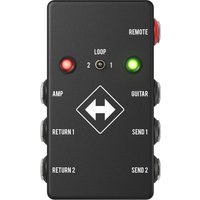
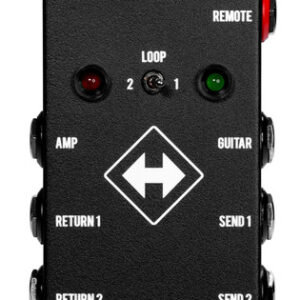
Solve any switching puzzle. The JHS Pedals Switchback gives you the perfect stage and studio solution for a multitude of switching uses. With a 1/4 input 1/4 output and two integrated effects loops the Switchback can be used as an A/B effects loop switcher a simple true bypass looper an A/B routing box an amp input switcher and much more. The switching can be done using the integrated toggle switch or you can utilise one of JHS Red Remote footswitches in the Remote input for handsfree footswitch control. The Switchback will bypass any loop where nothing is plugged in so switching between a single effects loop and the standard I/O can be done without having to bridge the second loop. With so many potential uses for a single handy box the JHS Switchback can be one of the most useful parts of any pedalboard.
JHS Pedals Switchback
This is a New JHS Pedals Switchback from JHS Pedals its found in our Specialist Effects Pedals on the Just Pedals menu. Read More below.
As an affiliate partner, we may earn a small commission when you buy through our links — at no extra cost to you.
Related videos


Brand
JHS Pedals
JHS Pedals grew from Josh Scott’s pedal-modification work in 2007 into a Kansas City effects maker. Scott’s first original designs followed in 2008; the Morning Glory began as his reinvention of the Marshall Bluesbreaker. The JustPedals catalogue carries the Morning Glory V4 and Muffuletta, along with practical tools such as the Little Black Buffer, Buffered Splitter and Little Black Amp Box. JHS describes its guitar pedals as made in Kansas City, USA. The range mixes original drive and fuzz designs with utility pedals, so the current listings show more than a single “boutique overdrive” identity.
Category
Specialist Effects Pedals
Specialist effects alter the signal in ways that do not sit cleanly inside one established family. They may use granular processing, frequency shifting, resonators, freeze or sustain, bit reduction, ring modulation, feedback networks or combinations of several techniques. The relevant distinction is the underlying process, its tracking or latency, and how completely the dry signal can be blended or replaced.
Tags
True Bypass
Connects input directly to output through mechanical or relay switching when the effect is off, removing the active circuit from the audio path. It avoids buffer colour but leaves cable capacitance and switching design to influence high-frequency loss and possible switching noise.
Others Just Ordered :
- I Love A Happy Accident… – Animals Pedal

- Animals Pedal Vintage Van Driving is Very Fun Overdrive

- Animals Pedal Sunday Afternoon Is Infinity Bender

- Ninevolt Pedals | Bath Time Reverb (Animals Pedal)

- This Fuzz Pedal Makes No Sense… But It Sounds Incredible

- ANIME Pedals | Animals Pedal Custom Illustrated Series