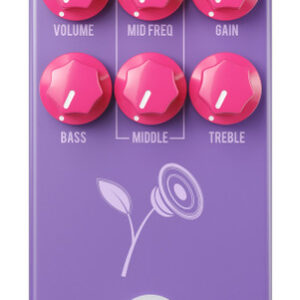
JHS Pedals Violet Lari Basilio Signature Overdrive Distortion Pedal in Purple

£169.99

This is a New JHS Pedals Violet Lari Basilio Signature Overdrive Distortion Pedal in Purple from JHS Pedals, listed in Overdrive Pedals on Just Pedals. Read More below.

View Just
more
and , ,

Here’s what JHS Pedals say about the JHS Pedals Violet Lari Basilio Signature Overdrive Distortion Pedal:

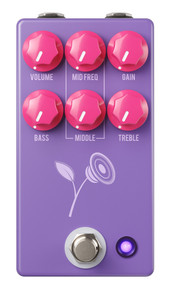
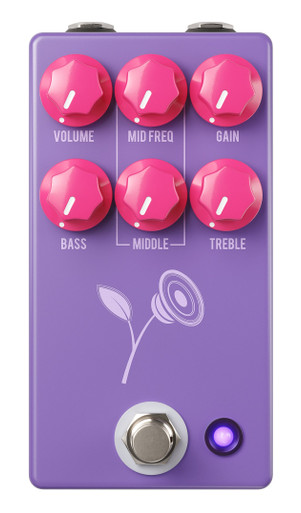
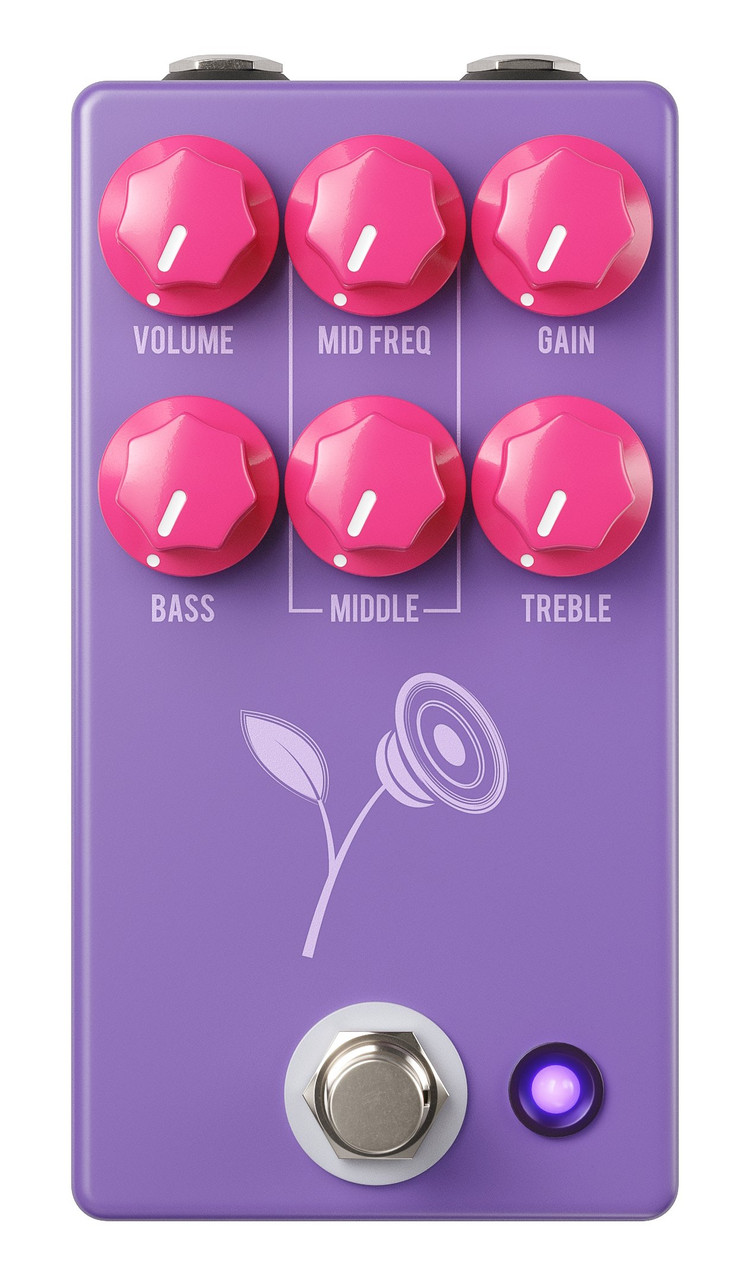
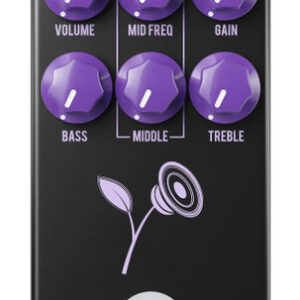
The Violet Distortion is a new take on distortion/overdrive brought to you from the collaborative minds of Josh Scott and highly influential Brazilian guitarist Lari Basilio! Using this pedal is like adding a new and ultra-flexible distortion channel to your favorite clean amplifier. The unique three-band EQ sets the Violet apart from our other popular distortion pedals. We placed the Midrange control before the distortion circuit as a powerful pre-amp distortion shaping tool. This single design choice allows the Violet to achieve hundreds of tones, from overdrive to full-on modern distortion. Treble and Bass controls are located in a more traditional position after the distortion circuit, offering familiar but extremely flexible post-distortion shaping you’re accustomed to.

The Violet also excels at stacking with other overdrives, distortions, and fuzzes, allowing it to fit perfectly into any rig as a second or new primary dirt device.

This pedal is for anyone looking to give their guitar a new voice. As Lari put it, “Why would I need words when my guitar can speak for me?”

Controls

  • Volume – Controls the overall volume of the unit. Left is less, right is more.
  • Mid Sweep – Controls which mid frequencies are boosted or scooped by the Mid control.
  • Drive – Controls the amount of drive. Left is less, right is more.
  • Low – Controls level of bass frequencies. Noon is flat, left is cut, right is boosted.
  • Mid – Controls level of mid frequencies. Noon is flat, left is scooped, right is boosted. The frequency range is set by the Mid Sweep control.
  • High – Controls level of treble frequencies. Noon is flat, left is cut, right is boosted.

Jacks

  • Input – ¼” jack on the top right side of the pedal.
  • Output – ¼” jack on the top left side of the pedal.
  • Power – Uses 9V DC Negative Center. Do not use more than 9V DC. Damage may occur and your warranty will be voided. Silent, soft touch switching with a buffered bypass.

Specifications

This Pedal Measures 4.7” X 3.5” X 1.5” And Consumes 55mA.
Related videos

Brand

JHS Pedals

In the current JustPedals catalogue, JHS Pedals is represented by Overdrive Pedals, Distortion Pedals and Delay Pedals. Current listings include Switchback, Mute Switch and Summing Amp. That makes the range relevant to players looking for drive, gain and clipping, plus time-based effects and ambience. Check each model for its exact circuit or processing platform, controls, power requirements and connections, particularly where the catalogue includes both pedals and supporting gear.

Category

Overdrive Pedals

Overdrive pedals add controlled clipping and harmonics while retaining more of the instrument’s attack and dynamics than heavier distortion. They can simulate a pushed valve amp, add a mid lift, tighten the low end or provide a lower-gain always-on voice. Gain, tone, output, presence, bass and clipping options determine how the pedal responds to pickups and the next stage. Before choosing, decide whether it should clean up from the guitar volume, stack with another drive or feed an already driven amplifier.

Tags

Bass

Bass products are designed or voiced to retain low-frequency information and usable headroom with bass guitar or other low-register sources. Controls may centre on clean blend, low-end EQ, compression, crossover points or drive character. A guitar pedal can sometimes work well on bass, but it may remove the fundamental or compress the transient. Check the frequency response, input impedance, output level and dry-signal path with the intended tuning and amplifier.

Distortion

Distortion uses deliberate clipping to add harmonics, compression and sustain. Some circuits are voiced for amp-like crunch, others for high-gain rhythm or an abrasive texture. Gain, tone, presence, resonance, blend and noise-control features determine how the pedal interacts with pickups and the next stage. Before choosing, decide whether it will push an amplifier, run into a clean platform or feed a cabinet simulation, because the same control settings can behave very differently in each route.

Vocal

Vocal products process a microphone signal with harmony, reverb, delay, doubling, pitch correction, distortion or tone shaping. Microphone type, phantom-power handling, input gain, footswitch control and balanced output are as important as the effect list. Check key or scale settings, monitoring, feedback control, dry-signal routing and the intended PA or interface connection before using a vocal effect on stage.