Brand
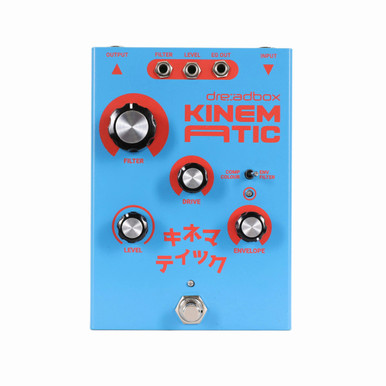
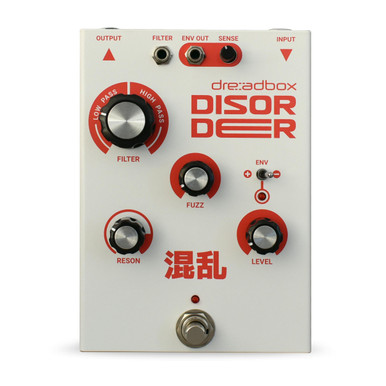
In the current JustPedals catalogue, Dreadbox is represented by Delay & Reverb Pedals, Fuzz Pedals and Tremolo & Vibrato Pedals. Current listings include Disorder Analogue Filter Fuzz, Darkness Digital Stereo Reverb and Kinematic VCA-Based Compressor. That makes the range relevant to players looking for drive, gain and clipping, plus time-based effects and ambience. Check each model for its exact circuit or processing platform, controls, power requirements and connections, particularly where the catalogue includes both pedals and supporting gear.
Category
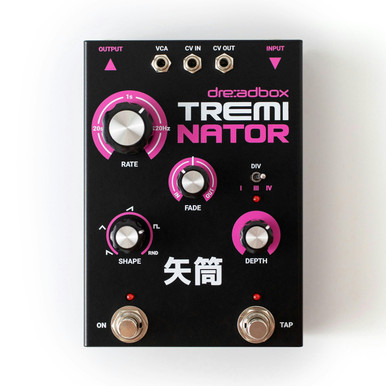
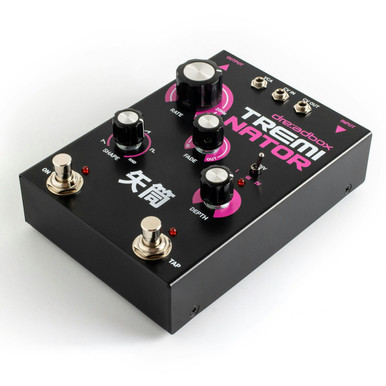
Tremolo and vibrato pedals create movement by changing amplitude or pitch. Tremolo varies volume, while vibrato varies the pitch of the signal; combined units may add harmonic, bias or rotary-style voices. Rate, depth, waveform, phase, mix and tap tempo shape the feel, from gentle pulse to pronounced rhythmic interruption. Check whether the effect is placed before or after drive, whether it preserves the dry signal, and whether stereo or expression control is available for a more animated setup.
Tags
Analogue products use continuous audio circuitry for some or all of the signal path, so clipping, filtering or modulation arises from physical components rather than sampled algorithms. The label does not guarantee a particular tone; component choice, headroom, bias, noise and the surrounding gain stages still matter. Check whether the switching, presets, control section or cabinet stage is digital when the exact signal path is important.
Digital products use conversion and processing to create, store or control the effect. This can provide presets, complex routing, repeatable algorithms, USB, MIDI and firmware features, but conversion, latency, power requirements and clocking depend on the design. Check the input and output levels, sample or impulse-response support, bypass behaviour and current draw when combining a digital unit with analogue pedals or a direct recording setup.
Tap tempo lets a player set delay, modulation, tremolo or looper timing by tapping a footswitch. The implementation may be a dedicated switch, an external input, MIDI clock or a combination, and the supported timing divisions vary. Check whether the tempo is stored, whether tap is momentary or latching, how quickly the effect follows changes and which blocks respond. Tap tempo is useful only when the control connection and timing range match the workflow.