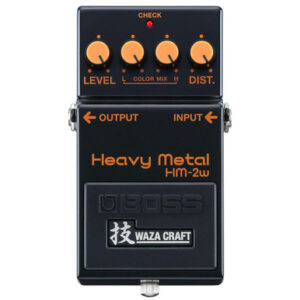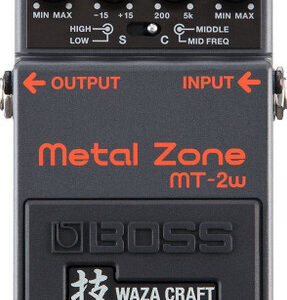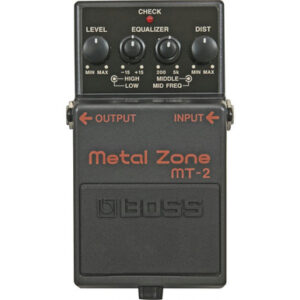
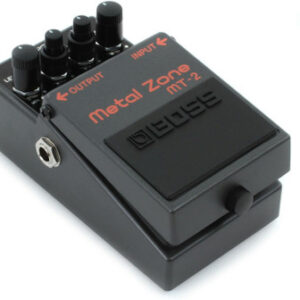
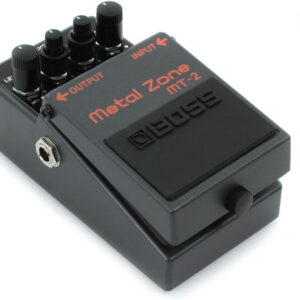
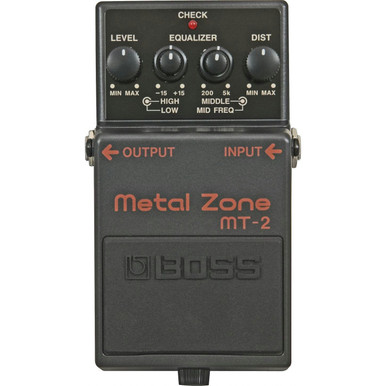
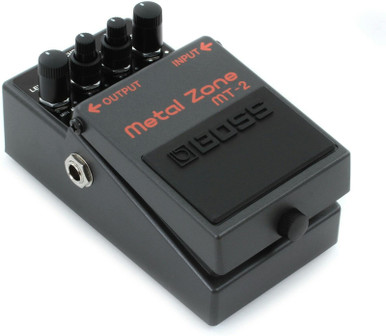
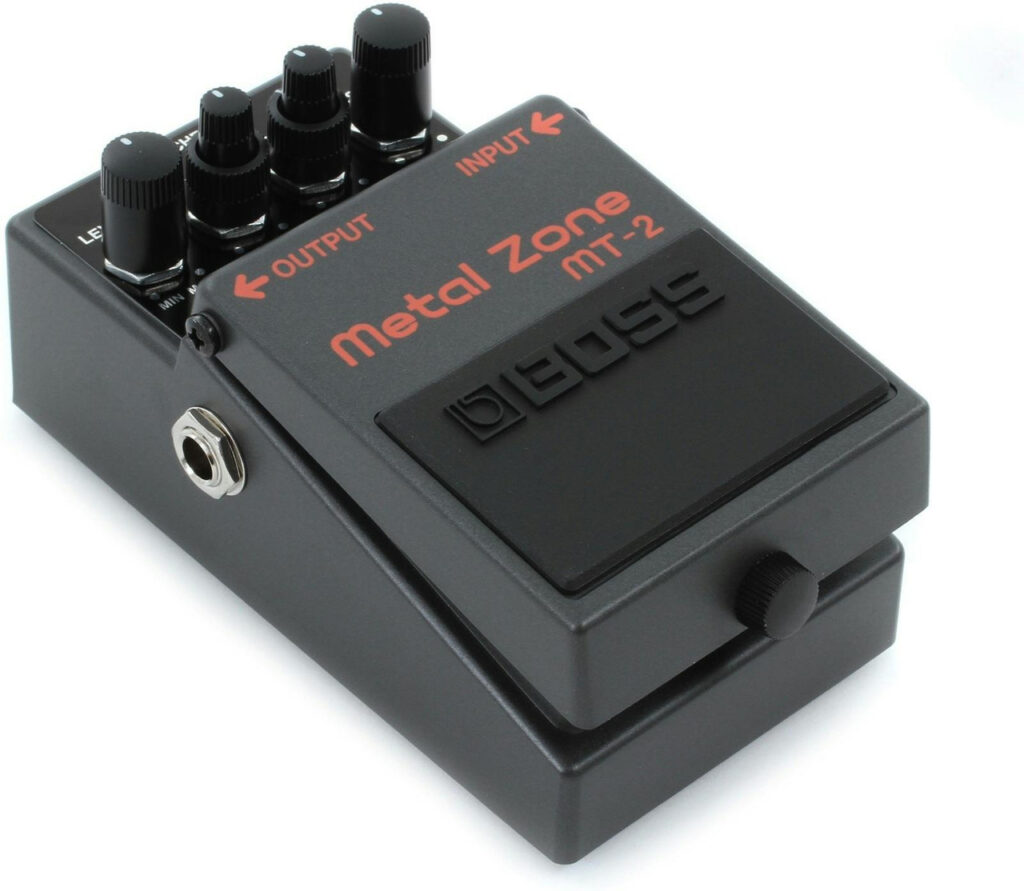
Boss MT-2 Metal Zone Distortion Pedal

£134.99

This is a New Boss MT-2 Metal Zone Distortion Pedal from Boss is in our Distortion Pedals category on Just Pedals. Read More below.

View Just
more

A best selling metal distortion, the MT2 delivers effortlessly when it comes to hi-gain goodness. Metal Zone has a 3-band EQ on board (with sweepable mid frequency) for maximum control of that all-important metal scooped mid sound. Tap into a gnarly saturated tone free from muddiness.

Renowned Boss build quality

Boss pedals have a reputation for being built like tanks. You can be sure that however much you drop it, kick it, throw it and jump on it, it'll still come back for more. These pedals constantly survive the rigours of rock 'n' roll touring, and that's why they're seen at the feet of top touring pros everywhere.

Reliability really can be affordable to all. Boss are so sure their compact pedals last the test of time, they cover them with a full five year warranty.

Key Features

  • Incredible-sounding distortion pedal with unique dual-gain circuitry
  • Provides super-long sustain and heavy mids and lows like a stack of overdriven amps
  • Three-band EQ with semi-parametric Mid control offers a wide range of extreme distortion textures
  • A must-have pedal for any hard rock or metal guitarist
  • BOSS 5-year warranty

Related videos

Brand

Boss

BOSS began in Osaka in 1973 as MEG Electronics, a company dedicated to effects. Its first BOSS-branded effect was the CE-1 Chorus Ensemble in 1976; the OD-1, SP-1 and PH-1 launched the compact-effects series in 1977. The JustPedals catalogue includes familiar overdrives and distortions such as the OD-3, SD-1, BD-2, DS-1 and MT-2 Metal Zone, as well as utility items such as the PCS-20A cable. BOSS now spans compact pedals, multi-effects, loopers, tuners and controllers. Manufacturing origin should be checked by model rather than inferred from the brand’s Japanese history.

Category

Distortion Pedals

Distortion clips the waveform more firmly than overdrive, generating dense upper harmonics, longer sustain and a more compressed response. Circuit topology and filtering decide whether the sound is tight and focused, broad and aggressive, smooth or deliberately abrasive. Gain sets the amount of clipping, while pre- and post-distortion tone controls strongly influence low-end definition, midrange presence and high-frequency texture.