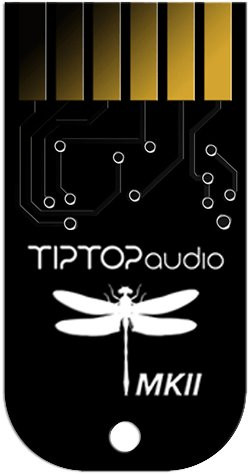

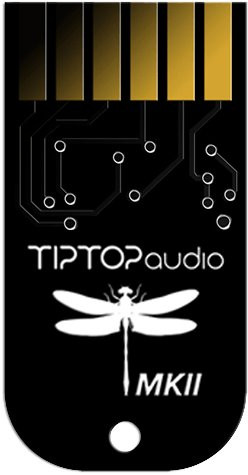
Just pedals are excited to share the latest New Delay Pedals by TipTop, the TipTop Audio – Dragonfly Delay ZDSP Cartridge Delay Pedals is a great Delay choice for new and experienced guitarists alike.. Read More below for more images, videos and latest UK prices from the TipTop brand, delivered by a UK retailer, with warranty & more.
Dragonfly MKII is a set of eight voltage-controlled, time-based delay effects for the Z-DSP. MKII features advanced delay programs with added filters and additional taps spicing up the original set of Dragonfly programs.
With up to 1000ms of delay time and feedback control on each program, the Dragonfly MKII is perfect for deep, stereophonic, spacey washes of sound covering all delay effect duties within a modular and more.
The external feedback loop on the Z-DSP let you feedback through other modules like filters, VCAs or just about any other module to further process the Dragonfly repeats.
Hook up a Z3000 for a variable clock of the DSP processor chip to mess up the algorithm’s processing speed, shifting from clear digital repeats to grungy lo-fi warbles, this is where binary DSP bits meet up with the organic analogue circuity of the Z-DSP.
The Dragonfly Delay contains the following algorithms:
- Mono in Stereo out L/R Tap: Two taps on a mono delay time.
- Mono in Stereo out Lowpass + Feedback: Two delay taps with LPF in feedback.
- Mono in Stereo out Highpass + Feedback: Two delay taps with HPF in feedback.
- Mono in Stereo out Right Ratio: Selector for ratio of Right delay time to Left.
- Mono in Stereo out Ping Pong: Two tap delay from Left to Right with LPF.
- Stereo in Stereo out L/R Delay: Independent delay lines on Left and Right.
- Stereo in Stereo out Highpass + Feedback: Two delay lines with HPF in feedback.
- Stereo in Stereo out Lowpass + Feedback: Tow delay lines with LPF in feedback.