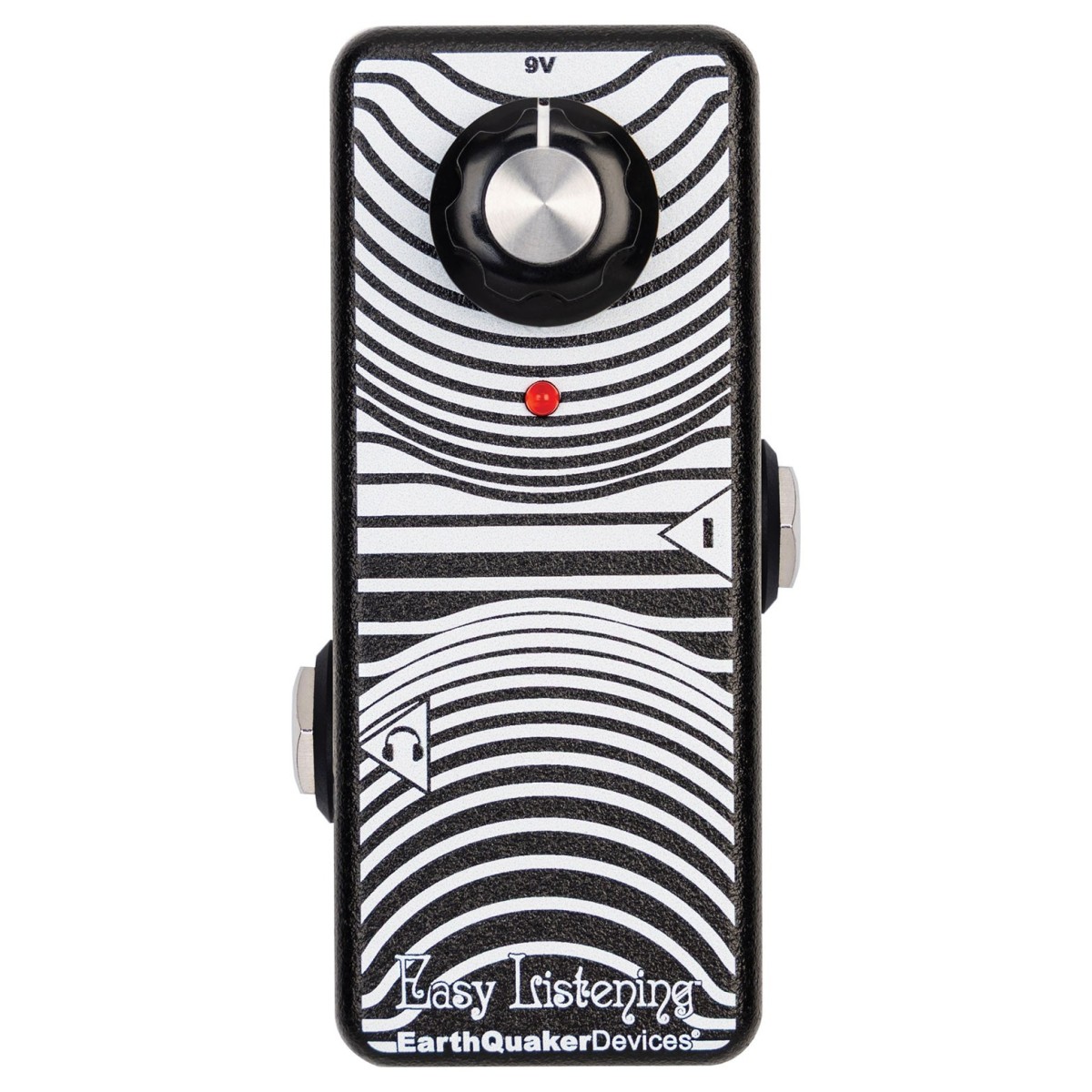
The EarthQuaker Devices Easy Listening is a no-frills all-analogue amp simulator that nails the sound and feel of a vintage combo without the bulk. Designed for purists who want great tone without menu-diving or digital faff it delivers big headroom proper cab sim and the kind of touch response you only get from analogue circuits. Whether youre running headphones for silent practice tracking direct into your interface or building a grab-and-go pedalboard rig Easy Listening fits right in. No IR loaders no effects chains—just a beautifully-voiced amp block you can actually enjoy playing through.
EarthQuaker Devices Easy Listening Analogue Amp Simulator
£111.00
This is a New EarthQuaker Devices Easy Listening Analogue Amp Simulator from EarthQuaker Devices, listed in Amp & Cab Simulator Pedals on Just Pedals. Read More below.
View Just EarthQuaker Devices
As an affiliate partner, we may earn a small commission when you buy through our links — at no extra cost to you.
Related videos
Brand
EarthQuaker Devices
In the current JustPedals catalogue, EarthQuaker Devices is represented by Octave Pedals, Fuzz Pedals and Overdrive Pedals. Current listings include Organizer V2, Hoof Fuzz V2 and Buffer/Splitter. That makes the range relevant to players looking for drive, gain and clipping, plus time-based effects and ambience. Check each model for its exact circuit or processing platform, controls, power requirements and connections, particularly where the catalogue includes both pedals and supporting gear.
Category
Amp & Cab Simulator Pedals
Amp and cab simulator pedals model, emulate or approximate the gain, frequency response and dynamic behaviour of an amplifier and speaker cabinet. Some focus on a preamp voice; others combine power-amp behaviour, cabinet filtering, microphone placement and direct outputs. They can feed a power amp, effects return, mixer, interface or headphones, but the correct routing depends on the model. Check impulse-response support, bypass options, input headroom and how the pedal responds to playing level.
Tags
Analogue
Analogue products use continuous audio circuitry for some or all of the signal path, so clipping, filtering or modulation arises from physical components rather than sampled algorithms. The label does not guarantee a particular tone; component choice, headroom, bias, noise and the surrounding gain stages still matter. Check whether the switching, presets, control section or cabinet stage is digital when the exact signal path is important.
Digital
Digital products use conversion and processing to create, store or control the effect. This can provide presets, complex routing, repeatable algorithms, USB, MIDI and firmware features, but conversion, latency, power requirements and clocking depend on the design. Check the input and output levels, sample or impulse-response support, bypass behaviour and current draw when combining a digital unit with analogue pedals or a direct recording setup.
Others Just Ordered :
- Mooer Meta FX – Review
- MOOER META FX Review: 3 Effects in 1—but Here’s the Problem

- I Wasn’t Expecting To Be Impressed – But What Is The Mooer Meta FX?

- Mooer // META FX Stereo Multi-Effect Platform (Demo)

- A NEW GENERATION OF PEDALS IS HERE – Mooer Meta FX Reverb Review
- Mooer META FX | All the REVERBS from subtle to WILD!