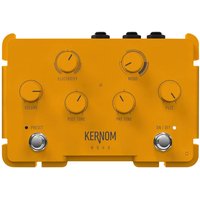
Kernom Moho Fuzz

£295.00

Also available on — Gear4music, Andertons, Reverb, Amazon, eBay

This is a real tasty fuzz. A solid fuzz and eq it stands out amongst other Guitar Pedals on the menu. Kernom make great Guitar Pedals, so If you like fuzz then this Kernom Moho Fuzz is the perfect fuzz to order in. Read More details Below.


Description

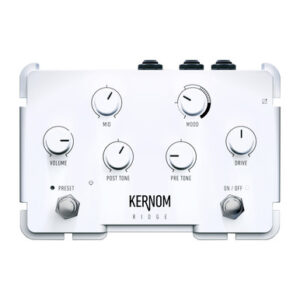
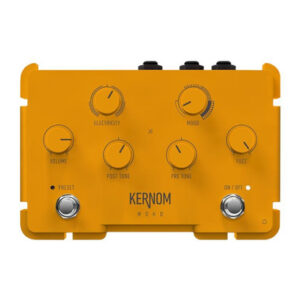
This is a real tasty fuzz. A solid fuzz and eq that stands out amongst other Guitar Pedals on the menu. Kernom make great Guitar Pedals, so If you like fuzz, then a Kernom Moho Fuzz is the perfect fuzz to order in. The Kernom MOHO Fuzz is a pedal that gives you complete mastery over fuzz tones from psychedelic warmth to razor-sharp grunge and beyond! It features an innovative EQ section that allow for a wide array of sounds and fuzz textures. The pre- and post-tone controls let you dial in and adjust for smooth rich sustain or gated choppy effects allowing for an almost limitless amount of fuzz possibilities. The Kernom MOHO Fuzz is equipped with full MIDI compatibility storing up to 128 presets ideal for experimentation and seamless transitions in live and studio settings. An expression pedal input further enhances customisation giving you absolute control over parameters to blend unique textures and tones.

Brand

Kernom

Category

Kernom

Tags

EQ

While Ed Sheeran primarily relies on the natural sound of his acoustic guitar and vocals, he occasionally uses EQ (Equalization) to shape and enhance his tone during live performances or in the studio. EQ pedals or onboard preamps can allow him to adjust the frequency response of his guitar signal to suit the acoustics of different venues or to achieve specific tonal characteristics. Here’s how EQ might be utilized in Ed Sheeran’s setup:

1. **Tonal Shaping**: EQ can be used to adjust the balance of frequencies in the guitar signal, allowing Ed Sheeran to shape his tone to his liking. For example, he might boost the midrange frequencies to bring out the warmth and presence of his acoustic guitar, or cut certain frequencies to reduce any harshness or mud in the sound.

2. **Feedback Control**: In a live setting, EQ can help control feedback by notching out problematic frequencies that might cause the guitar signal to feed back through the amplification system. This can be particularly useful when performing in venues with challenging acoustics or high volume levels.

3. **Room Correction**: In situations where the venue’s acoustics are less than ideal, EQ can be used to compensate for any deficiencies in the sound. By adjusting the EQ settings, Ed Sheeran can tailor the guitar tone to sound more balanced and natural, regardless of the room’s acoustic properties.

4. **Matching Gear**: EQ can also be used to match the tone of Ed Sheeran’s guitar to the sound of other instruments or equipment in his setup. For example, he might adjust the EQ to complement the tonal characteristics of his vocal microphone or to blend seamlessly with backing tracks or other instruments.

Overall, while EQ may not be a central component of Ed Sheeran’s guitar effects setup, it can still play a valuable role in shaping his tone and ensuring that he achieves the desired sound in different performance environments. Whether used subtly for tonal shaping or more aggressively for feedback control, EQ allows Ed Sheeran to tailor his guitar tone to suit his musical vision and performance needs.

Expression

Expression pedals allow real-time control over specific parameters on compatible guitar pedals, such as volume, delay time, modulation depth, or filter sweep. Used with an expression input, they let players shape effects dynamically with their foot, adding movement and performance control that cannot be achieved with fixed knob settings.

Fuzz

A fuzz pedal is one of the earliest and most aggressive forms of distortion, turning your clean guitar signal into a thick, saturated wall of sound. It works by clipping the waveform almost flat, creating a compressed, gritty tone full of harmonic overtones. The result is raw, unruly, and unmistakable — from the sputtering breakup of vintage germanium circuits to the searing sustain of modern silicon designs. Fuzz pedals react strongly to your guitar’s volume and pickup choice, making them dynamic tools for expressive players.

Whether you’re chasing the classic tones of Hendrix and the Smashing Pumpkins or exploring heavy, experimental textures, fuzz remains a favourite for its personality and unpredictability. It can sound smooth and sustaining, or wild and velcro-like, depending on how it’s set up. A good fuzz pedal cuts through the mix while adding thickness and attitude, turning any riff or lead line into something bold and unmistakably alive.

Guitar Effects Pedals

Guitar Pedals

Your pedal is like a signature dish for your sound — a flavour-packed creation that transforms the bland ingredients of your guitar into something unforgettable. Each one adds its own seasoning, texture, and heat, turning a simple meal into a feast of tone.

These tasty little boxes sit in a row, like plates on a buffet, letting you mix and match flavours as you play. With one tap of your foot, you can swap sweet for spicy, subtle for smoky, and serve up something completely new. From the comfort food of warm overdrive to the fiery kick of fuzz, from smooth jazz sauce to heavy-metal spice, pedals give players a full menu of options to express their taste.  And just like with food, once you’ve tried one dish, you’ll want to sample them all.

Collecting, trading, and discovering new flavours soon becomes part of the joy of being a tone-loving gourmet geek with a guitar.

MIDI

MIDI pedals use the Musical Instrument Digital Interface standard to communicate with other guitar pedals, effects units, and hardware. They allow control over presets, parameters, and switching across multiple devices from a single controller. MIDI integration makes it possible to build complex, synchronised pedal setups while keeping control simple and consistent.