
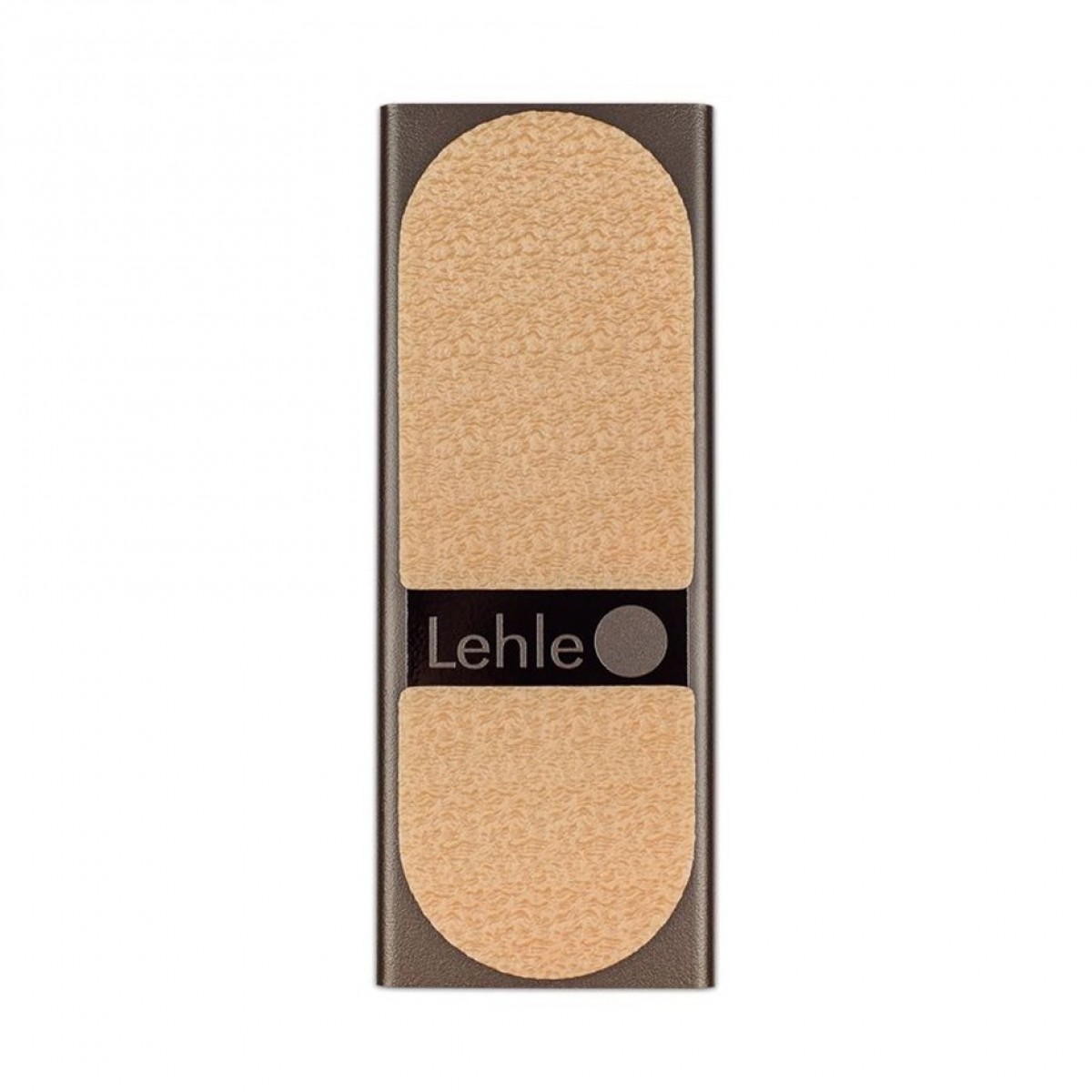
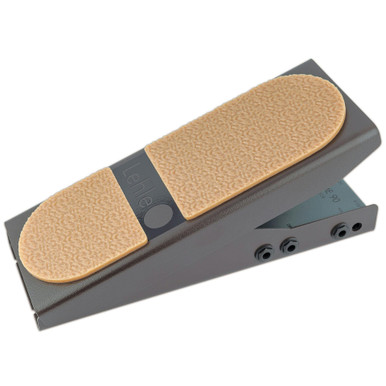
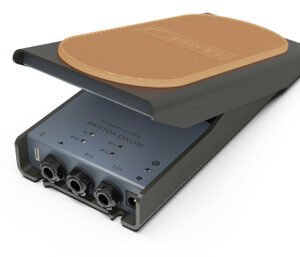
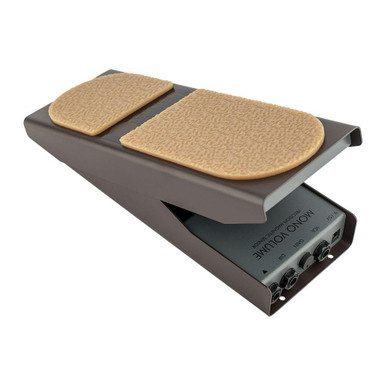
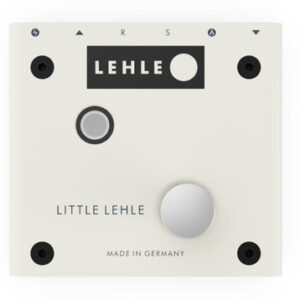
The LEHLE MONO VOLUME Pedal is a revolutionary tool designed for meticulous musicians who demand precision and durability in sound control. Featuring a high-end preamp with a discrete Class-A input stage this pedal offers a dynamic range of 120 dB thanks to its advanced 30 V technology. Its innovative magnetic sensor technology eliminates mechanical wear and noise ensuring a smooth and consistent performance over time. The pedals signal path remains entirely analogue preserving the integrity of your sound while offering the precision of digital control.This compact and lightweight pedal is optimised for ease of use without sacrificing performance. It integrates MIDI functionality via USB allowing musicians to connect seamlessly with digital audio workstations and other MIDI-enabled devices. Dual outputs provide added versatility catering to various setup needs while the ability to adjust pedal tension enables personalised control. Whether in the studio or on stage the LEHLE MONO VOLUME Pedal ensures that every nuance of your performance is captured and conveyed with clarity and fidelity.
Lehle Mono Volume Pedal
This is a New Lehle Mono Volume Pedal from Lehle, listed in Volume Pedals on Just Pedals. Read More below.
As an affiliate partner, we may earn a small commission when you buy through our links — at no extra cost to you.
Brand
Lehle
In the current JustPedals catalogue, Lehle is represented by Volume Pedals, Expression Pedals and Preamp & DI Pedals. Current listings include DC-Filter, P-Split III and Stereo Volume. That makes the range relevant to players looking for modelling, direct rigs and multi-effects. Check each model for its exact circuit or processing platform, controls, power requirements and connections, particularly where the catalogue includes both pedals and supporting gear.
Category
Volume Pedals
A volume pedal places a foot-controlled attenuator in the audio path, varying level without changing the instrument itself. Potentiometer value and active or passive design determine impedance compatibility, sweep shape and high-frequency retention. Placement before gain changes both loudness and distortion response; placement later behaves more like a master level. Minimum-volume, tuner and stereo connections extend the basic function.
Tags
Analogue
The signal is shaped by continuously varying electronic circuitry rather than being converted into a digital effect algorithm. Component choice, operating voltage and circuit tolerances influence headroom, noise, clipping texture and the small variations in response between designs.
Digital
Converts the signal or control process into numerical data for algorithmic processing. Digital designs can provide precise timing, long memory, complex routing and repeatable presets; sample rate, conversion, internal resolution and latency influence fidelity and response.
MIDI
Sends, receives or responds to Musical Instrument Digital Interface messages rather than carrying the instrument audio itself. Program changes recall presets, continuous controllers move parameters, and MIDI clock or transport messages synchronise timing between devices.
USB
Provides a Universal Serial Bus connection for power, audio, MIDI, firmware or editing data. The supported USB class and connector do not by themselves show its purpose; channel count, sample format, host compatibility and power demand define the actual function.
Others Just Ordered :
- Mooer Meta FX – Review
- MOOER META FX Review: 3 Effects in 1—but Here’s the Problem

- I Wasn’t Expecting To Be Impressed – But What Is The Mooer Meta FX?

- Mooer // META FX Stereo Multi-Effect Platform (Demo)
- A NEW GENERATION OF PEDALS IS HERE – Mooer Meta FX Reverb Review

- Mooer META FX | All the REVERBS from subtle to WILD!