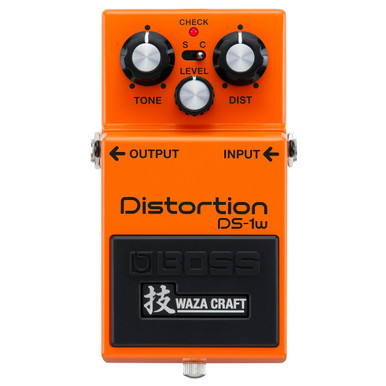
The Boss DS-1W Waza Craft Distortion Pedal is a legendary time-honoured stompbox thats revamped for the modern player. It offers the same hard-edged sonics and massive sustain of the original DS-1 but with an added twist! A brand-new custom mode delivers bolder beefier tones that are loaded with focused mids and exceptional touch dynamics. Together with a set of intuitive sound-sculpting controls and BOSSs superb Waza Craftsmanship the DS-1W is supremely versatile and easy to use. And more than that Wazas all-analogue circuitry promises a warm authentic tonality with an extended range to keep you creative. Thats all contained within Wazas sturdy casing which ensures years of reliable performance. Even better that performance is backed up by a cutting-edge buffer to guarantee consistency in signal.
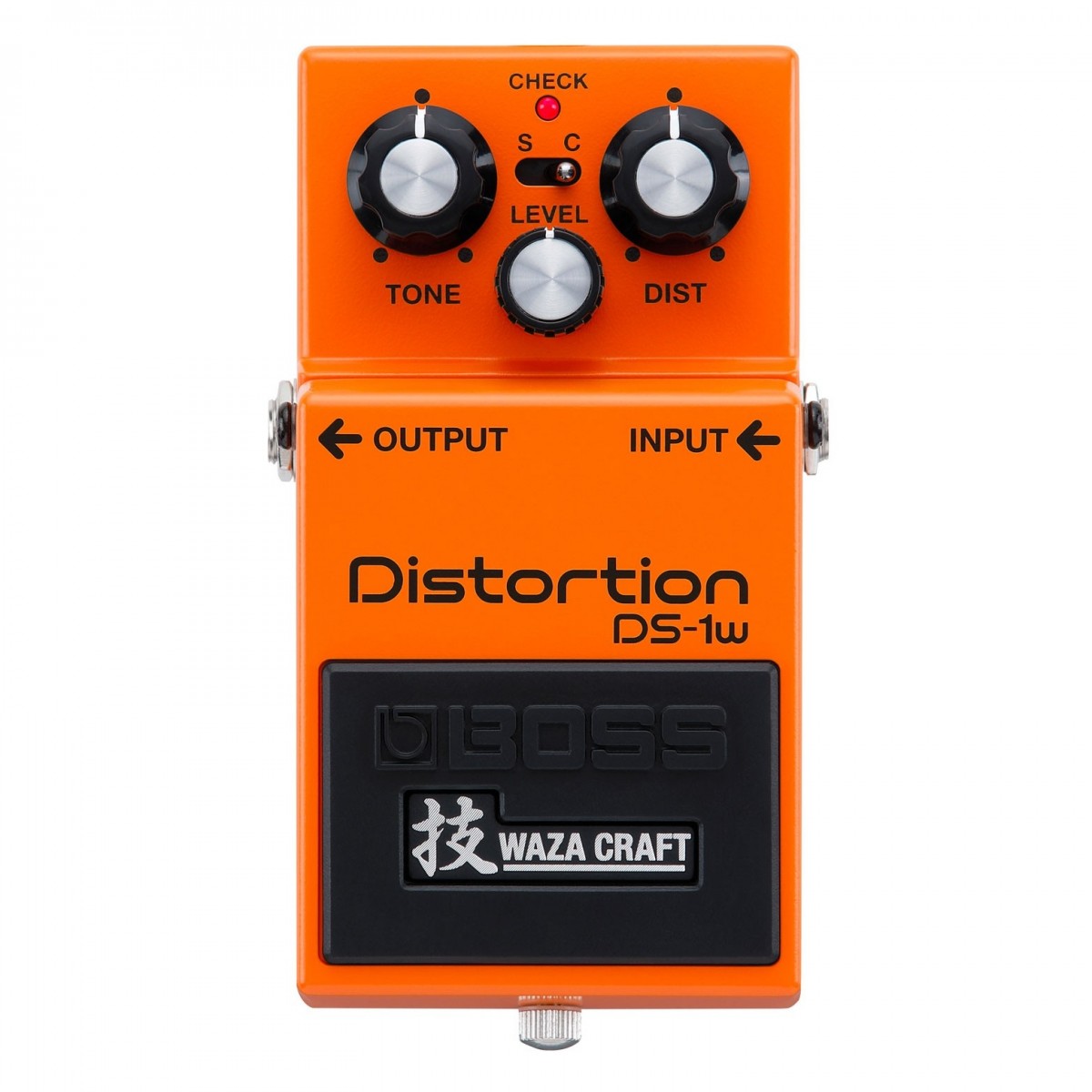
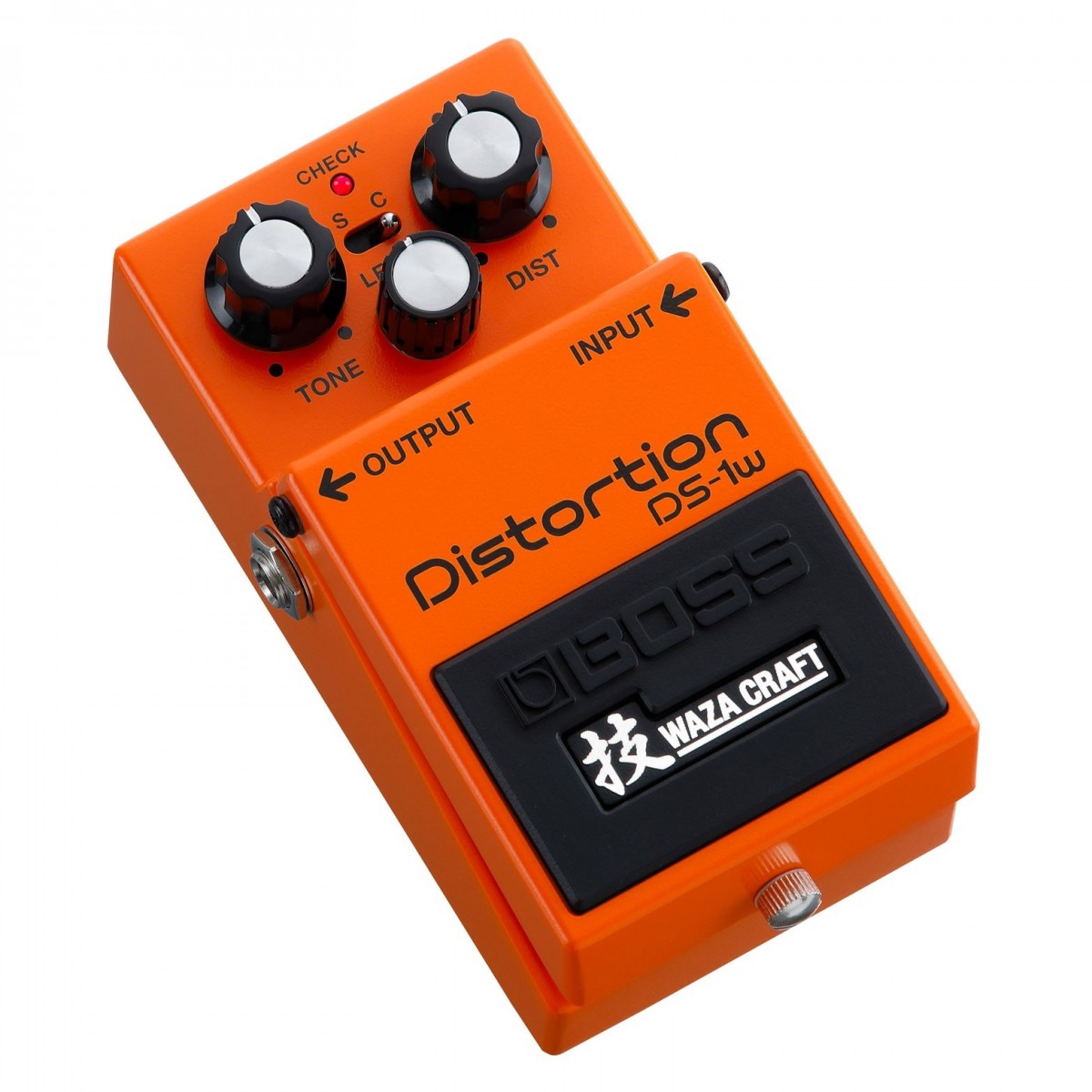
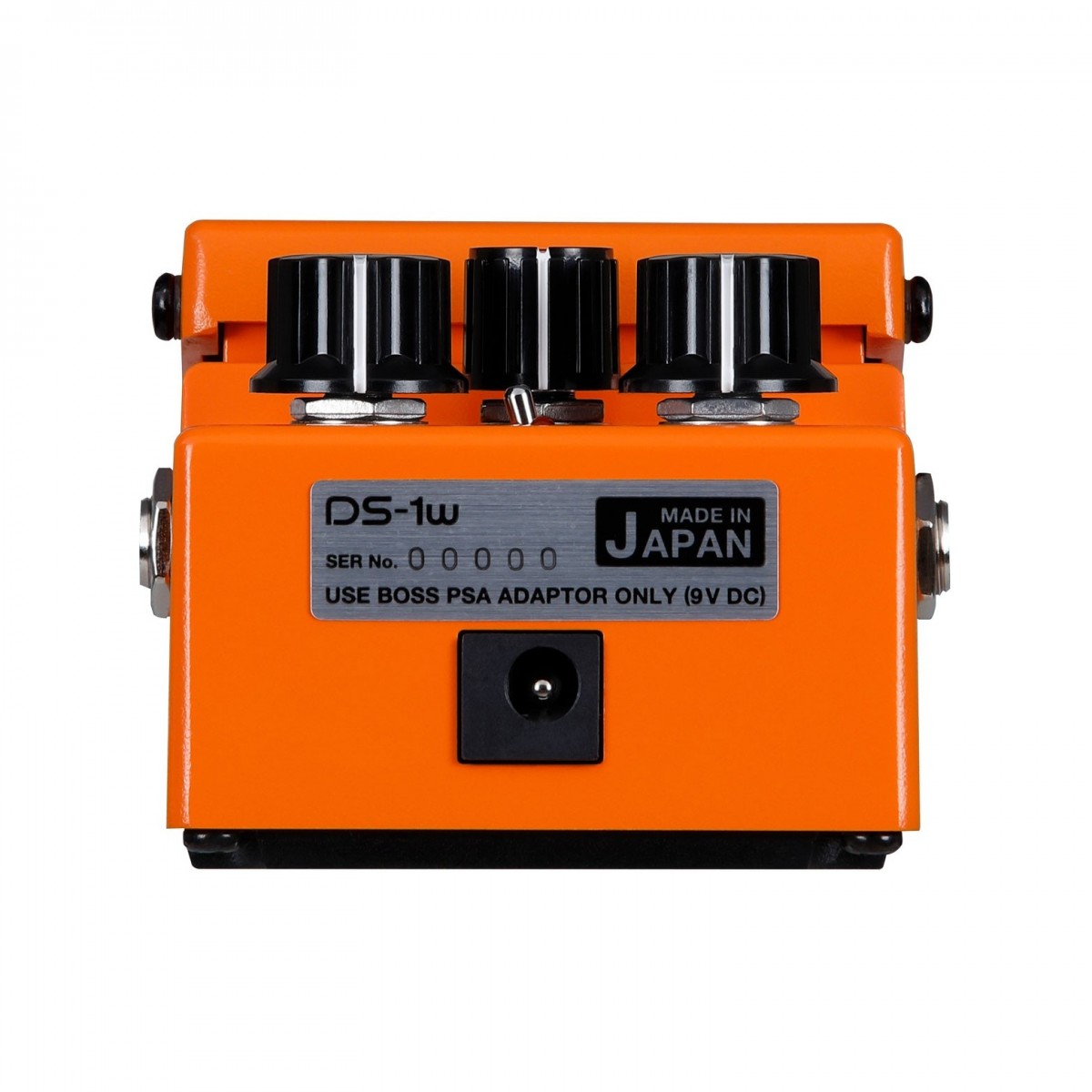
Boss DS-1W Waza Craft Distortion Pedal
This is a New Boss DS-1W Waza Craft Distortion Pedal from Boss, listed in Distortion Pedals on Just Pedals. Read More below.
As an affiliate partner, we may earn a small commission when you buy through our links — at no extra cost to you.
Related videos

Brand
Boss
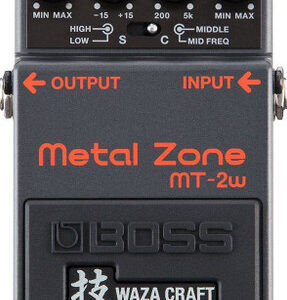
BOSS began in Osaka in 1973 as MEG Electronics, a company dedicated to effects. Its first BOSS-branded effect was the CE-1 Chorus Ensemble in 1976; the OD-1, SP-1 and PH-1 launched the compact-effects series in 1977. The JustPedals catalogue includes familiar overdrives and distortions such as the OD-3, SD-1, BD-2, DS-1 and MT-2 Metal Zone, as well as utility items such as the PCS-20A cable. BOSS now spans compact pedals, multi-effects, loopers, tuners and controllers. Manufacturing origin should be checked by model rather than inferred from the brand’s Japanese history.
Category
Distortion Pedals
Distortion clips the waveform more firmly than overdrive, generating dense upper harmonics, longer sustain and a more compressed response. Circuit topology and filtering decide whether the sound is tight and focused, broad and aggressive, smooth or deliberately abrasive. Gain sets the amount of clipping, while pre- and post-distortion tone controls strongly influence low-end definition, midrange presence and high-frequency texture.
Tags
Analogue
The signal is shaped by continuously varying electronic circuitry rather than being converted into a digital effect algorithm. Component choice, operating voltage and circuit tolerances influence headroom, noise, clipping texture and the small variations in response between designs.
Others Just Ordered :
- Mooer Meta FX – Review
- MOOER META FX Review: 3 Effects in 1—but Here’s the Problem
- I Wasn’t Expecting To Be Impressed – But What Is The Mooer Meta FX?

- Mooer // META FX Stereo Multi-Effect Platform (Demo)
- A NEW GENERATION OF PEDALS IS HERE – Mooer Meta FX Reverb Review

- Mooer META FX | All the REVERBS from subtle to WILD!