
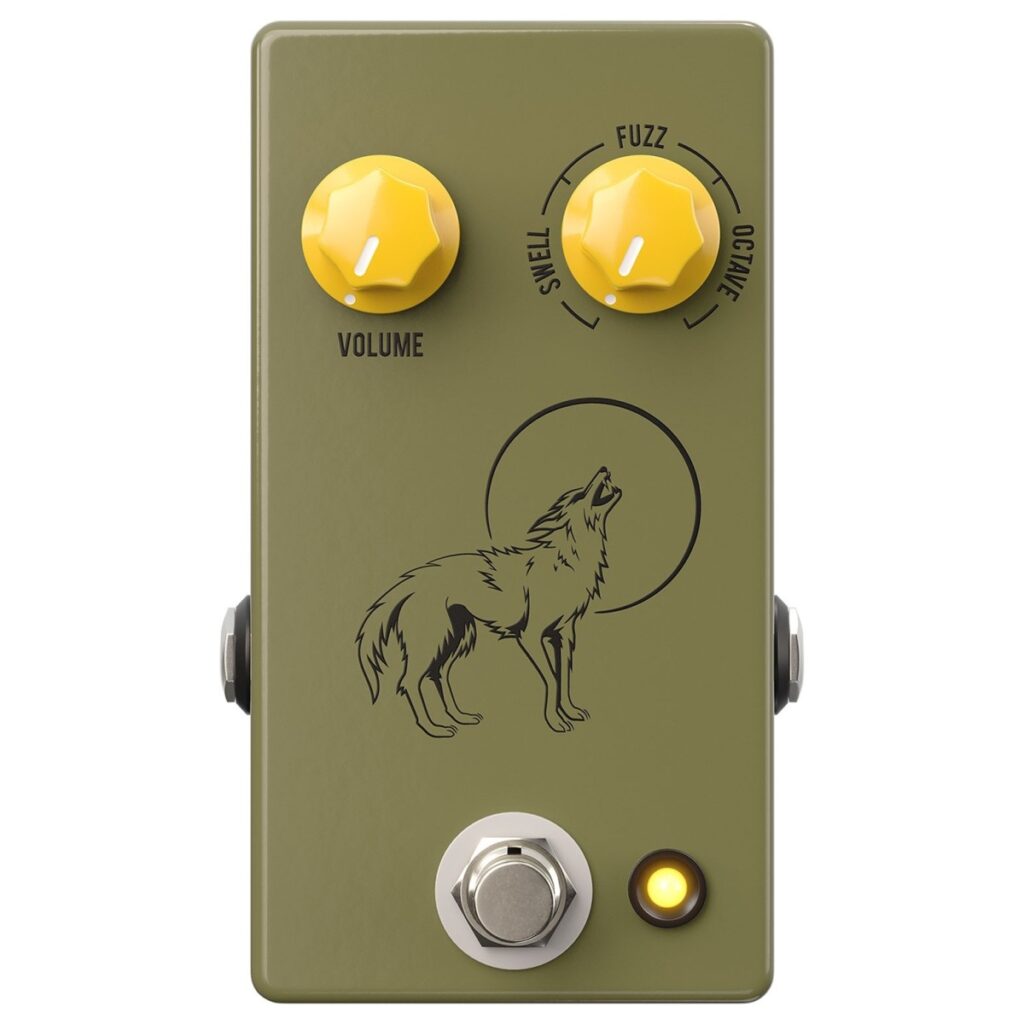
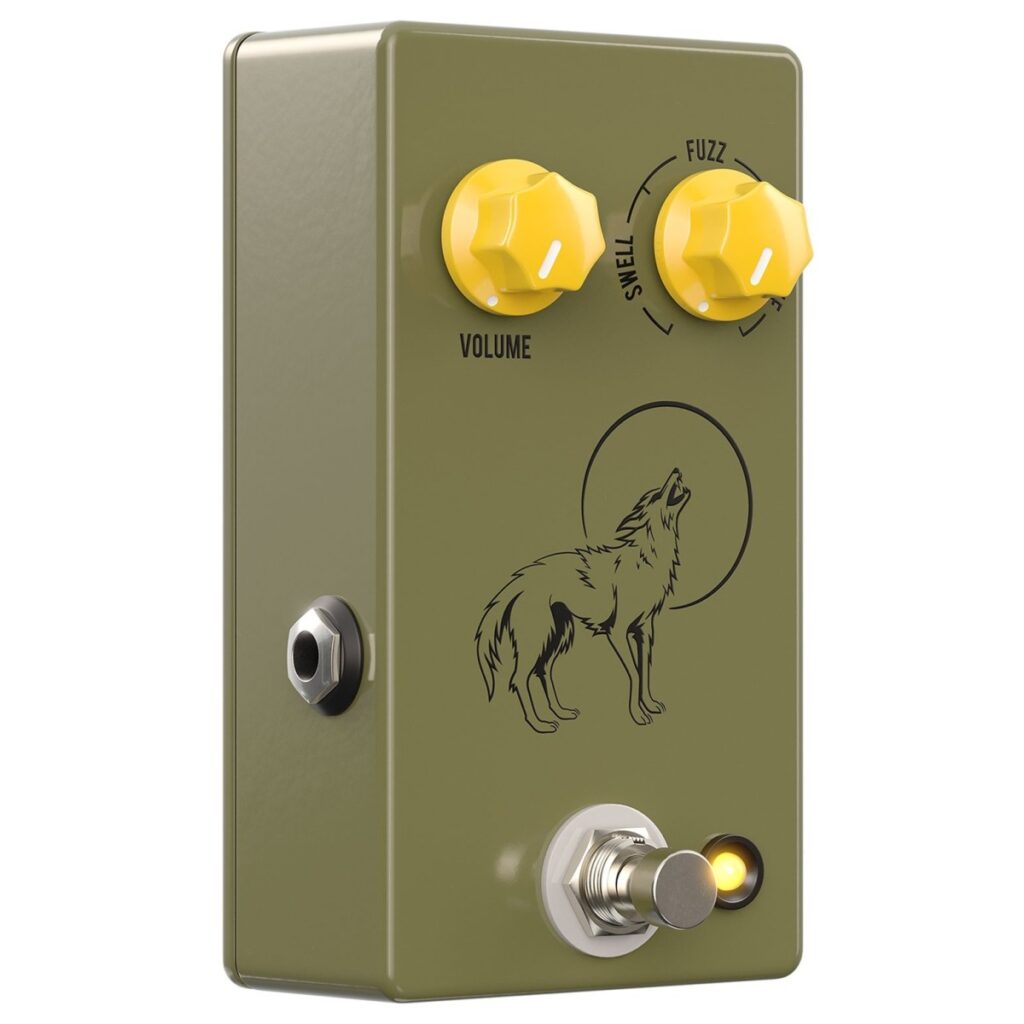
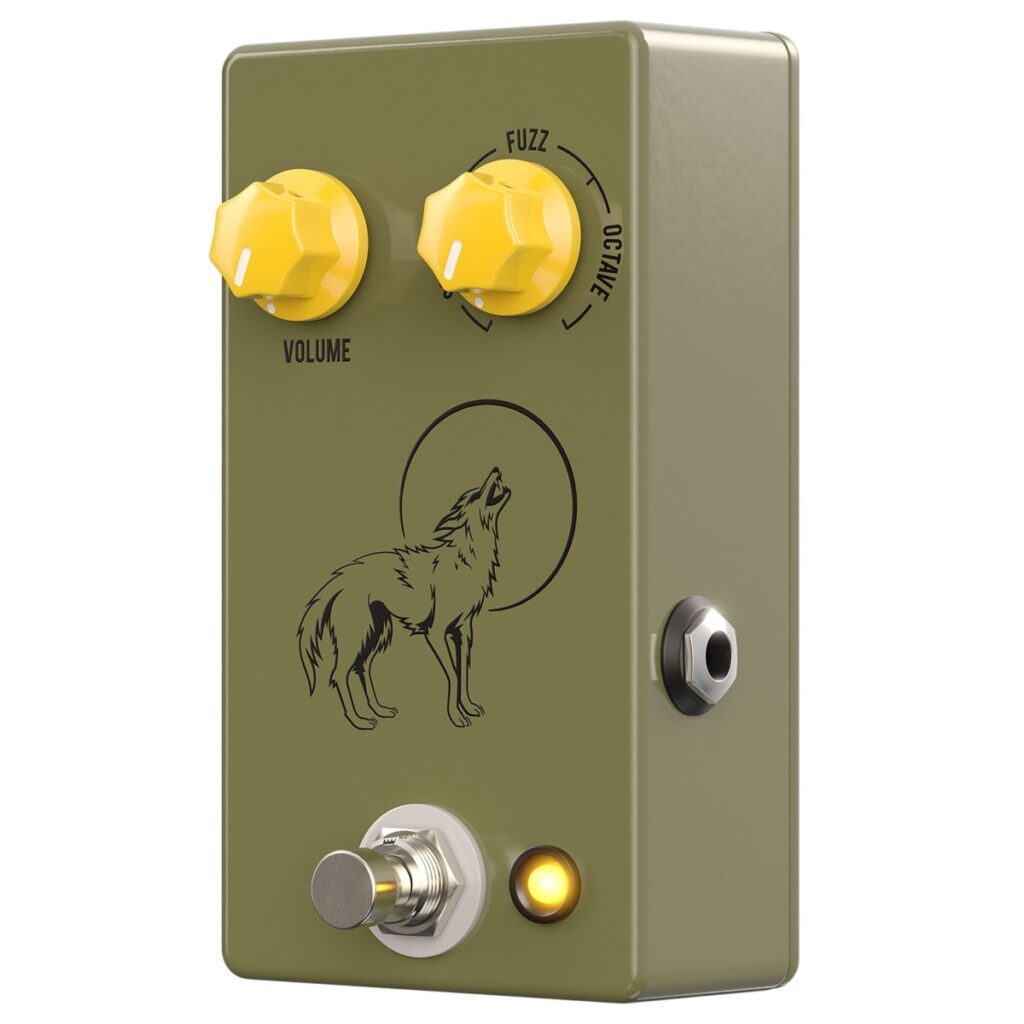
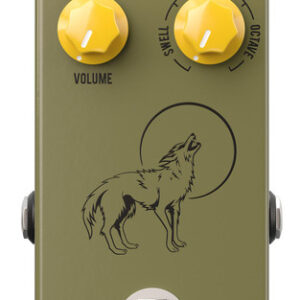
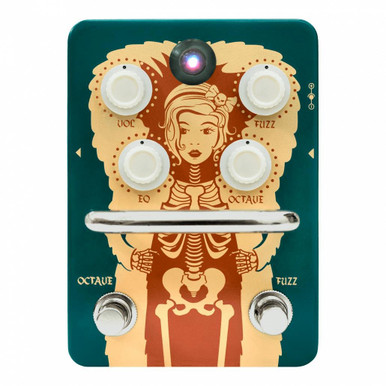
The JHS Pedals Coyote Fuzz is a one-of-a-kind octave fuzz that doesnt follow the usual script. Rather than borrowing from the classic Octavia Super Fuzz or Tone Machine family tree it recreates the obscure Moonrock Fuzz by Glenn S. Wyllie – a rare experimental design built around an unconventional transformer setup. The result is a sound that moves from strange blooming textures to thick fuzz and snarling octave-up tones all from a single control with a feel and response that stands apart from the usual vintage-inspired fuzz crowd. That simple Swell / Fuzz / Octave knob is what makes the Coyote so addictive. Turn it down for a gated reverse-style bloom park it around noon for a rich chord-friendly fuzz or crank it for aggressive octave-up bite. It also cleans up brilliantly with your guitars volume control which is unusual for any fuzz and especially rare in an octave fuzz. Run it first in your chain and into a driven amp or overdrive and youve got a pedal thats expressive weird and packed with character for psychedelic riffs garage rock blues leads and full-on experimental noise.
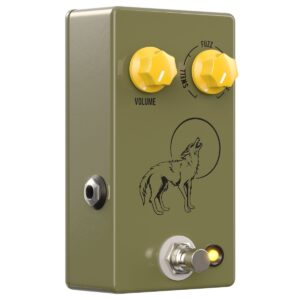
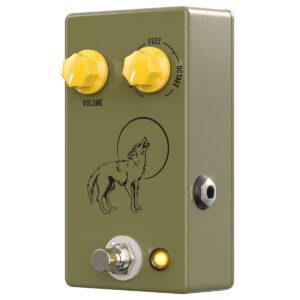
JHS Pedals Coyote Fuzz
This is a New JHS Pedals Coyote Fuzz from JHS Pedals, listed in Fuzz Pedals on Just Pedals. Read More below.
As an affiliate partner, we may earn a small commission when you buy through our links — at no extra cost to you.
Related videos


Brand
JHS Pedals
In the current JustPedals catalogue, JHS Pedals is represented by Overdrive Pedals, Distortion Pedals and Delay Pedals. Current listings include Switchback, Mute Switch and Summing Amp. That makes the range relevant to players looking for drive, gain and clipping, plus time-based effects and ambience. Check each model for its exact circuit or processing platform, controls, power requirements and connections, particularly where the catalogue includes both pedals and supporting gear.
Category
Fuzz Pedals
Fuzz drives the signal into extreme clipping, often flattening the waveform and generating a thick spectrum of harmonics. Transistor type, bias, input loading and tone filtering create markedly different responses, from loose and velvety to gated, spluttering or octave-rich. Some circuits interact strongly with pickup impedance and guitar volume, while others include buffers or blends for a more consistent response.
Others Just Ordered :
- Mooer Meta FX – Review
- MOOER META FX Review: 3 Effects in 1—but Here’s the Problem

- I Wasn’t Expecting To Be Impressed – But What Is The Mooer Meta FX?

- Mooer // META FX Stereo Multi-Effect Platform (Demo)

- A NEW GENERATION OF PEDALS IS HERE – Mooer Meta FX Reverb Review

- Mooer META FX | All the REVERBS from subtle to WILD!